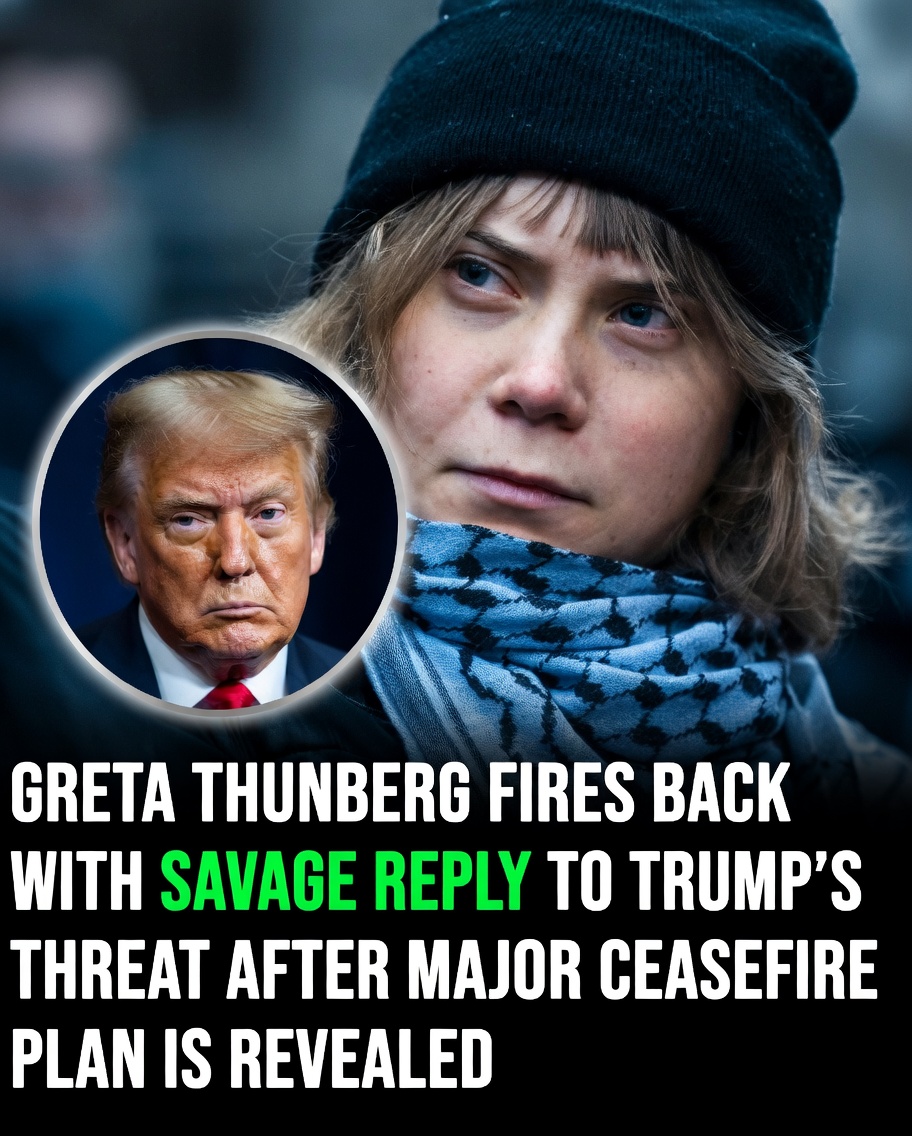
You watched the news unfold and felt the collective tension across the globe reach a breaking point as President Donald Trump issued a chilling threat on social media, warning that “a whole civilization will die tonight, never to be brought back again,” words that hung heavy in the air just hours before a fragile two-week ceasefire was finally reached between the United States and Iran, turning what had been a month-long standoff in the Strait of Hormuz into a moment that forced the entire world to confront the terrifying normalization of annihilation as a negotiating tactic. The ceasefire itself was announced with both sides claiming victory, hinging on Iran reopening vital shipping lanes and a temporary pause in hostilities, but the damage from Trump’s statement had already been done, sparking fears of escalation and even nuclear war until a last-minute diplomatic breakthrough bought the world a brief reprieve from the brink.
The threat was not subtle. Trump made it clear that if the conflict continued beyond his deadline, the consequences for Iran could be total and irreversible, a declaration that went far beyond standard political rhetoric and into territory that many world leaders and citizens found deeply alarming. In the hours leading up to the deal, the global community held its breath, watching as diplomacy and military posturing collided in real time, with the fate of millions hanging on negotiations that seemed to teeter on the edge of catastrophe.
It was in this charged atmosphere that Greta Thunberg broke her silence with a response so blistering and direct that it cut through the diplomatic language and political spin like a knife. Rather than offering cautious optimism about the ceasefire, she delivered a savage indictment of what she called the “normalization of the monstrous,” arguing that when threats to wipe out an entire civilization are tossed around like bargaining chips, the moral fabric of humanity begins to unravel. Her words linked Trump’s ultimatum to broader systemic failures, from environmental collapse to the tolerance of war crimes, forcing a global audience to confront an uncomfortable truth: we have become dangerously desensitized to the language of genocide and total war.
Thunberg’s fury was not just about one statement or one conflict. She questioned when the world stopped reacting with visceral horror to the promise of mass slaughter, pointing out that the same apathy that allows for the destruction of the planet is what allows for the casual threat of annihilation. For her, the ceasefire was not a success story but a stay of execution, a temporary pause that highlights the recklessness of modern leadership and the terrifying reality that the survival of a nation can now be treated as conditional rather than guaranteed.
The response has rippled through every corner of the political spectrum. Trump’s supporters have dismissed Thunberg as an alarmist, arguing that tough talk is what brought Iran to the table and secured the deal. But Thunberg’s supporters and a growing number of international observers see something far more sinister at play, a precedent being set where the survival of an entire people is no longer a given but a privilege granted by a superpower. Her intervention has ensured that this moment will not be forgotten as a mere footnote in a successful negotiation but framed instead as a turning point in human history.
This clash of ideologies comes at a time when the world is already reeling from a sense of perpetual crisis, from record-breaking winter storms to economic instability fueled by the conflict. Pope Leo XIV had already set the stage for a moral reckoning with his condemnation of Trump’s threats as “truly unacceptable,” but it was Thunberg who provided the raw, generational anger that many felt was missing from official statements. She spoke for a youth demographic that views the current geopolitical maneuvering not as a game of chess but as a reckless gamble with their future existence.
Behind the diplomatic language of the ceasefire sits an unmistakable and terrifying reality: we are living in an era where the ego of a single man can hold the fate of millions in the balance over a social media post. Thunberg’s scream of “stop” was not just about the Iran-U.S. conflict. It was about the wider culture of indifference that allows for the erosion of international law and the dehumanization of “the other.”
As the two-week ceasefire clock begins to tick, the tension remains thick. The Strait of Hormuz may be open and the bombers grounded for now, but the rhetoric of “civilizational death” cannot be unsaid. It has entered the bloodstream of our political discourse, poisoning the well of future negotiations. Thunberg’s response has ensured that this will not be forgotten as a mere footnote but as a moment where we either decide that some things are truly unthinkable, or we accept that everything, including the survival of our species and our cultures, is up for negotiation.
As the world moves deeper into 2026, it is becoming clear that the voices screaming “stop” are the only things standing between us and the “revolutionarily wonderful” disaster that some leaders seem so eager to invite. The ceasefire bought us time, but Thunberg’s words are meant to buy us a conscience.
As you reflect on Greta Thunberg’s powerful response to Trump’s threats and the way it forced the world to confront the normalization of monstrous rhetoric, ask yourself this: when leaders casually threaten the destruction of entire civilizations, will you stay silent in the face of the unthinkable, or will you find your voice and demand that some lines must never be crossed?
Most Popular!
-
 The Ultimate Wedding Revenge: When the Mother Who Abandoned Her Six Daughters Showed Up with Her Millionaire Boss, the Bride Opened a Box That Destroyed Lives Forever
-
The Beach Shaming Disaster: What My 8-Year-Old Said to the Prying Stranger Left Everyone Speechless
-
My Husband Abandoned Me With Twin Babies for a Luxury Fishing Trip — When He Returned, I Had Already Packed His Bags
-
The Three-Dollar Miracle: How a Dust-Covered Vase Revealed a Heartbreaking Decades-Old Secret
-
The $80,000 Battle to Erase a Birthmark: Why One Mother Risked Everything for Her Daughter’s Future
-
The Silent Thief: Why Millions of Men Are Living with a Time Bomb They Can’t See
-
The Final Curtain Falls: Beloved Sanford and Son Legend Hal Williams Gone at 91
-
Found at a Yard Sale: This “Useless” Vintage Contraption Is Actually a Forgotten Piece of Human History