You sat behind a row of dumpsters with your forehead on the steering wheel of a beat-up sedan older than you were, listening to traffic and trying not to panic. Nine days earlier your father had told you that you were eighteen now, an adult, and that meant they were done taking care of you. No cake, no card, just three plastic bags by the front door and the driveway.
You had come home from school expecting nothing special, but the moment you walked in you knew something was wrong. Your father sat at the kitchen table with that calm voice he used when the decision had already been made. His wife stirred sugar into her mug and smiled like she was doing you a favor. Your stepbrother leaned back in his chair, already knowing how the story ended. They had used the three thousand dollars you had saved from grocery shifts and dishwashing jobs to pay for your stepbrother’s applications and fees. Call it rent, your father said flatly. You earned it while living under our roof.
The emotional weight of that moment crushed you. You had worked since you were fifteen so you could have a safety net. Now that net was gone and so was your bed. You carried the three plastic bags to your car and promised yourself you wouldn’t cry until the door was shut. You made it about ten seconds. That night you slept curled up in the backseat with your hoodie pulled tight around you, the heater barely working.
You still went to school every day. You raised your hand in class, joked in the halls, and tried to act like nothing had changed. You showered before sunrise in the locker room and prayed no one noticed you kept wearing the same jeans. After school you drove until you found somewhere quiet enough to park. Big store lots. Empty side streets. A spot behind a strip mall where no one asked questions if you stayed invisible.
Hunger feels different when there is no real meal waiting anywhere. Lunch became your anchor. You would eat half and save the rest, pretending you weren’t counting every bite. By the ninth day the gas light was on and so were you. The car finally gave out behind a row of restaurants, squeezed between dumpsters and delivery trucks that smelled like everything you couldn’t afford.
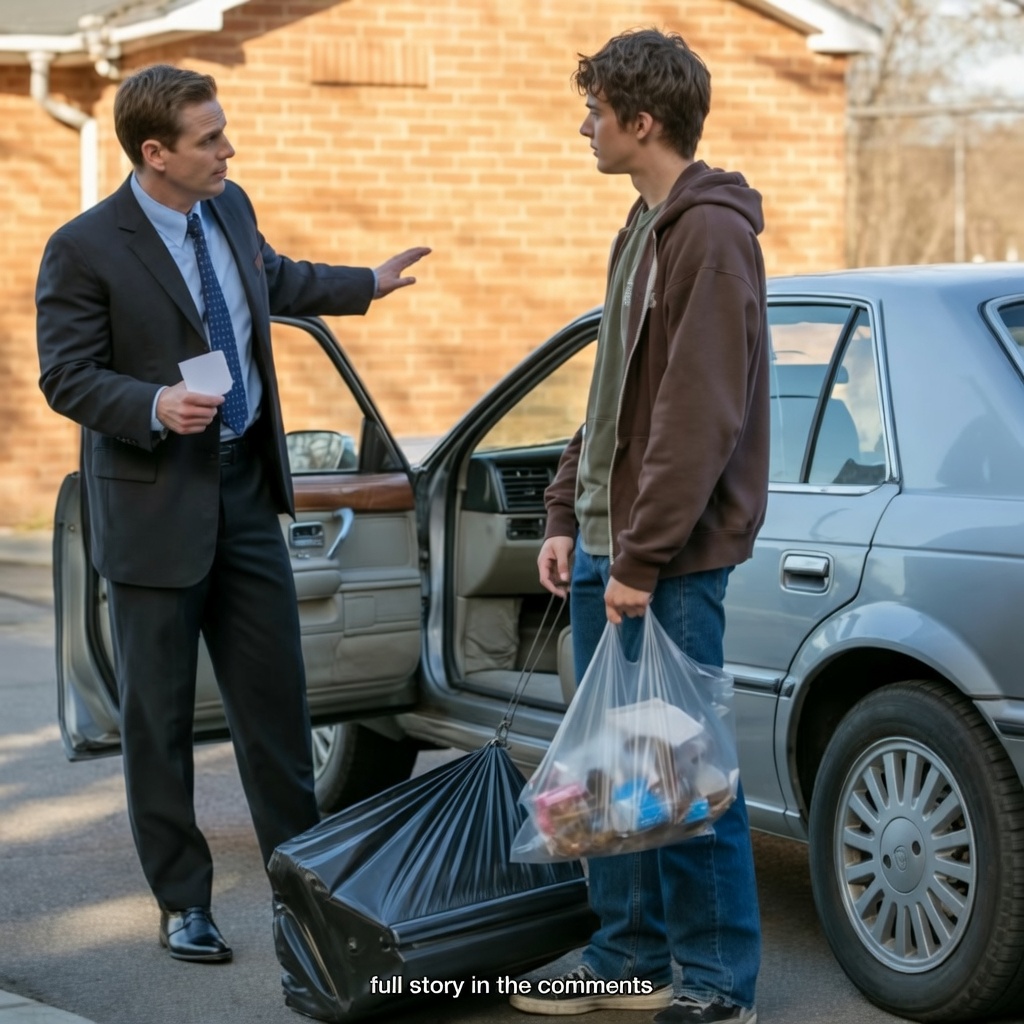
That’s when someone said your name. “Excuse me — are you Nathan Brooks?” You froze. When you’re living out of a car, being noticed is terrifying. Your first instinct was to run. Instead you turned. The man didn’t look like a cop or a social worker. He looked like he belonged somewhere else entirely. Tailored suit, clean shoes, perfect tie. He pulled out a business card and held it out like we were meeting in an office, not next to trash bins.
“My name is Richard Hartwell,” he said. “I represent the estate of James Brooks. Your grandfather.” You scoffed because you had been told your grandfather died before you were born. The lawyer’s expression stayed grave. “That isn’t correct. Your grandfather passed away a few weeks ago. And he instructed us to find you immediately.” The world tilted. He met your gaze and lowered his voice. “Because he left everything to you. The house. The business. The accounts. All of it.” Ten minutes earlier you had been wondering if anyone had thrown out food. Now a stranger was telling you that you owned more than you could imagine.
“But there’s one condition,” he said. “And it changes everything.”
Most Popular!
-
 The Ultimate Wedding Revenge: When the Mother Who Abandoned Her Six Daughters Showed Up with Her Millionaire Boss, the Bride Opened a Box That Destroyed Lives Forever
-
The Beach Shaming Disaster: What My 8-Year-Old Said to the Prying Stranger Left Everyone Speechless
-
My Husband Abandoned Me With Twin Babies for a Luxury Fishing Trip — When He Returned, I Had Already Packed His Bags
-
The Three-Dollar Miracle: How a Dust-Covered Vase Revealed a Heartbreaking Decades-Old Secret
-
The $80,000 Battle to Erase a Birthmark: Why One Mother Risked Everything for Her Daughter’s Future
-
The Silent Thief: Why Millions of Men Are Living with a Time Bomb They Can’t See
-
The Final Curtain Falls: Beloved Sanford and Son Legend Hal Williams Gone at 91
-
Found at a Yard Sale: This “Useless” Vintage Contraption Is Actually a Forgotten Piece of Human History