My daughter Lily was 16 — bright, kind, the girl who hugged strangers at school when they looked sad. She was walking home from tutoring when a 14-year-old boy, driving his older brother’s car without permission, ran a red light at 55 in a 35. He hit her. She died instantly.
The boy — Ethan — had no license, no permit, no adult in the car. He was high on something his friends gave him. He didn’t even see her until it was too late.
The prosecution wanted him tried as an adult. Vehicular manslaughter. Maximum sentence. His public defender begged for juvenile court — said he was a scared kid from a broken home who’d never been in trouble before. The town was divided. Half wanted justice. Half pitied him. I just wanted my daughter back.
The sentencing hearing was packed. Cameras. Reporters. Lily’s friends in the front row wearing her favorite color — lavender. Ethan sat beside his lawyer, head down, handcuffs on thin wrists, shaking.
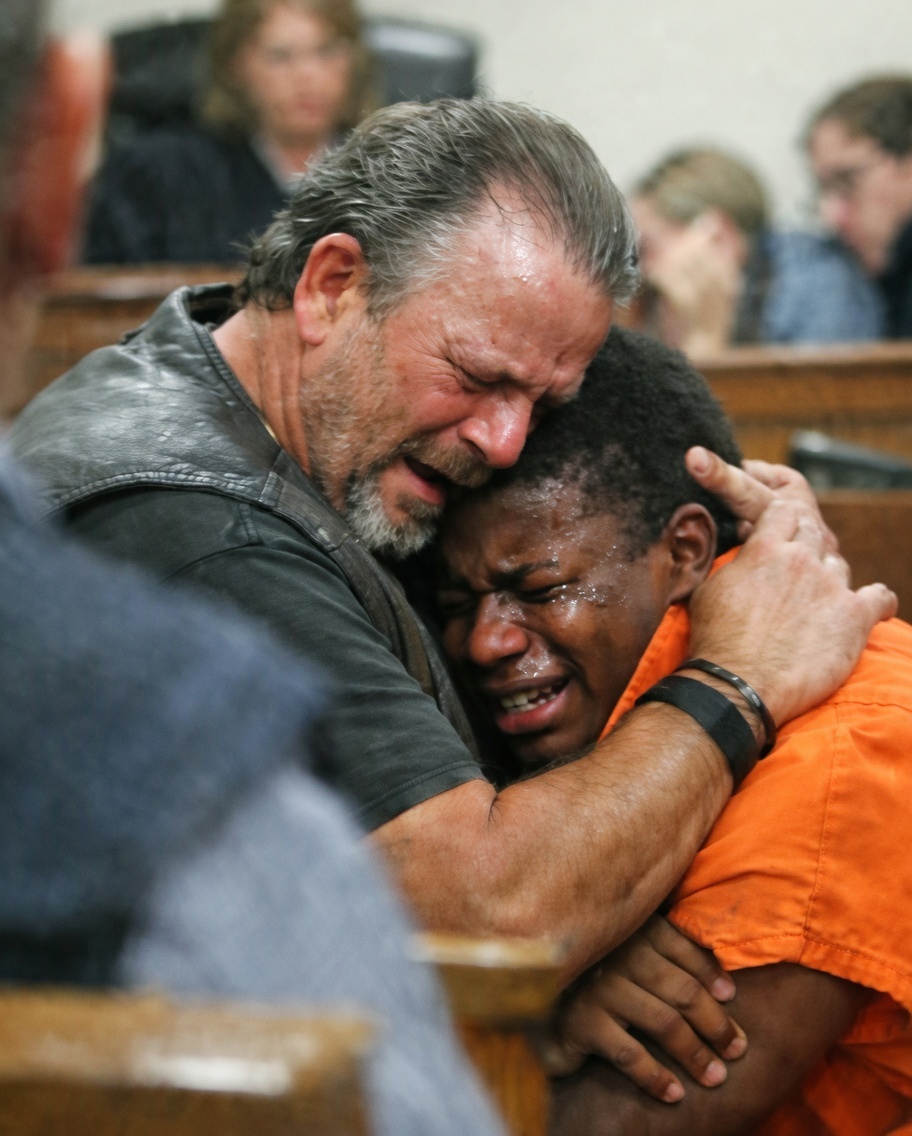
When the judge asked if anyone wanted to speak, I stood. Everyone expected the usual victim-impact statement — pain, anger, calls for punishment. Instead I walked past the podium, past the bailiff, straight to the defense table. I knelt in front of Ethan. The room went dead silent. I opened my arms. He looked up — terrified — then slowly leaned in. I hugged him. Hard. Like I was hugging Lily one last time.
Cameras flashed. Gasps. Someone sobbed.
I held him until his shaking stopped. Then I stood, turned to the judge, and spoke clearly:
“Your Honor, my daughter is gone. Nothing brings her back. This boy will carry what he did for the rest of his life — just like I will. Prison won’t give me my child. It will only give two mothers grief instead of one. I ask the court to sentence him as a juvenile, with mandatory counseling, community service at the children’s hospital where Lily volunteered, and restitution paid by working every weekend until he’s 21. Let him learn to live with what he did — not rot in a cell forgetting who he hurt.”
The judge stared at me for a long moment. Ethan’s mother collapsed crying behind him. The prosecutor looked stunned.
The judge recessed for 20 minutes. When he returned, he followed my recommendation almost exactly — juvenile adjudication, intensive probation, therapy, hospital volunteer work, restitution schedule. No adult trial. No prison.
Afterward Ethan’s mother tried to thank me. I shook my head. “This isn’t forgiveness,” I told her. “This is refusing to let hate take another life.”
Ethan wrote me a letter every month for two years — updates on therapy, hospital shifts, grades. He never asked for absolution. He just said: “I’m trying to be someone your daughter would be proud of.”
Last month he turned 18. He showed up at Lily’s grave with flowers and a college acceptance letter — first in his family. He didn’t speak. Just left the envelope under the headstone and walked away.
I still cry when I think of Lily. I still miss her every second. But I don’t regret that hug. Or those words in court.
Because sometimes justice isn’t punishment. Sometimes it’s choosing to stop the bleeding instead of adding more blood.
The conversation is just getting started — and for countless parents over forty carrying unbearable loss, it is already changing everything for the better.
You don’t have to forgive to heal. But sometimes choosing mercy over vengeance is the only way to keep your own heart beating. Lily would have hugged him too. I know it. ❤️🕊️
Most Popular!
-
 The Ultimate Wedding Revenge: When the Mother Who Abandoned Her Six Daughters Showed Up with Her Millionaire Boss, the Bride Opened a Box That Destroyed Lives Forever
-
The Beach Shaming Disaster: What My 8-Year-Old Said to the Prying Stranger Left Everyone Speechless
-
My Husband Abandoned Me With Twin Babies for a Luxury Fishing Trip — When He Returned, I Had Already Packed His Bags
-
The Three-Dollar Miracle: How a Dust-Covered Vase Revealed a Heartbreaking Decades-Old Secret
-
The $80,000 Battle to Erase a Birthmark: Why One Mother Risked Everything for Her Daughter’s Future
-
The Silent Thief: Why Millions of Men Are Living with a Time Bomb They Can’t See
-
The Final Curtain Falls: Beloved Sanford and Son Legend Hal Williams Gone at 91
-
Found at a Yard Sale: This “Useless” Vintage Contraption Is Actually a Forgotten Piece of Human History