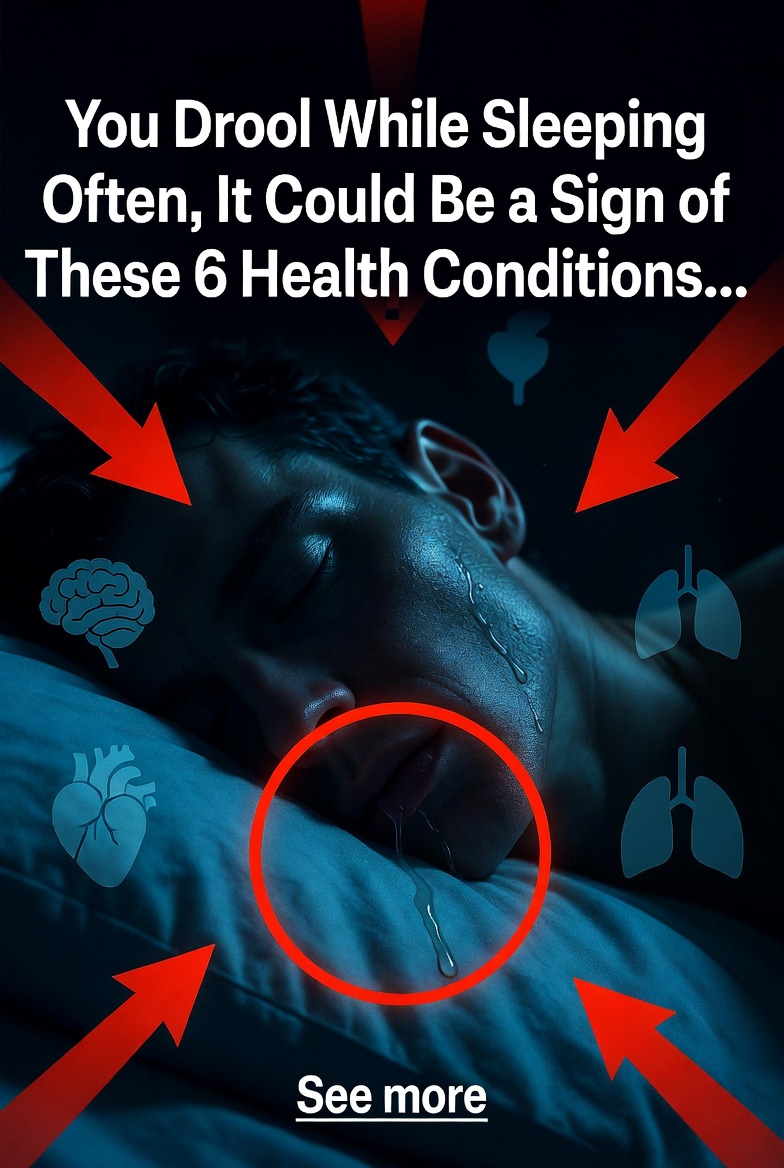
The first time I woke up with a soaked pillow I blamed the pillow itself — too soft, wrong position, maybe allergies. I flipped it over and went back to sleep. But it kept happening. Night after night, I’d wake up with drool running down my chin, the sheet damp under my cheek. At first I laughed it off as “getting older.” I’m 52. Things change. Then my wife started noticing. She’d nudge me awake and say, “You’re drooling again — it’s loud.” That’s when I started paying attention. The snoring was worse too. The fatigue during the day was getting harder to shake. I finally mentioned it at my annual checkup. The doctor didn’t laugh. He asked one question that changed everything: “How often do you wake up gasping for air?”
Like so many of us over forty, I had dismissed the signs as normal aging. Snoring, daytime tiredness, dry mouth in the morning — I figured it was just life. But the drooling was the clue I couldn’t ignore. My doctor ordered a sleep study. The results came back: moderate obstructive sleep apnea. The drooling wasn’t just drooling — it was my body struggling to breathe, mouth open all night, saliva pooling and spilling out. He said it’s one of the most common red flags after 40, and ignoring it can quietly wreck your heart, brain, and life expectancy.
The first condition doctors link to nighttime drooling is sleep apnea itself. When airways collapse during sleep, your mouth falls open to compensate. Saliva escapes. You wake up exhausted, headachy, foggy. Over time, untreated apnea raises blood pressure, strains the heart, and triples stroke risk. For anyone over forty already watching cholesterol or blood pressure, this adds silent damage that can turn manageable issues into emergencies.
The second is acid reflux or GERD. Stomach acid creeps up when you lie flat, irritating the throat. Your body produces more saliva to protect itself — and it spills out while you sleep. Many of us over forty deal with reflux quietly, popping antacids, never connecting it to the wet pillow. Left untreated, chronic reflux can lead to esophageal damage, higher cancer risk, and constant inflammation that ages you faster.
The third is sinus issues or allergies. Post-nasal drip forces mouth breathing. Mouth stays open, drooling happens. Chronic sinus problems are epidemic after 40 — pollution, dust, mold in older homes. The constant inflammation stresses the immune system and can trigger migraines, fatigue, even cognitive fog that makes work and family life harder.
The fourth is neurological — conditions like Parkinson’s or early dementia can weaken facial muscles. Saliva control slips. Drooling increases. For those of us watching parents age or fearing our own memory changes, this symptom can be an early whisper of something bigger. Early detection matters — medications and therapy can slow progression and protect quality of life.
The fifth is medication side effects. Many common drugs after 40 — blood pressure pills, antidepressants, pain meds — cause dry mouth or increased saliva production. The imbalance leads to drooling. Doctors often miss this connection. Switching meds or adjusting doses can fix it — but only if you speak up.
The sixth — and one of the most serious — is oral health decline. Gum disease, tooth infections, or poorly fitting dentures cause excess saliva and mouth breathing. Chronic oral bacteria enter the bloodstream, raising heart disease and stroke risk. Dental care after 40 isn’t cosmetic — it’s life-saving. Many skip cleanings because of cost, not realizing it’s one of the cheapest ways to protect long-term health.
The financial reality is brutal. Untreated sleep apnea alone can lead to heart failure, stroke, or diabetes complications — hospital stays costing $30,000–$100,000 each. Medications, CPAP machines, dental work, specialist visits — even with insurance, out-of-pocket costs add up fast. For retirees or pre-retirees on fixed income, ignoring drooling and its causes can quietly drain the savings meant for travel, grandkids, or long-term care.
Health experts now urge anyone over 40 with frequent drooling to get checked — sleep study, ENT exam, dental visit, bloodwork. Early intervention saves lives and money. The awareness spreading through senior centers, online groups, and family chats is powerful because it costs nothing to look yet touches every part of daily life we care about — our energy, our heart, our brain, and the years we want to spend with family.
Protective instincts kicked in hard for me after my diagnosis. I got the CPAP. I started allergy meds. I scheduled a deep dental cleaning. My wife and I updated our health directives and checked long-term care insurance. The simple act of listening to my body’s signal became our family’s turning point from denial to action.
Many of us over forty are now balancing caring for aging parents while still supporting grown children, and anything that gives us an early edge on health feels like a true gift. Drooling became one more reminder to pay attention before small signs become big problems.
The emotional reflection has been the hardest part. There is something deeply humbling about realizing your body has been trying to warn you for years — and you ignored it. It gave me the same uneasy feeling you get when you discover a hidden crack in the foundation. But it also gave hope: catching it now means I can protect the future I want.
Friends who have since checked their own symptoms keep sharing updates. The stories they tell about better sleep, clearer thinking, and peace of mind only deepen the sense that this one small sign could be the health wake-up call an entire generation needs.
Looking back at those soaked pillows I realize they weren’t just embarrassing — they were a message. My body was begging for help. Listening saved me years of damage and thousands in future medical bills.
So the next time you wake up with a wet pillow, pause for a second and take it seriously. Get checked. It may be nothing… or it may be everything. Share this with the person you sleep next to because sometimes the most powerful health alerts come in the quietest, messiest ways. The conversation is just getting started, and for countless people over forty it is already changing everything for the better.
Most Popular!
-
 The Ultimate Wedding Revenge: When the Mother Who Abandoned Her Six Daughters Showed Up with Her Millionaire Boss, the Bride Opened a Box That Destroyed Lives Forever
-
The Beach Shaming Disaster: What My 8-Year-Old Said to the Prying Stranger Left Everyone Speechless
-
My Husband Abandoned Me With Twin Babies for a Luxury Fishing Trip — When He Returned, I Had Already Packed His Bags
-
The Three-Dollar Miracle: How a Dust-Covered Vase Revealed a Heartbreaking Decades-Old Secret
-
The $80,000 Battle to Erase a Birthmark: Why One Mother Risked Everything for Her Daughter’s Future
-
The Silent Thief: Why Millions of Men Are Living with a Time Bomb They Can’t See
-
The Final Curtain Falls: Beloved Sanford and Son Legend Hal Williams Gone at 91
-
Found at a Yard Sale: This “Useless” Vintage Contraption Is Actually a Forgotten Piece of Human History