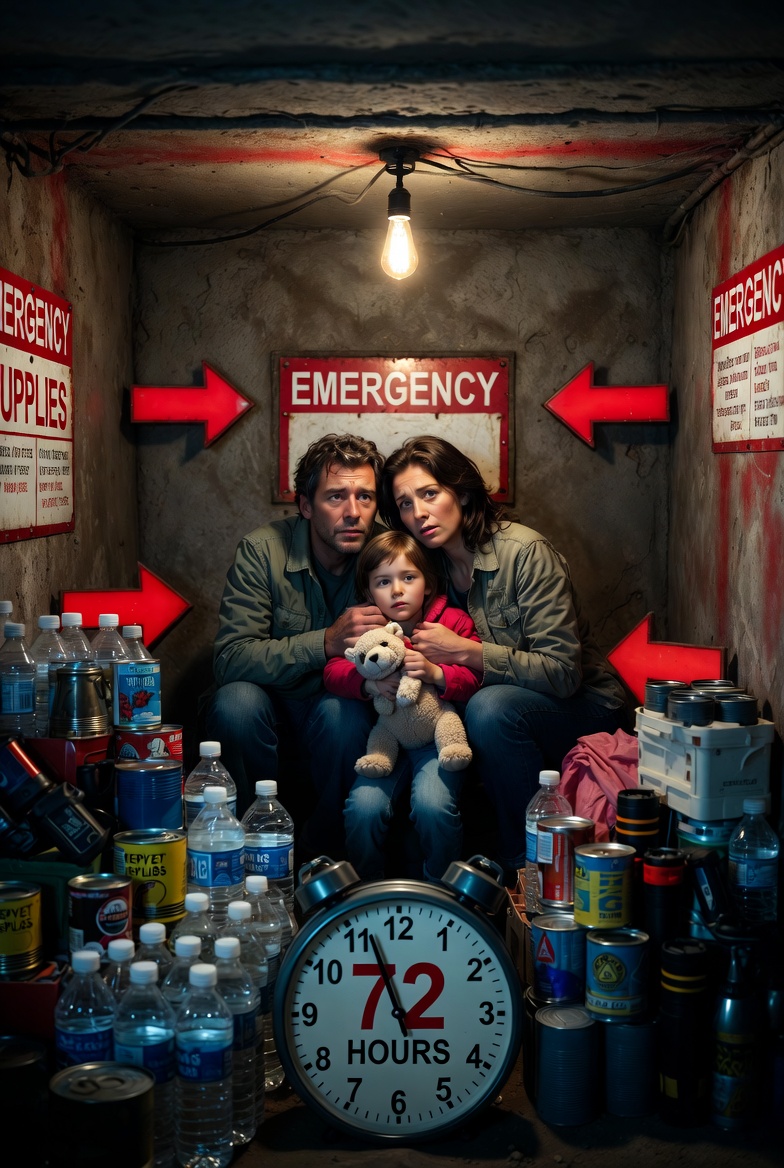
The text alert came in at 2:17 a.m. during a storm last month: “Power outages expected 48–72 hours. Prepare essential supplies.” My wife and I stared at our phones in the dark, realizing we had maybe one day of food, half a case of water, and a flashlight with dying batteries. Like so many of us over forty who have spent decades building homes and saving for retirement, we thought we were prepared for emergencies — until we weren’t. That night we learned the hard way why emergency experts are now saying 72 hours of supplies is the minimum every family needs.
Like most people in this stage of life, we had focused on long-term planning — retirement accounts, insurance, home maintenance — but short-term survival had slipped through the cracks. We assumed help would come quickly or that we could always run to the store. But when roads flood, stores close, and power stays out for days, those assumptions collapse. The 72-hour rule isn’t about fear; it’s about giving your family the breathing room to stay safe and calm while the world sorts itself out.
The first thing experts emphasize is water — one gallon per person per day for drinking and basic hygiene. For a family of four that’s 12 gallons minimum for three days. We had maybe three. Food comes next: non-perishable items that don’t require cooking or refrigeration. Canned goods, protein bars, peanut butter, crackers, dried fruit — enough calories to keep energy up without making anyone sick.
Medications are non-negotiable. If you or a loved one takes daily prescriptions, having at least a week’s supply (ideally two) can be lifesaving when pharmacies are closed or roads are impassable. We learned this the hard way when my wife’s blood pressure medicine ran low during the outage. First-aid supplies — bandages, antiseptics, pain relievers, any personal medical items — round out the basics.
The financial reality of being unprepared is brutal. Emergency purchases during a crisis mean paying inflated prices for water, food, and generators. Many families end up using credit cards or dipping into retirement savings just to get through a few days. Having 72 hours of supplies stocked ahead of time is one of the cheapest forms of insurance you can buy — pennies per day when you spread it out over months.
Health considerations make the 72-hour rule even more critical after forty. Dehydration hits harder, blood sugar crashes faster, and stress-related issues like high blood pressure can escalate quickly without proper food, water, and rest. For anyone already managing chronic conditions or medications, being self-sufficient for three days can prevent a hospital visit — or worse.
The broader awareness is spreading fast through neighborhood groups and senior centers. People who once kept only a few cans of soup are now building real emergency kits. The conversation has shifted from “that will never happen here” to “what do we need to be ready next time?”
Protective instincts kicked in hard for many families after recent storms and outages. Parents started teaching kids how to open cans without electricity, grandparents checked their medication supplies, and couples reviewed their insurance policies. The simple act of preparing for 72 hours became a powerful reminder that being ready is an act of love.
Many of us over forty are now balancing caring for aging parents while still supporting grown children, and anything that keeps our household stable during a crisis feels like a true gift. Stocking 72 hours of supplies became one more way we could protect the family we love without relying on outside help.
The emotional reflection that came with this preparation was both sobering and empowering. There is something deeply reassuring about opening your pantry and knowing your family can eat and drink safely for three days no matter what happens outside. It gave the same proud feeling you get when you finally pay off a debt or watch your garden survive a storm. In the middle of busy lives full of bigger worries, this small act of readiness became a quiet anchor that reminded us we are still in control.
Friends who have since built their own 72-hour kits keep sharing how much calmer they feel during storm warnings. The stories they tell about being able to help neighbors instead of needing help themselves only deepen the sense that this simple checklist could be the difference-maker an entire generation needs.
Looking back at that sleepless night during the outage I realize the 72-hour rule was never about fear — it was about giving ourselves and our families the gift of time and peace when everything else is uncertain. The supplies we keep now are not just cans and bottles — they are peace of mind, health protection, and financial security rolled into one.
So the next time you see a weather alert or hear about a local emergency, take a moment to open your pantry and count. If you’re short of 72 hours, start building today. Share this with the people you want to protect because sometimes the most powerful thing you can do is be ready before the storm arrives. The conversation is just getting started, and for countless families it is already changing everything for the better.
Most Popular!
-
 The Ultimate Wedding Revenge: When the Mother Who Abandoned Her Six Daughters Showed Up with Her Millionaire Boss, the Bride Opened a Box That Destroyed Lives Forever
-
The Beach Shaming Disaster: What My 8-Year-Old Said to the Prying Stranger Left Everyone Speechless
-
My Husband Abandoned Me With Twin Babies for a Luxury Fishing Trip — When He Returned, I Had Already Packed His Bags
-
The Three-Dollar Miracle: How a Dust-Covered Vase Revealed a Heartbreaking Decades-Old Secret
-
The $80,000 Battle to Erase a Birthmark: Why One Mother Risked Everything for Her Daughter’s Future
-
The Silent Thief: Why Millions of Men Are Living with a Time Bomb They Can’t See
-
The Final Curtain Falls: Beloved Sanford and Son Legend Hal Williams Gone at 91
-
Found at a Yard Sale: This “Useless” Vintage Contraption Is Actually a Forgotten Piece of Human History