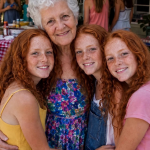
Julia Roberts has spent decades as one of Hollywood’s most recognizable faces, known for a smile that can light up a screen and a presence that feels both larger than life and surprisingly approachable. That public image of warmth and resilience has become so familiar that it is easy to forget the private chapters that shaped the woman behind it. Like many people who live much of their lives in view of others, she has carried personal losses and family complexities that never fully appear in red-carpet photographs or promotional interviews. The contrast between the bright exterior and the quieter interior is not a contradiction. It is simply the reality of a life lived under unusual pressure.
Roberts has never built her public persona around detailed confessions. She tends to protect the boundaries of her private world, especially when it comes to family. Yet over the years, pieces of her story have emerged through careful interviews and the inevitable attention that follows any high-profile family event. The death of her mother, Betty Lou Bredemus, after a battle with lung cancer left a lasting mark. Roberts has spoken of her mother’s strength in raising children largely on her own and of the practical, no-nonsense wisdom she offered. Those memories surface in small ways—when her own children ask questions, when ordinary moments trigger recollection—reminding her that parental influence continues long after a parent is gone.
Another profound loss came with the death of her half-sister Nancy Motes in 2014. The circumstances were painful, and the aftermath included public statements and conflicting accounts from people close to the situation. For any family, the death of a sibling is disorienting. When that loss becomes part of a larger public narrative, the emotional weight increases. Roberts and her family issued a brief expression of heartbreak at the time and then largely stepped back from further commentary. That choice itself reveals something important: not every private grief needs to be processed in full view of an audience. Some pain is simply carried, day by day, without performance.
Family relationships have never been simple in the Roberts household. Her brother Eric has spoken openly in recent years about periods of estrangement, the consequences of his own struggles with addiction, and the long process of accountability and repair. Julia’s decision years ago to support the mother of Eric’s daughter during a difficult custody period created lasting tension. Time and distance have allowed some softening, but the history remains part of the family’s complicated map. These dynamics are familiar to many people who have watched addiction or conflict fracture relationships. What distinguishes Roberts’ approach is her consistent preference for privacy. She has not used interviews to settle scores or rewrite the past. She has simply continued living and parenting on her own terms.
Her marriage to cinematographer Daniel Moder and the raising of their three children have provided a steady center. Roberts has described the ordinary work of parenting—checking on sleep, sending safety texts, maintaining connection as the children grow older—as the part of life that keeps her grounded. She has also spoken about shared practices such as meditation and simple rituals that help the family navigate difficult seasons. These details matter because they show a deliberate effort to create stability inside a life that could easily become chaotic. Fame does not remove the need for structure, sleep, or emotional regulation. If anything, it makes those foundations more necessary.
The public fascination with Roberts often focuses on the surface—the smile, the roles, the enduring star power. Yet the more interesting story may be the quieter discipline required to keep showing up after loss. Grief does not announce a clear endpoint. It changes shape. Some days feel heavier than others. The people who manage to continue contributing, creating, and caring for others are rarely doing so because the pain has disappeared. They are doing so because they have found ways to carry it without letting it define every decision.
There is also a broader cultural lesson in how Roberts has handled visibility. Modern celebrity culture often rewards constant disclosure. The expectation that public figures should narrate their pain in real time can create pressure that compounds the original loss. Roberts has largely resisted that pressure. She appears when she has work to promote, speaks thoughtfully when she chooses, and otherwise protects the space required for ordinary family life. That restraint is not coldness. It is a form of self-preservation that many people in high-visibility roles eventually learn is essential.
For audiences who have followed her career since the early breakthroughs, the continuity of her public warmth can feel reassuring. It suggests that a person can experience profound private difficulty and still offer generosity on screen and in public settings. The smile is not a denial of grief. It is evidence that grief and engagement with life can exist at the same time. Many people who have lost parents or siblings will recognize that dual reality. The ability to laugh, work, and care for children does not erase the absence. It simply allows life to keep moving.
Roberts’ story ultimately resists tidy resolution. There is no single turning point after which everything became easy. There are instead accumulated choices: the choice to protect privacy, the choice to invest in family routines, the choice to keep working at a high level without requiring the audience to witness every private struggle. Those choices have allowed her to sustain a long career while raising a family and navigating the inevitable losses that accompany a full life.
In the end, the brightest public smiles often belong to people who have learned how to hold more than one truth at once. Julia Roberts has given audiences decades of memorable performances. Behind them sits a quieter record of endurance—the daily work of remaining present for the people who matter most, even when the weight of the past is still felt. That kind of steady, unspectacular strength may be the most lasting part of her story.
Most Popular!
-
 When an Absent Parent Returns: Boundaries, Time, and the Limits of Making Amends
-
When Secrets in the Home Become Dangerous: Recognizing Control, Betrayal, and the Path Back to Safety
-
The Quiet Crisis Next Door: Loneliness, Small Gestures, and What We Miss in Ordinary Neighborhoods
-
When a Community Refuses to Forget: Memorials, Missing Children, and the Complicated Search for Meaning
-
High School Cruelty, Body Shame, and the Quiet Work of Reclaiming Your Place
-
James Spader’s Quiet Rebellion: Why One of Hollywood’s Most Private Actors Still Fascinates Us
-
Shared Spaces, Small Cruelties, and the Quiet Power of Choosing Kindness on Vacation
-
When a False Accusation Echoes Across Decades: Trust, Silence, and the Long Path Back to Truth