It was our first family trip to the beach since my newborn son Oliver was born. I had finally given in to my eight-year-old daughter Sophie’s repeated requests for a day by the shore. In the weeks after Oliver’s arrival Sophie had grown noticeably quieter, pouring her own cereal and learning to match her socks without being asked so she would not disturb the baby. The beach outing was meant to show her that she still mattered just as much as before.
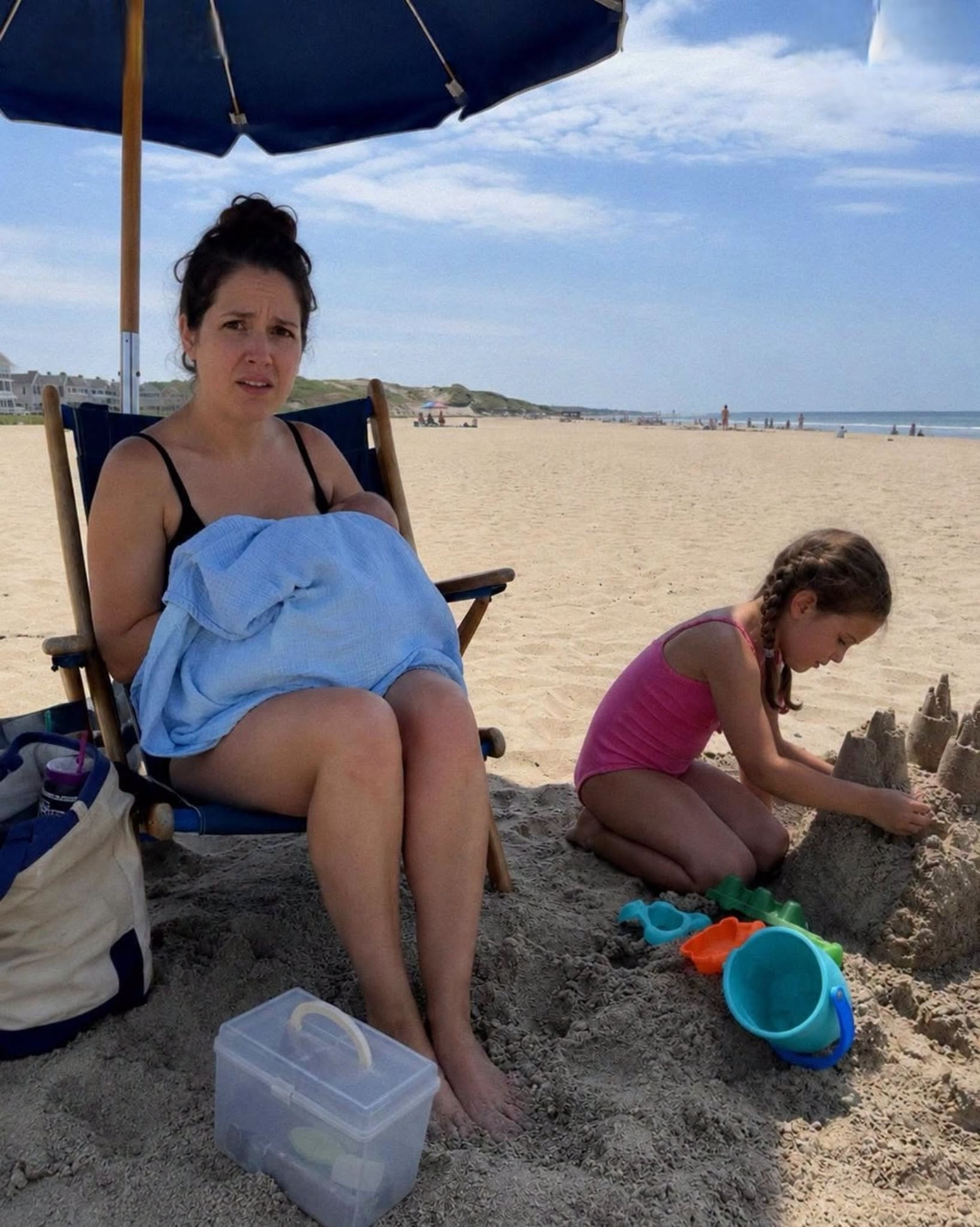
We arrived loaded with towels, snacks, and extra onesies. Sophie immediately began building an elaborate sandcastle while Oliver slept peacefully in the shade. When he woke fussing and hungry, I sat under our umbrella, nestled him securely in my arms, and draped a lightweight muslin blanket over us to maintain privacy while I fed him.
Then came a sharp scoff from nearby. I looked up to see an aggressive stranger marching toward us with her smartphone raised and recording. She announced that breastfeeding in public was disgusting and that there were children and men present. I told her I was covered and simply feeding my baby. She stepped closer, trying to get a better angle under the umbrella, and demanded that I use a restroom.
The situation escalated when she panned her camera toward my young daughter and newborn son. Before I could respond, Sophie stood up. She dusted the sand from her knees, walked straight in front of the lens, and looked the woman directly in the eye. With the clear voice of a child who had been watching carefully, Sophie asked a single, simple question: “Where is your child?”
The woman blinked, caught off guard. When she replied that she did not have one with her, Sophie stared at the phone and then back at the woman’s flushed face. “Then why are you telling my mom how to feed hers?” The entire beach went silent. A grandmother two umbrellas away began to applaud quietly, and a nearby father told the stranger she was manufacturing a scene out of nothing.
Emboldened by my daughter’s courage, I found my voice again. I asked the woman to lower her device and leave us alone. Humiliated and furious, she turned on her heel and walked quickly toward the parking lot without another word. In the minutes that followed, several other parents came over to check on us and express support. The incident that could have left me feeling exposed and ashamed instead became a moment of unexpected solidarity.
Days later the story of the beach confrontation reached the local community. When the woman attempted to secure an appointment on a recreation committee, neighbors who had witnessed the event promptly shared what they had seen. Her application was rejected, and community support for her withdrew. Eventually she tracked down our house and stood on the front porch with trembling hands to offer a genuine apology.
She showed us her phone to prove that she had permanently deleted the video and ensured her friends had done the same. Before accepting the apology, I asked her to speak directly to Sophie as well. The woman turned to my daughter and offered a humble, thorough apology for her behavior. Sophie studied her for a moment before asking one final, unforgettable question: “Did you learn not to record people’s babies?”
The woman winced and softly answered yes. The exchange was not dramatic, but it felt complete. In the following weekend we returned to the exact same spot on the beach. As I fed Oliver beneath our umbrella without hiding behind a protective shield, and watched Sophie happily rebuild her sandcastle, a profound sense of peace settled over me. For the first time since my son was born, I knew with absolute certainty that I was enough for both of my children.
That afternoon taught me something I had not fully understood before. Children notice far more than adults often give them credit for. Sophie had watched the way I tried to shrink myself to avoid conflict, and when the moment came she chose to speak up with a clarity that cut through the noise. Her simple question reminded everyone present that the conversation about feeding a baby should begin and end with the child’s well-being rather than the comfort of strangers.
I no longer measure my success as a mother by how invisible I can make myself in public. I measure it by the confidence I see growing in my daughter and the security my son feels in my arms. The beach that once felt like a place of potential judgment now feels like a place where we can simply be. The woman who tried to shame us ultimately gave us a story we tell with pride rather than embarrassment. Sometimes the bravest voice on the beach belongs to the smallest person present.
Most Popular!
-
 The Ultimate Wedding Revenge: When the Mother Who Abandoned Her Six Daughters Showed Up with Her Millionaire Boss, the Bride Opened a Box That Destroyed Lives Forever
-
My Husband Abandoned Me With Twin Babies for a Luxury Fishing Trip — When He Returned, I Had Already Packed His Bags
-
The Three-Dollar Miracle: How a Dust-Covered Vase Revealed a Heartbreaking Decades-Old Secret
-
The $80,000 Battle to Erase a Birthmark: Why One Mother Risked Everything for Her Daughter’s Future
-
The Silent Thief: Why Millions of Men Are Living with a Time Bomb They Can’t See
-
The Final Curtain Falls: Beloved Sanford and Son Legend Hal Williams Gone at 91
-
Found at a Yard Sale: This “Useless” Vintage Contraption Is Actually a Forgotten Piece of Human History
-
The Hidden Danger at the Funeral: Why a Viral Doctor Is Asking People to Rethink Kissing the Deceased