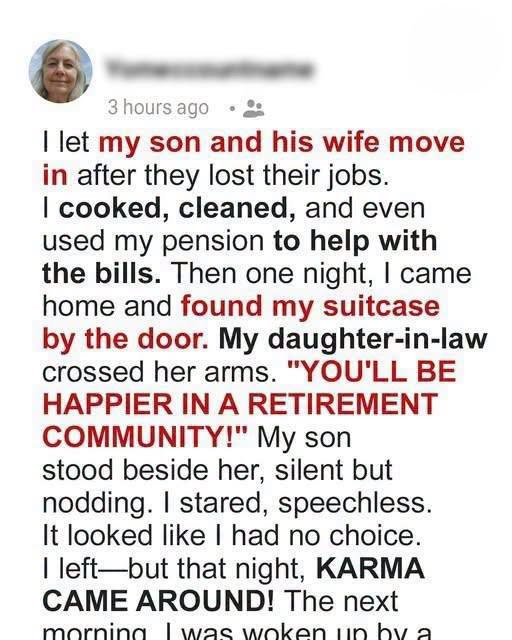
I never expected to be standing on my own front lawn with a suitcase while my son changed the locks. He had shown up with papers and two police officers, claiming I was no longer safe to live alone and that he had legal authority to take control of the property. I had raised him in that house, paid it off over decades, and now he was treating me like a tenant who had overstayed her welcome.
The weeks leading up to that day had been confusing. My son had become increasingly involved in my finances and medical decisions after I had a minor fall. He said he was worried about my memory and wanted to help. I trusted him because he was my only child. I signed documents he placed in front of me without reading every line, believing he had my best interests at heart.
After the eviction, I stayed with a friend while trying to understand what had happened. My son stopped answering my calls. The few times we spoke, he told me the house was being sold to pay for my care and that I would be moved into assisted living. He spoke to me like I was already gone, like my wishes no longer mattered.
I eventually contacted an old friend who worked in elder law. She helped me request copies of the documents I had signed. When we reviewed them together, we discovered that my son had transferred the house into his name and given himself power of attorney without proper explanation of what those papers actually meant. The eviction had been legal on paper, but the process had relied on my trust rather than full understanding.
The truth that eventually came out was even more painful. My son had been struggling with serious gambling debts. He had used my house as collateral for loans without my knowledge and was facing pressure from people he owed money to. Removing me from the property and selling it quickly had become his way of solving his own financial problems.
Learning this broke something inside me. The son I had raised, the boy I had stayed up with during illnesses and cheered for at every game, had seen me as a resource to be used rather than a mother to be protected. The betrayal felt deeper than anything I had experienced in my long life.
With legal help, I was able to challenge the transfer of the house. Because I could show that I had not fully understood the documents and that my son had a clear conflict of interest, the court eventually returned ownership to me. The process took months and cost money I did not have, but it restored my home and my dignity.
During those difficult months, I also discovered how many people cared about me. Neighbors, old coworkers, and friends from church stepped forward with support. One neighbor had noticed unusual activity at the house and had quietly taken photos that later helped my case. I realized I was not as alone as I had felt when my son changed the locks.
My relationship with my son never fully recovered. He moved away after the legal proceedings and we speak only when necessary. I still love him, but I no longer trust him with my safety or my finances. That boundary has been painful to maintain but necessary for my peace of mind.
Today I live in my house again, surrounded by the memories I built over decades. I have updated my legal documents with clear instructions and have chosen trusted people outside my immediate family to help if I ever need support. The experience taught me that even family members can make dangerous choices when they are desperate.
The eviction that once felt like the end of my life actually became the beginning of a stronger chapter. It forced me to confront hard truths about my son and about my own habit of trusting without question. It also showed me how resilient I could be when everything I had worked for was suddenly at risk.
I still think about that day on the lawn sometimes. The shock and humiliation have faded, but the lesson remains clear. Protecting yourself is not selfish, even when it means standing against your own child. In my case, that difficult stand saved more than my house. It saved my sense of self and my ability to face the future on my own terms.
Most Popular!
-
 He Brought His Mistress to Our Fourth of July BBQ and Told Me Not to Make a Scene So I Ruined His Life in Front of Everyone
-
The Ultimate Act of Betrayal: My Husband Thought He Could Buy His Way Out of Fatherhood But He Didn’t Know I Had Been Keeping Receipts for Years
-
My Fiancée Vanished Ten Years Ago But When Her Son Saw Her at a Resort I Discovered a Heart-Stopping Secret That Should Have Been Impossible
-
My Childhood Bully Swept Me Off My Feet with a Romantic Proposal But on Our Honeymoon He Handed Me a Letter That Exposed the Sickening Truth
-
The Heartbreaking Secret My Grandfather Hid Behind Every Glass of Grape Juice
-
I Found a Hidden Backpack Two Days Before My Wedding: What Was Inside Ended Everything Before I Could Walk Down the Aisle
-
The Ultimate Birthday Betrayal: My Daughter’s Classmates Used My Home as a Pit Stop and the Truth in the Group Chat Left Me Shattered
-
The Hidden Maternal Link: Scientists May Have Finally Unlocked the Gut Microbiome Secret Behind Autism