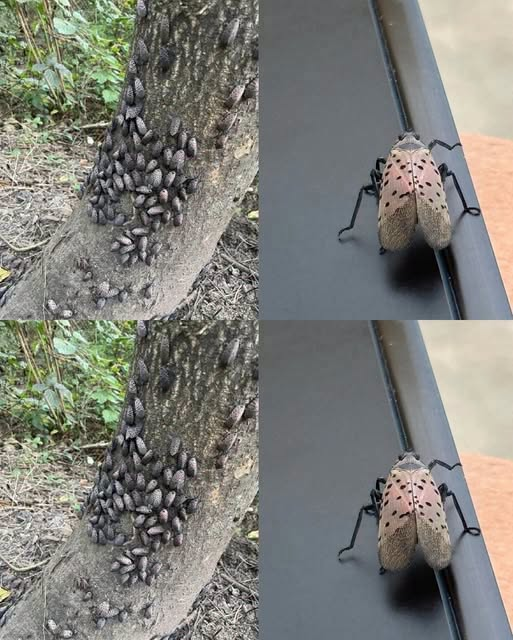
That eye-catching red insect marching across your garden might look striking, but it could be signaling a serious threat to your backyard ecosystem. The Spotted Lanternfly, with its distinctive bright red hindwings and spotted appearance, has become one of the most problematic invasive species in many regions. Understanding this pest and taking action quickly can help protect your plants, trees, and local environment from significant damage.
Identifying the threat
Adult Spotted Lanternflies are roughly one inch long with grayish forewings featuring black spots. Their most distinctive feature appears when they fly or are disturbed—the bright red hindwings with black spots and white bands become visible. Nymphs (younger stages) are black with white spots initially, then develop red patches as they mature.
These insects are planthoppers that feed on plant sap using piercing-sucking mouthparts. While they prefer the invasive Tree of Heaven, they feed on over 70 different plant species including grapevines, fruit trees, hops, and various hardwood trees. Their feeding weakens plants and creates honeydew—a sticky substance that promotes sooty mold growth, further damaging vegetation.
The ecological and economic impact
Spotted Lanternflies pose significant threats to agriculture and local ecosystems. Vineyards and orchards face particular risk, with heavy infestations potentially destroying crops and requiring expensive control measures. The honeydew they excrete attracts other pests and creates unsightly black mold that can kill understory plants and affect tree health.
The invasive nature of this species means it lacks natural predators in many areas where it has spread. Without intervention, populations can explode rapidly, creating widespread damage to both cultivated and wild plants. Early detection and control efforts represent the most effective strategy for limiting their impact.
Effective control strategies
Early detection: Regular inspection of your property, particularly trees and vines, helps identify infestations before they become severe. Look for the distinctive insects, their egg masses (which look like mud smears), and signs of honeydew or sooty mold.
Mechanical removal: For small infestations, physically removing insects and egg masses can be effective. Scrape egg masses into alcohol or hand sanitizer, and destroy adult insects when found.
Tree banding: Sticky bands wrapped around tree trunks can trap nymphs as they crawl up to feed. Check and replace bands regularly to maintain effectiveness.
Professional treatment: For significant infestations, consult local agricultural extension services or pest control professionals who understand appropriate treatment options for your specific area and plant types.
Prevention measures
Reducing the spread of Spotted Lanternflies requires community-wide efforts:
- Don’t move firewood or outdoor equipment from infested areas
- Check vehicles and outdoor items for hitchhiking insects or egg masses
- Report sightings to local agricultural authorities
- Support community control efforts and education initiatives
The importance of rapid response
Early intervention makes a significant difference in controlling Spotted Lanternfly populations. The longer an infestation goes unchecked, the more difficult and expensive it becomes to manage. Individual property owners play crucial roles in broader regional control efforts through vigilance and prompt action.
Local agricultural departments and university extension services often provide specific guidance for your area, including treatment recommendations and reporting procedures. Taking advantage of these resources helps coordinate effective community responses to this invasive threat.
Protecting your backyard investment
Your landscape represents significant investment in time, money, and effort. Protecting it from invasive pests like the Spotted Lanternfly preserves both aesthetic value and ecological health. Regular monitoring and prompt response to potential threats help maintain the beauty and functionality of your outdoor spaces.
The striking appearance of adult Spotted Lanternflies can actually help with identification once you know what to look for. Their bright red hindwings make them relatively easy to spot compared to many other garden pests. Use this visibility to your advantage by staying alert and taking action when you see them.
Creating a comprehensive defense strategy
Effective pest management involves multiple approaches rather than relying on single solutions. Combining mechanical removal, appropriate treatments, and prevention measures creates the strongest defense against invasive species. Working with neighbors and community groups amplifies individual efforts and creates more effective regional control.
Your backyard can serve as both personal sanctuary and part of larger ecosystem health. Taking responsibility for managing invasive threats like the Spotted Lanternfly contributes to broader environmental protection while preserving the beauty and health of your own property.
The flashy red invader demands attention and action. Don’t wait until significant damage occurs before responding. Early detection and prompt control measures represent your best defense against this problematic pest. Stay vigilant, act quickly when you spot them, and help protect both your backyard and your community from the threat of Spotted Lanternflies.
Your proactive approach to this invasive species helps preserve the beauty and health of your outdoor spaces while contributing to larger efforts to control their spread. The time to declare war on this flashy red threat is now—before small problems become major infestations that are much harder to manage.
Regular inspection and quick response create the best defense against invasive pests. Your diligence in protecting your property contributes to healthier local ecosystems and more beautiful communities for everyone. The Spotted Lanternfly may be eye-catching, but its impact demands serious attention and decisive action. Stay alert and protect what you’ve worked hard to create.
Most Popular!
-
 The Wedding Day Heartbreak That Turned Into a Brutal Lesson: How a Grandmother’s Revenge Left the Bride in Tears
-
The Final Silence of an Outlaw: The Complicated, Unsolved Legacy of Country Icon David Allan Coe
-
My Son Shaved His Head for His Cancer-Stricken Girlfriend – But When Her Mother Called, I Feared the Worst
-
The Constitutional Clash of the Century: Why a Single Federal Court Ruling Has the Entire Military on Edge
-
12 Toxic Habits of the Elderly: Why Your Loved Ones Are Pushing Everyone Away (And Don’t Even Know It)
-
She Didn’t Cut Her Hair for 25 Years – Then She Made a Choice That Left Everyone Stunned
-
The Grocery Store Stranger Who Unlocked My Wife’s 12-Year Secret
-
The Botched Execution Nightmare: Death Row Inmate’s Attorney Reveals Chilling Secret Behind Imminent Lethal Injection