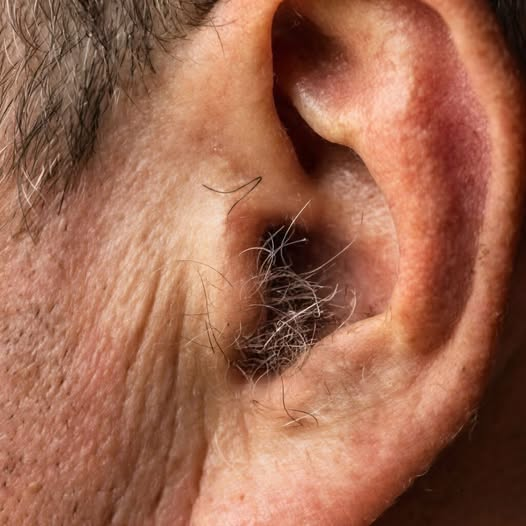
That moment in front of the mirror when you spot unexpected tufts of hair sprouting from your ears can be jarring. For many people hitting their 40s, 50s, and beyond, what once seemed like a minor grooming quirk turns into a noticeable feature that feels out of place in our youth-obsessed world. But before you panic or reach for the tweezers in frustration, it’s worth understanding that ear hair growth is far more common than most realize—and usually completely harmless. This natural change affects millions and stems from straightforward biological processes rather than any hidden disease. Exploring the reasons behind it can turn embarrassment into simple acceptance and smarter self-care.
At the heart of the matter lies our body’s shifting hormone landscape as we age. Hair follicles across different body areas respond uniquely to androgens like testosterone and its derivative DHT. While scalp hair often thins due to sensitivity in those follicles, the ones in the ears and nose become more active over time. This leads to vellus hairs—the fine, light ones we barely notice—transforming into thicker, darker terminal hairs. Men tend to experience this more prominently because of naturally higher androgen levels, but women can notice similar changes after menopause when estrogen dips and allows testosterone effects to stand out. Genetics play a big role too, so if your parents or grandparents had it, you’re more likely to see the same.
Evolution offers an interesting angle on why this happens at all. In our distant past, those ear hairs served practical purposes, acting like tiny filters to block dust, pollen, insects, and debris from reaching the sensitive inner ear. They also helped with temperature regulation and basic protection. Although modern life with headphones, hats, and cleaner environments reduces the need for such defenses, our DNA still carries these ancient instructions. Your body isn’t suddenly malfunctioning—it’s following an old blueprint that hasn’t fully updated for contemporary living. This perspective can make the change feel less like a flaw and more like a quirky remnant of human history.
Many people worry that sudden ear hair signals bigger health problems, such as heart disease or circulation issues. Older myths linked it to conditions like Frank’s sign (a crease on the earlobe), but current medical understanding largely dismisses direct connections for most cases. It’s primarily a cosmetic and age-related trait rather than a diagnostic red flag. That said, if you’re experiencing rapid changes alongside other symptoms like unexplained weight shifts, fatigue, or skin alterations, consulting a doctor makes sense to rule out hormonal imbalances or thyroid concerns. For the average person, though, it’s just another chapter in the aging process, much like graying hair or wrinkles.
Grooming ear hair safely becomes a priority once it starts drawing attention. The ear canal and outer ear are delicate zones prone to irritation or infection if mishandled. Sharp tweezers or unsafe tools risk pushing debris deeper or causing micro-tears. Instead, experts recommend battery-powered trimmers designed specifically for ears and nose, featuring rounded guards that prevent nicks. Small, curved safety scissors can work too if used carefully in good lighting. Avoid waxing or harsh chemical creams around this area, as the skin is thin and sensitive. Regular, gentle maintenance keeps things tidy without turning it into a stressful ordeal.
Beyond the physical, there’s a psychological side worth addressing. Society bombards us with flawless images, making any “extra” hair feel like a betrayal of youth. Yet embracing these changes fosters better body confidence and reduces unnecessary anxiety. Many men and women share stories online about finally accepting ear hair as part of growing older with grace. It joins other common aging markers like nose hair or bushier eyebrows, all driven by the same hormonal shifts. Reframing it this way shifts focus from hiding to understanding and caring for your body as it evolves.
Lifestyle factors can influence hair growth patterns to some degree. Maintaining a balanced diet rich in vitamins, staying active, and managing stress support overall hormonal health, though they won’t stop ear hair entirely. Some people explore laser treatments or professional electrolysis for longer-term reduction, but these are personal choices rather than necessities. Over-the-counter options exist too, but always patch-test and follow instructions to avoid skin reactions. The key is approaching grooming as routine self-care rather than a battle against time.
Interestingly, ear hair isn’t unique to humans in the animal kingdom—many mammals develop thicker protective hairs in sensory areas as they mature. This commonality reminds us that aging is a universal biological journey filled with adaptations. For those bothered by it aesthetically, modern grooming technology has made management easier than ever before. Simple tools available at any drugstore can restore smoothness in minutes, freeing you to focus on more important aspects of health and vitality.
In the end, hair sprouting on your ears is typically a benign sign that your body has accumulated decades of experience and hormonal fine-tuning. It’s neither unsettling nor alarming when viewed through the lens of science—it’s just normal variation in how humans develop over a lifetime. By separating fact from folklore and adopting safe habits, you can handle it confidently without letting it dim your self-image. Aging brings plenty of changes, and a few extra ear hairs are among the least concerning. They might even serve as a gentle reminder to appreciate the journey, quirks and all, while staying proactive about wellness at every stage.
Most Popular!
-
 Eggs, Cholesterol, and Timing: What Actually Matters for Most People
-
When a Partner Leaves With More Than a Suitcase: Protecting Yourself From Financial Betrayal
-
When Financial Support Meets Contempt: Recognizing Exploitation Inside a Marriage
-
Why Some Sensory Toys and Household “Hacks” Do Not Belong in the Microwave
-
When Grief Clouds Judgment: Misreading Silence and the Quiet Ways People Show Care
-
When One Partner Does All the Hosting: Recognizing Imbalance Before Resentment Takes Over
-
How Many Holes Are in a T-Shirt? What a Simple Puzzle Reveals About How We See
-
The Quiet Stories Inside Secondhand Objects: When a Thrift-Store Find Carries Someone Else’s History