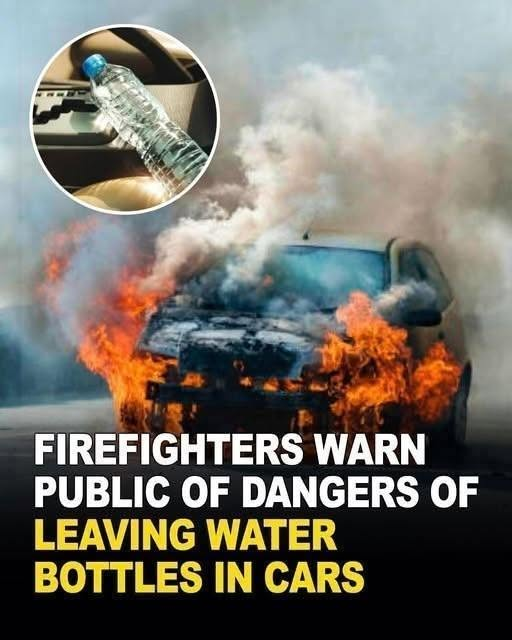
We’ve all done it. You finish your water, toss the bottle into the cup holder or passenger seat, and go about your day. It seems completely harmless—a simple plastic container that helps you stay hydrated. But on a hot, sunny day, that everyday item can transform into a hidden fire hazard capable of causing serious damage to your vehicle. Firefighters and safety experts have documented multiple cases where a clear plastic water bottle, left in direct sunlight, acted like a magnifying glass and ignited materials inside cars. The phenomenon is rare, but the consequences can be devastating, turning a routine errand into an expensive or dangerous emergency.
The science behind this risk is surprisingly straightforward. When sunlight passes through a rounded, clear plastic bottle filled with water, it refracts and concentrates the rays into a focused beam of intense heat. Much like kids using a magnifying glass to burn leaves on a summer afternoon, the water-filled bottle creates a hot spot that can reach temperatures high enough to scorch fabric, melt plastic, or ignite paper and upholstery. Tests conducted by fire departments have shown this concentrated beam easily exceeding 400 degrees Fahrenheit on dark surfaces within seconds. In a parked car, where temperatures inside can quickly climb well above 100°F even on mild days, the conditions become ideal for trouble.
Real-world incidents highlight how quickly this can escalate. One technician in Idaho noticed smoke coming from his truck seat after leaving a water bottle in the path of sunlight streaming through the window. The bottle had focused the light onto the fabric, creating burn marks and nearly starting a fire. Similar reports have surfaced from various parts of the country, with drivers returning to find scorched seats, melted dashboards, or small flames. The risk is highest with clear bottles containing clear liquid—cloudy or colored bottles, or empty ones, are far less likely to cause problems because they don’t refract light as effectively.
Modern car interiors often worsen the danger. Many vehicles feature dark-colored seats, dashboards, and floor mats designed to absorb heat, which makes them perfect targets for a concentrated sunlight beam. Add in the greenhouse effect of closed windows, and a parked car becomes a pressure cooker that amplifies the magnifying power of a simple water bottle. Families with children or pets who frequently leave bottles behind are especially vulnerable, as are commuters who grab a drink on the way to work and forget about it by day’s end.
Beyond the immediate fire risk, there are other concerns with leaving plastic bottles in hot cars. The heat can cause chemicals from the plastic to leach into the water, potentially making it unsafe to drink even if no fire starts. Repeated exposure to high temperatures degrades the bottle material faster, releasing microplastics and other substances. While the fire hazard grabs headlines, the everyday health implications of “baked” bottled water add another layer of caution for those who reuse containers.
Prevention is straightforward and requires minimal effort. The simplest solution is to never leave water bottles in your car, especially on sunny days. Make it a habit to take them with you when you exit the vehicle or store them in the trunk, glove compartment, or a shaded bag. If you must keep water accessible, opt for opaque or dark-colored bottles, metal containers, or insulated tumblers that won’t refract light the same way. Empty bottles should also be removed promptly, as even they can contribute to clutter that becomes fuel in a worst-case scenario.
For those who frequently travel with kids, establishing family rules around car cleanliness can prevent accidental oversights. Teach children to grab their bottles when leaving the vehicle, and do a quick sweep before locking up. During summer months, parking in shaded areas or using windshield sun shades provides an extra layer of protection by reducing overall interior heat and direct sunlight exposure. These small habits take almost no time but can eliminate a surprising risk many drivers never consider.
Fire safety experts emphasize that while water bottle fires remain relatively uncommon, they’re entirely preventable. Departments across the country have run demonstrations showing how quickly a focused beam can ignite materials, using the tests as educational tools during community safety events. Their message is consistent: treat clear plastic water bottles like any other potential hazard in your vehicle. Just as you wouldn’t leave matches or flammable liquids unsecured, be mindful of items that can concentrate sunlight.
This issue also ties into broader car safety awareness during extreme weather. Hot cars pose multiple threats beyond fires, including rapid temperature spikes dangerous for children and pets. Combining the water bottle risk with these known dangers creates a compelling case for more mindful habits when it comes to what we leave inside our vehicles. A moment of forgetfulness on a bright day can lead to costly repairs, insurance claims, or far worse outcomes.
For environmentally conscious drivers, the advice aligns well with reducing single-use plastics overall. Switching to reusable bottles made of stainless steel or other non-transparent materials not only eliminates the fire risk but also supports sustainability goals. Many find that investing in quality insulated bottles improves their hydration habits while solving multiple problems at once. The initial cost quickly pays for itself through convenience and safety.
Parents and caregivers should pay special attention during school runs, sports practices, and family road trips. Kids often leave half-full bottles behind, creating perfect conditions for the magnifying effect as the car sits idle in parking lots. A quick end-of-day check can become part of your routine, much like ensuring windows are up and doors locked. These small actions protect your investment in your vehicle while modeling responsible behavior for younger family members.
Mechanics and detailers occasionally see the aftermath firsthand—scorched seats, melted trim, and lingering smoke damage that requires professional cleaning or replacement. The repair costs can easily run into hundreds or thousands of dollars, depending on the extent of the damage. Insurance may cover some incidents, but preventing them entirely saves time, money, and hassle while avoiding potential gaps in coverage for negligence-related claims.
As temperatures rise with changing climate patterns, awareness of these lesser-known vehicle hazards becomes increasingly important. What once seemed like an urban legend or exaggerated warning has been proven through real incidents and controlled tests. Staying informed and adjusting simple habits keeps you and your loved ones safer on the road and in parking lots.
The next time you reach for a refreshing drink during your commute or errands, remember the potential danger hiding in plain sight. That ordinary water bottle sitting innocently in your passenger seat could become the spark that changes everything if left unchecked. By developing the habit of removing bottles and other light-focusing items, you protect your car, your safety, and your peace of mind.
Driving already comes with enough variables and risks. Don’t let something as simple as a forgotten water bottle add to them. Take a moment to clear your vehicle at the end of each trip, especially during the hottest months. Your future self—and potentially your insurance company—will thank you for the extra care. Small preventive steps like this one contribute to safer roads and fewer unexpected emergencies, allowing you to focus on what truly matters: getting where you need to go without unnecessary drama or danger.
Stay vigilant, stay hydrated the smart way, and keep your car free of hidden hazards. That refreshing bottle of water is great for your body, but only when handled with awareness of its surprising power under the sun.
Most Popular!
-
 The Redistricting Reckoning: Virginia Courtroom Defeat Leaves Democrats in Chaos and Republicans Poised for Gains
-
The Microphone From Hell: How My Vile Mother-in-Law Tried to Destroy My Wedding—And Ended Up Humiliating Herself Instead
-
The Terrifying Discovery in the Lake: My Search for the Truth Behind the Eerie Underwater Orbs
-
The Horror at Skeleton Bridge: A Young Woman’s Fatal Leap, the Forgotten Rope, and the Chilling Three-Word Excuse That Shocked a Nation
-
That Quiet Bedroom Habit Could Be Quietly Raising Your Stroke Risk While You Sleep
-
The Risky Decision I Made to Help My Shy Son Go to Prom—and the Beautiful Truth That Left Me in Tears
-
The Timeless Beauty and Quiet Strength of Bo Derek: Where the Icon Is Today and How She’s Living Now
-
The Devastating Truth Behind a Family Dog and Infant Tragedy That Every Parent Needs to Understand