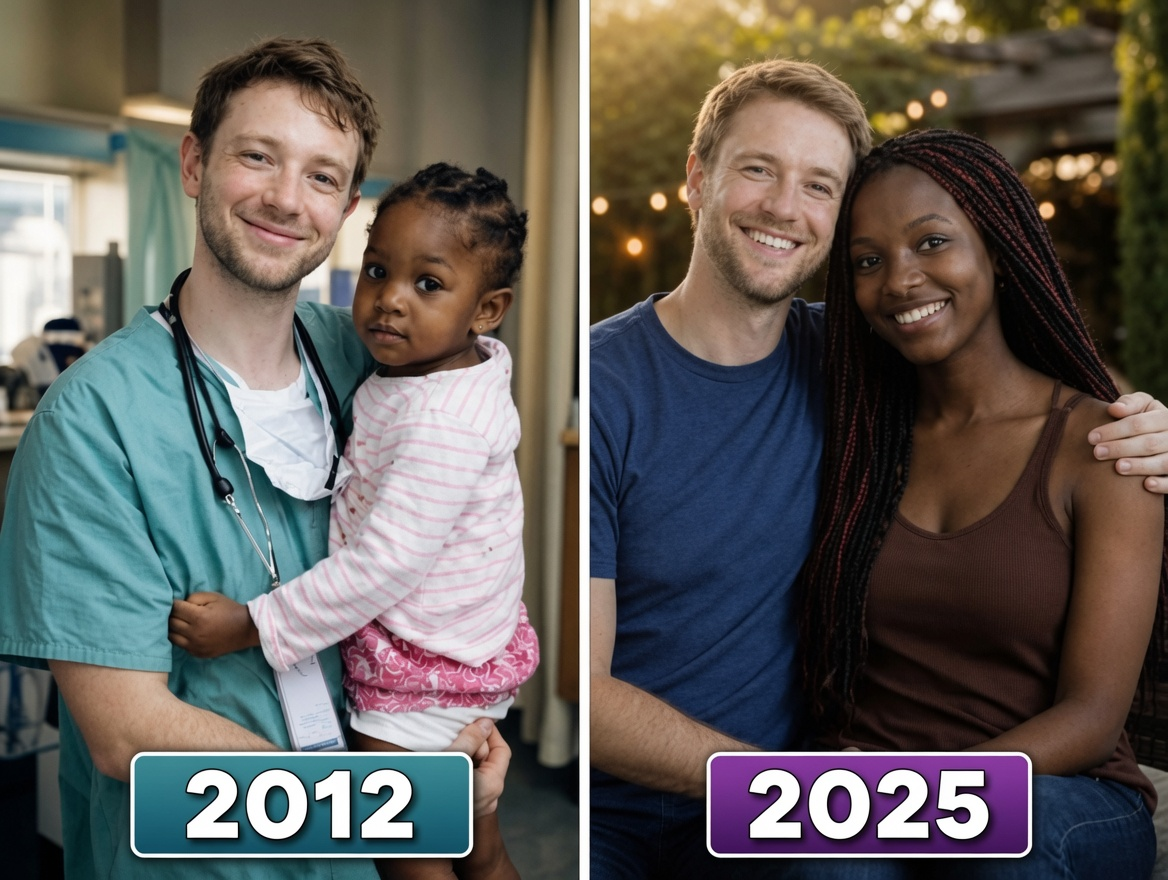
The day I brought Mia home from the orphanage was the happiest day of my life. She was five years old, tiny for her age, with wide brown eyes that held both fear and cautious hope. I had waited years for this moment — filling out endless paperwork, attending training sessions, and preparing a bedroom with soft pink walls and a reading nook filled with books I hoped she would love. As a single mother who had always dreamed of having children but never found the right partner, adoption felt like the most natural path for me. Mia didn’t speak much during those first weeks. She would watch me carefully, as if waiting for me to change my mind and send her back. But slowly, with patience, homemade pancakes, and bedtime stories, she began to trust that this was her forever home.
Thirteen years passed in what felt like the blink of an eye. Mia grew into a bright, compassionate teenager who loved art, played soccer, and had a laugh that could light up the darkest room. We had built a beautiful life together. We traveled to the beach every summer, celebrated birthdays with silly traditions, and created inside jokes that only we understood. She called me Mom without hesitation, and I loved her with a depth I never knew was possible. People often commented on how much we looked alike, even though we shared no blood. I would smile and say that love makes a family, not DNA. For thirteen years, that belief felt rock solid. Until the afternoon everything changed with one glance at her phone screen.
It was a ordinary Tuesday. I had come home early from work and found Mia in the kitchen making a snack. Her phone was on the counter, screen still lit from a recent notification. As I reached for a glass of water, my eyes accidentally caught the message preview. The sender’s name was unfamiliar, but the words stopped me cold: “I’ve been looking for you for years. I’m your biological mother. Please don’t be angry. I can explain everything.”
My heart slammed against my ribs. Mia noticed my expression and quickly grabbed her phone, but the damage was done. The color drained from her face. For a moment, neither of us spoke. Then the questions poured out. How long had she known? Who was this woman? Why now, after thirteen years of building a life together? Mia broke down in tears, admitting she had been secretly searching for her biological family for the past year. She had found her mother through an online DNA registry and had been exchanging messages for several weeks. She was afraid to tell me because she didn’t want me to feel like I wasn’t enough.
That night, our home felt different. The laughter that usually filled our dinners was replaced by heavy silence and careful words. I lay awake for hours, replaying every moment of our thirteen years together. Had I missed signs that she was curious about her past? Had I somehow failed to make her feel secure enough to share her feelings? The fear that I might lose the daughter I had raised gripped me with an intensity I wasn’t prepared for. Adoption had always been part of our story, but I had never imagined it could suddenly feel like a threat to everything we had built.
The following days were some of the most difficult of my life. Mia’s biological mother, Elena, wanted to meet. She explained in careful messages that she had been young and in an unstable situation when Mia was born. She had made the heartbreaking choice to place her for adoption, believing it was the best chance for her daughter to have a stable life. Now, after years of getting her own life together, she wanted the opportunity to know the young woman Mia had become. Part of me understood her pain. Another part felt a deep, primal fear that this woman could somehow take my daughter away from me.
We arranged a meeting in a neutral place — a quiet park with benches under old oak trees. Mia held my hand tightly as we waited. When Elena arrived, I saw the same wide brown eyes I had fallen in love with thirteen years earlier. The resemblance was undeniable. The conversation was emotional and careful. Elena shared her story of struggle, regret, and eventual healing. She thanked me for raising Mia with love and stability. I listened, trying to hold space for both my daughter’s needs and my own complicated feelings. Mia cried as she hugged the woman who had given birth to her. In that moment, my heart broke and expanded at the same time. I realized that love isn’t a limited resource. There was room for both of us in Mia’s life.
The months that followed tested every part of our family. Mia began spending time with Elena while still living at home with me. There were moments of jealousy, confusion, and adjustment. I had to learn how to share my daughter without feeling like I was losing her. Mia had to navigate the complex emotions of loving two mothers in different ways. Elena had to accept that she couldn’t rewrite the past or claim the years she had missed. Through it all, we chose honesty over secrecy and communication over resentment. Family counseling helped us find a new normal that honored everyone’s feelings.
Looking back, that phone screen moment wasn’t the end of our story. It was the beginning of a deeper, more authentic chapter. Mia learned that it’s okay to be curious about her roots without betraying the mother who raised her. I learned that being a parent means supporting your child’s full identity, even when it’s painful. Elena learned that love can grow in unexpected ways and that gratitude can heal old wounds. Together, the three of us created a new definition of family — one that includes biology and choice, past and present, blood and bond.
This experience taught me that adoption stories don’t end when the papers are signed. They continue evolving as children grow into adults with their own questions and needs. It also showed me the incredible resilience of the human heart. Love isn’t fragile. When given space to breathe and grow, it can expand to include more people rather than less. Mia is now eighteen and thriving. She maintains relationships with both of her mothers, and we have all grown through the process. The fear I felt that day in the kitchen has been replaced by a deeper appreciation for the beautiful, complicated journey we’ve shared.
For anyone walking through their own complicated family dynamics — whether through adoption, blended families, or unexpected revelations — please know you’re not alone. The feelings of fear, jealousy, and uncertainty are normal. What matters is how we respond to them. Choose openness when possible. Seek support when needed. Remember that your worth as a parent isn’t measured by biology but by the love, consistency, and presence you provide.
Mia still calls me Mom. She still comes to me for advice about school, boys, and life decisions. But now she also has Elena in her life — someone who adds another layer of love and understanding to her identity. Our family looks different than I imagined it would thirteen years ago, but it’s richer for the complexity. Love, I’ve learned, isn’t a competition. It’s a garden that grows bigger when tended with care, honesty, and courage.
That single glance at a phone screen stopped our comfortable routine, but it opened the door to something more beautiful and real. It forced us to face hard truths, have difficult conversations, and ultimately build stronger bonds. If you’re facing your own unexpected revelation, trust that you have the strength to navigate it. Families aren’t perfect. They’re real. And sometimes the most meaningful connections come from walking through the hardest moments together.
Thirteen years of raising Mia taught me what it means to be a mother. That one phone screen taught me that motherhood has no limits. Love doesn’t divide — it multiplies. And the family we choose, and the family that finds us, can create something more powerful than any of us could have planned alone.
Most Popular!
-
 The 5 That Changed Everything: How a Pair of Baby Shoes Brought Two Mothers Back to Life
-
Why Charlie Kirk and His Wife Are Being Targeted by an Online “Transvestigation” Hoax — And What This Dangerous Trend Really Means
-
The Flight Attendant Scolded a Struggling Mother — Until the Pilot’s Voice Came Over the Intercom and Changed Everything
-
Swollen Feet: The Silent Warning Sign Your Body Is Trying to Send You — And What to Do About It Before It Gets Worse
-
Everyone Misjudged This Tattooed Biker — Until the Truth Came Out and Changed How We See People
-
8 Subtle Signs Someone Secretly Resents You — And How to Protect Your Peace Without Losing Yourself
-
I Found Strange Black Grains Under My Mattress — What I Thought Were Insect Eggs Turned Out to Be Something Beautiful
-
What You Should Never Cook in a Cast Iron Skillet — And Why It Could Ruin Your Pan Forever