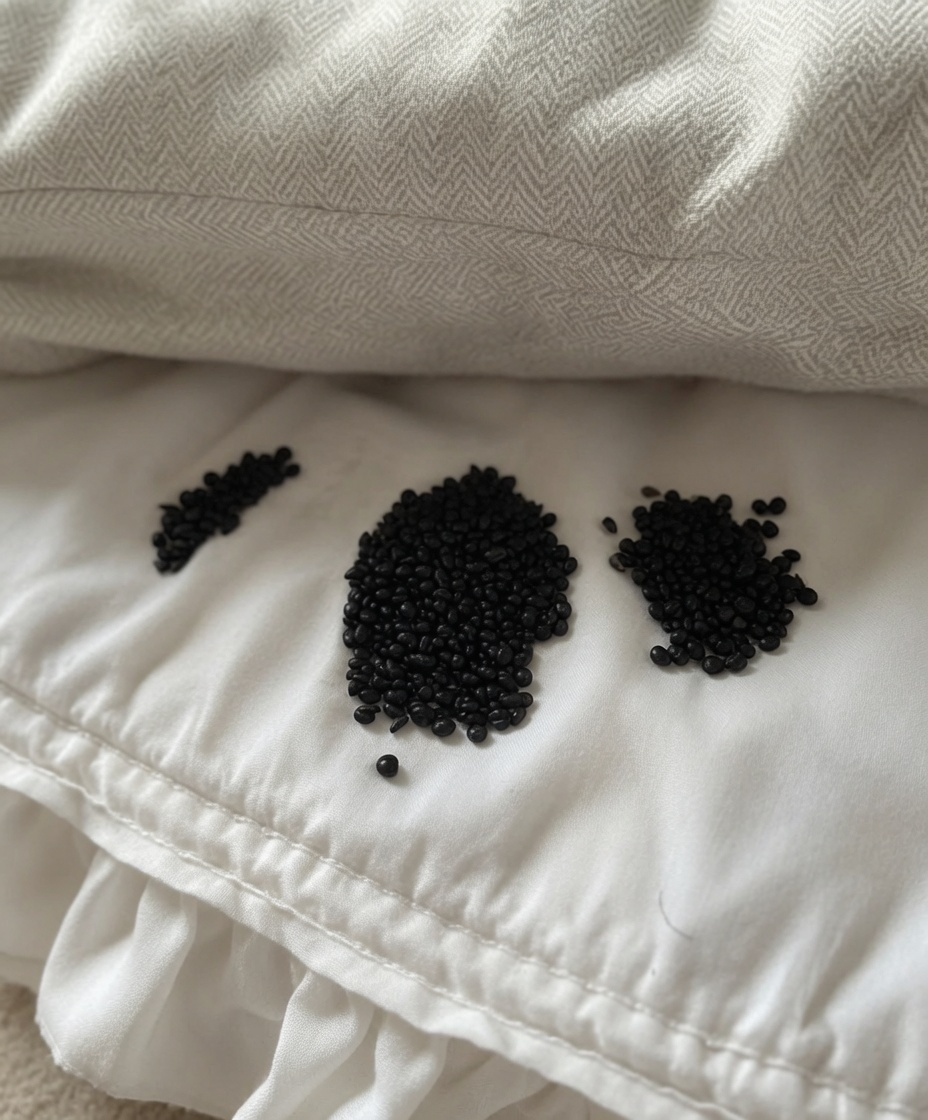
The house had been quiet for weeks after my grandmother passed away. At seventy-eight, she had lived a full life, but her absence left a silence that felt heavier than I expected. I had inherited her old Victorian home on Maple Street, the same house where I spent countless summers as a child, chasing fireflies in the backyard and listening to her stories on the porch swing. Now, at thirty-four, I was sorting through decades of memories, deciding what to keep and what to let go. The master bedroom, once filled with her lavender scent and soft classical music, felt both comforting and overwhelmingly empty. That’s when I decided to flip the mattress to air it out before bringing in my own things. What I found underneath changed everything I thought I knew about loss, love, and the quiet ways people say goodbye.
At first, I thought it was dirt. Small, black grains scattered across the box spring like tiny pepper flakes. My stomach dropped. I had heard horror stories about bed bugs, those resilient little creatures that could turn a peaceful home into a nightmare. I grabbed a flashlight and leaned closer, heart pounding. The grains were uniform, almost perfectly round, and clustered in small piles near the corners. Panic set in. I imagined calling an exterminator, tearing the room apart, and spending hundreds of dollars on treatments. The thought of tiny insects crawling through my grandmother’s things — the same blankets she had wrapped me in as a child — made me feel physically ill. I took several photos with my phone, then carefully vacuumed up a sample to show the professionals. I spent the rest of the afternoon researching bed bug eggs online, comparing images and reading horror stories from other homeowners. Every article confirmed my fears: small, dark, seed-like eggs that could hatch quickly and spread throughout the house.
I barely slept that night. I moved to the guest room and kept the light on, imagining tiny legs skittering across the floor. The next morning, I called a local pest control company and explained the situation. The technician promised to come by in the afternoon. While waiting, I decided to clean the entire room thoroughly. I pulled out the bed frame, vacuumed every corner, and wiped down the walls. That’s when I noticed something odd about the grains I had missed the day before. They weren’t moving. They weren’t clustered in the typical egg patterns I had seen in photos. And when I touched one with a gloved finger, it felt strangely smooth, almost like a tiny pebble rather than something organic.
Curiosity got the better of me. Instead of waiting for the exterminator, I took a few of the grains to the kitchen table and examined them under a magnifying glass I had found in my grandmother’s desk drawer. What I saw made me pause. They weren’t eggs at all. They looked like small, polished seeds — dark, rounded, with a slight sheen that caught the light. My heart raced for a different reason now. I remembered my grandmother’s garden, the way she spent hours tending to her flower beds and vegetable patches. She had always talked about planting “something special” for me, something that would bloom long after she was gone. Could these be the seeds she had mentioned?
I called my mother later that afternoon, describing what I had found. She was quiet for a long moment, then laughed softly through tears. “Those aren’t bug eggs, sweetheart,” she said. “Those are morning glory seeds. Your grandmother saved them for you. She wanted you to plant them in the garden so you’d have flowers every summer to remember her by. She called them her ‘midnight treasures’ because she harvested them at night when the pods opened.”
The realization hit me like a wave. I sat on the kitchen floor surrounded by the tiny black seeds, crying harder than I had at the funeral. These weren’t signs of infestation. They were love letters from my grandmother, hidden carefully under the mattress where she knew I would eventually find them. She had spent her final months collecting and drying the seeds from her favorite climbing vines, the same ones that had covered the trellis outside my childhood bedroom window. Each seed represented a promise — that beauty could grow from loss, that memories could bloom again every year, and that love doesn’t disappear when someone leaves. It simply changes form.
When the pest control technician arrived, I showed him the seeds with a mixture of embarrassment and joy. He examined them under his own magnifying glass and confirmed they were indeed morning glory seeds, not insect eggs. He laughed with me when I explained the story, then helped me carefully collect every last one into a small jar. “You’ve got yourself a beautiful inheritance,” he said before leaving. “Not many people get something like that.”
That evening, I sat on the back porch with the jar in my lap, watching the sunset paint the sky in the same soft pinks and oranges my grandmother had loved. I thought about all the summers I had spent with her, helping plant flowers and learning the names of every bloom in her garden. She had taught me patience, the way seeds need time in the dark before they can reach for the light. Now, years later, she was still teaching me the same lesson. Even in death, she had found a way to remind me that life continues, that beauty returns, and that love finds creative ways to stay with us.
The next weekend, I planted the seeds along the old trellis in the backyard. I watered them gently, whispering stories to the soil the way she used to do. Within days, tiny green shoots appeared, reaching toward the sun with the same determination I had seen in my grandmother her entire life. By midsummer, the vines had climbed high, covered in vibrant purple and blue flowers that opened every morning like tiny trumpets welcoming the day. Every time I looked at them, I felt her presence — not as a ghost, but as a living reminder that the people we love never truly leave us. They simply plant themselves in new ways, waiting for us to notice.
This experience changed how I view loss and inheritance. We often think of inheritance as money, property, or material things. But the real treasures are the memories, the lessons, and the small acts of love that continue to bloom long after someone is gone. My grandmother didn’t leave me a fortune in the bank. She left me flowers that return every year, a garden full of memories, and the quiet knowledge that love can be hidden in the most unexpected places — even under a mattress, disguised as tiny black seeds.
My children now help me tend the morning glories every summer. They ask about their great-grandmother, and I tell them stories while we water the vines together. The flowers have become our family tradition, a living connection to the woman who taught us all how to find beauty in ordinary things. Every morning when the blooms open, I feel her smiling down on us, reminding me that life is full of surprises if we’re willing to look closely enough.
The “insect eggs” under my mattress weren’t a problem to solve. They were a gift to cherish. They taught me that what looks like a crisis at first glance can turn out to be a blessing in disguise. They reminded me that love doesn’t end with death — it simply finds new ways to grow. And they showed me that sometimes the most beautiful things come from the darkest, most unexpected places.
If you’re going through your own season of loss or uncertainty, I hope this story brings you comfort. Look closer at the things that frighten you. Listen to the quiet messages hidden in everyday objects. The people who loved you are still speaking, even if their voices have changed form. Sometimes they whisper through flowers, through memories, or through tiny black seeds waiting patiently under a mattress for the right moment to bloom.
My grandmother’s final gift wasn’t just morning glories. It was the reminder that love is stronger than death, that beauty returns after every winter, and that the best inheritance isn’t measured in dollars but in the living things we pass down to those who come after us. Every summer when those purple flowers climb the trellis, I thank her for the lesson. And every time I see my children picking the blooms to make crowns for their hair, I know she’s smiling too.
The strange black grains under my mattress didn’t ruin my home. They saved it. They filled it with color, with memories, and with the kind of love that refuses to stay buried. And for that, I will always be grateful.
If you ever find something unexpected in your own home — whether it’s under a mattress, in an old drawer, or hidden in a closet — pause before you panic. It might not be a problem. It might be a message. It might be love, still trying to reach you in the only way it can. Open your heart to it. Plant it. Watch it grow. You never know what beautiful things might bloom from what first looks like darkness.
Most Popular!
-
 The 5 That Changed Everything: How a Pair of Baby Shoes Brought Two Mothers Back to Life
-
Why Charlie Kirk and His Wife Are Being Targeted by an Online “Transvestigation” Hoax — And What This Dangerous Trend Really Means
-
The Flight Attendant Scolded a Struggling Mother — Until the Pilot’s Voice Came Over the Intercom and Changed Everything
-
I Adopted a Little Girl — Thirteen Years Later, One Phone Screen Brought Everything to a Stop
-
Swollen Feet: The Silent Warning Sign Your Body Is Trying to Send You — And What to Do About It Before It Gets Worse
-
Everyone Misjudged This Tattooed Biker — Until the Truth Came Out and Changed How We See People
-
8 Subtle Signs Someone Secretly Resents You — And How to Protect Your Peace Without Losing Yourself
-
What You Should Never Cook in a Cast Iron Skillet — And Why It Could Ruin Your Pan Forever