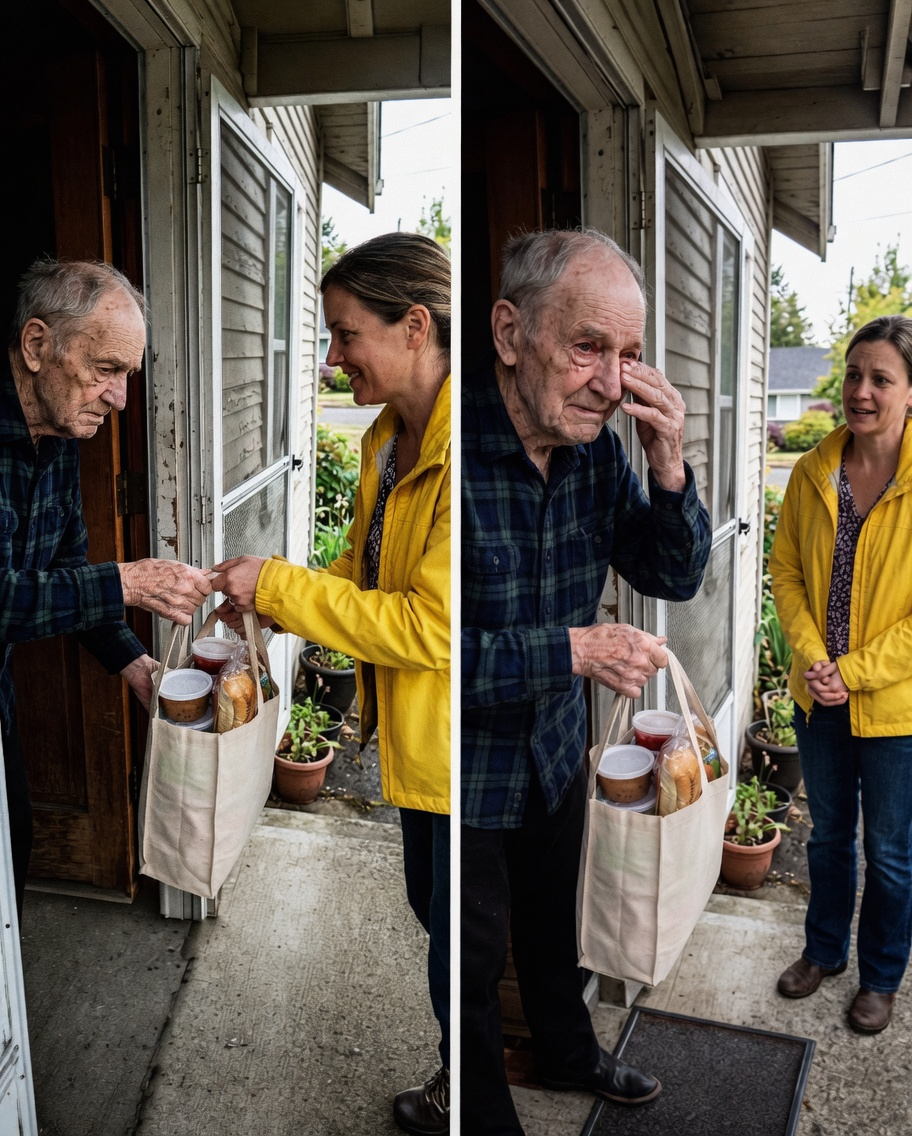
I still remember the first time I knocked on Mr. Harlan’s door with a warm plate of lasagna. He was the terror of Maple Street, the old man who yelled at kids for riding bikes too close to his lawn and called the police on anyone who parked in front of his house for more than five minutes. Everyone avoided him. But something about the way he sat alone on his porch every evening, staring at nothing, made me wonder if the anger was just a wall he had built to keep the world out. So I kept showing up, week after week, even when he slammed the door in my face or muttered that I was wasting my time. I never expected that simple act of kindness would one day change my life forever.
For seven years I brought him dinner every Sunday. Sometimes it was soup when he was sick, sometimes fresh cookies when the neighborhood kids had a bake sale. He never said thank you. He never invited me inside. Most of the time he would grunt, take the plate, and close the door without another word. My husband thought I was crazy. My friends told me I was enabling a mean old man. But I couldn’t shake the feeling that underneath all that gruffness was someone who had been hurt so badly he didn’t know how to be kind anymore. I kept coming back anyway, because kindness isn’t about getting something in return. At least that’s what I told myself.
The neighbors started calling me “the saint of Maple Street” behind my back, but I never felt saintly. I felt human. Mr. Harlan had lost his wife decades earlier and his only son had stopped visiting years ago. He was alone in a big empty house filled with memories he didn’t want to face. I started leaving the plates on the porch with a short note when he wouldn’t answer the door. “Thinking of you,” I would write. “Hope this warms you up.” Some weeks the plate came back clean on my porch the next day. Other weeks it sat untouched for days. I never stopped trying.
Then one rainy Tuesday morning, an ambulance pulled up to his house. Mr. Harlan had suffered a massive stroke in the middle of the night. He was rushed to the hospital, and for three weeks he lay in that bed fighting for his life. I visited every day after work, sitting quietly beside him even when he couldn’t speak. The nurses told me he had no other visitors. His son lived across the country and hadn’t returned any calls. I held his hand and talked about the weather, about the garden I was planting, about anything that might make him feel less alone. I don’t know if he could hear me, but I kept showing up anyway.
When the lawyer called me a month after the funeral, I assumed it was about some unpaid medical bill or a final piece of paperwork. I had helped arrange a quiet burial since no one else stepped up. I never expected to be asked to attend the reading of the will. When I walked into the office, Mr. Harlan’s son was already there, looking impatient and entitled. He had flown in just for the day, clearly expecting to inherit everything. The lawyer cleared his throat and began reading.
The first part of the will was straightforward. Mr. Harlan left his house and most of his savings to a local animal shelter, the one that had taken in the stray cats he secretly fed for years. His son’s face turned red with anger. Then the lawyer read the final paragraph, and the room went completely silent.
“To the only person who showed me kindness when I had given the world every reason not to,” the will said, “I leave the contents of my safe deposit box and the letter I wrote the night before my stroke. Elena, you reminded me that not everyone is cruel. Thank you for seeing the man behind the anger.”
Inside the safe deposit box was a stack of old savings bonds and stock certificates that had been growing quietly for decades. The total value was just over $1.4 million. But the real gift was the letter. In it, Mr. Harlan admitted he had pushed everyone away after losing his wife because he couldn’t bear the pain of loving and losing again. He wrote that my Sunday plates and quiet notes had slowly chipped away at the wall he had built. He called me the daughter he never had and asked me to use the money to live the life he wished he had been brave enough to live.
I sat in that lawyer’s office crying like a child while his real son stormed out without saying a word. I never expected anything from Mr. Harlan. I just couldn’t stand the thought of another human being eating alone every night. That simple act of kindness had come back to me in the most unexpected way possible.
I used part of the money to set up a scholarship fund in his name for kids who lost a parent young. The rest I put toward a small house with a big garden where I could grow vegetables and cook Sunday dinners for anyone who needed one. My husband and I still talk about Mr. Harlan every week. We keep one of his old plates on the mantel as a reminder that kindness is never wasted, even when it feels like no one is paying attention.
Sometimes the meanest people are the ones who need love the most. Mr. Harlan taught me that. He also taught me that you never really know what someone is carrying behind their anger until you take the time to look closer. I gave him dinner for seven years. He gave me a future I never dreamed of. And in the end, the grumpy old man on Maple Street left behind something far more valuable than money. He left behind proof that one person’s quiet kindness can change everything.
If you know someone who seems impossible to love, maybe try anyway. Bring them a plate of food. Leave a kind note. Show up even when they slam the door in your face. You never know whose life you might be saving — including your own. Mr. Harlan’s final gift wasn’t the money. It was the reminder that no one is beyond redemption, and that sometimes the hardest hearts are the ones that need the most patience.
I still set an extra place at the table every Sunday. Just in case someone needs to know they’re not alone. Because that’s what Mr. Harlan taught me, even if it took him seventy-eight years and a will to say it out loud. Kindness always finds its way home.
Most Popular!
-
 Eggs, Cholesterol, and Timing: What Actually Matters for Most People
-
When a Partner Leaves With More Than a Suitcase: Protecting Yourself From Financial Betrayal
-
When Financial Support Meets Contempt: Recognizing Exploitation Inside a Marriage
-
Why Some Sensory Toys and Household “Hacks” Do Not Belong in the Microwave
-
When Grief Clouds Judgment: Misreading Silence and the Quiet Ways People Show Care
-
When One Partner Does All the Hosting: Recognizing Imbalance Before Resentment Takes Over
-
How Many Holes Are in a T-Shirt? What a Simple Puzzle Reveals About How We See
-
The Quiet Stories Inside Secondhand Objects: When a Thrift-Store Find Carries Someone Else’s History