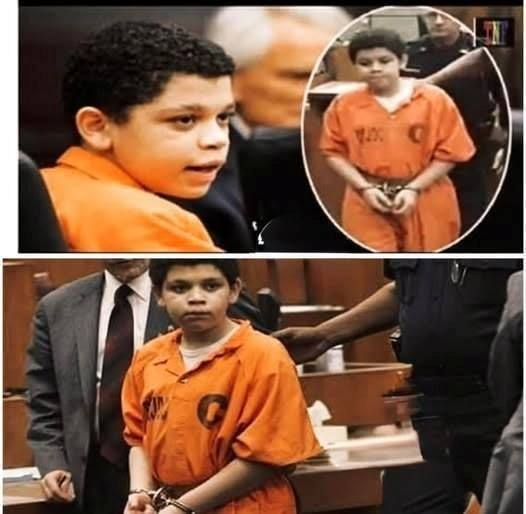
Imagine being 16 years old and told you will die in prison. No parole. No second chance. No light at the end of the tunnel. For 79 young people currently behind bars in the United States, this isn’t a nightmare scenario — it’s their daily reality. These are the forgotten children of the American justice system, juveniles sentenced to life without parole for crimes committed when their brains were still developing, their impulse control immature, and their ability to fully understand consequences limited. Their stories challenge everything we think we know about justice, redemption, and what it means to be human.
These 79 individuals represent the remnants of an era when “tough on crime” policies swept the nation. Many were sentenced before landmark Supreme Court decisions like Miller v. Alabama (2012) and Montgomery v. Louisiana (2016), which declared mandatory life without parole for juveniles unconstitutional. Yet even after those rulings, some states have been slow to revisit old cases, and certain exceptions still allow judges to impose the harshest possible sentence on children. The result is a small but heartbreaking group of people who entered prison as teenagers and may never see freedom again.
What makes these cases especially tragic is the science we now understand about adolescent brains. Research from neuroscience shows that the prefrontal cortex — the part responsible for decision-making, risk assessment, and long-term thinking — doesn’t fully mature until the mid-20s. A 15-year-old who makes a terrible, impulsive choice is not the same person they will be at 25, 35, or 45. Yet the justice system often treats them as irredeemable monsters rather than troubled kids who deserve a chance to grow and change. Many of these young offenders were themselves victims — of abuse, poverty, gang recruitment, or broken homes — before they ever became offenders.
Take the case of someone like Michael, sentenced at 17 for a robbery gone wrong that resulted in a death. He had no prior record, was acting under pressure from older gang members, and has spent the last 22 years earning multiple college degrees behind bars, mentoring younger inmates, and becoming a model prisoner. Stories like his are common among the 79. These aren’t hardened career criminals. Many were involved in group crimes where they played minor roles. Some were convicted under felony murder laws that hold every participant responsible for a death, regardless of intent. The punishment doesn’t always fit the individual.
The human cost extends far beyond the prison walls. Families are destroyed. Mothers grow old visiting their children through glass. Siblings grow up without knowing their brother or sister as free adults. Entire communities lose potential contributors — people who could have become teachers, counselors, artists, or simply productive citizens. The financial burden on taxpayers is enormous too. Housing one person for life in prison costs states hundreds of thousands of dollars more than releasing someone who has demonstrated genuine rehabilitation.
Critics of juvenile life without parole argue that it violates the principle of hope that should exist in any justice system. The Supreme Court has repeatedly recognized that children are different and deserve different treatment. Yet implementation has been uneven. Some states have resentenced their juvenile lifers and offered parole hearings. Others have dragged their feet, creating a patchwork system where justice depends more on geography than on the facts of the case. This inconsistency leaves the 79 in limbo — technically eligible for review in some cases, but still trapped in a system that often moves at a glacial pace.
On the other side, victims’ families understandably demand accountability. When a child commits a violent crime that destroys lives, the pain is real and lasting. No one wants to minimize that suffering. The challenge lies in balancing accountability with the recognition that teenagers can and do change. Many of the 79 have expressed deep remorse, participated in restorative justice programs, and shown through decades of behavior that they are no longer the impulsive kids they once were. Denying them any path forward raises serious moral questions about whether our justice system is truly about rehabilitation or simply permanent punishment.
Reform efforts are gaining momentum. Organizations like the Campaign for the Fair Sentencing of Youth and the Equal Justice Initiative continue pushing states to eliminate juvenile life without parole entirely. Several states have already done so. Public opinion is shifting as more people learn the science and hear the stories. Even some conservative voices have joined the call for reform, arguing that endless incarceration for redeemable young people wastes both lives and resources.
For the 79 still serving these sentences, every year that passes without review deepens the despair. Many entered prison before smartphones existed. They’ve grown into adults in environments designed to break people down. Yet some still hold onto hope, studying law books, writing letters, and believing that someday someone will see them as more than their worst mistake. Their resilience in the face of permanent hopelessness is both inspiring and heartbreaking.
As a society, we must ask ourselves what kind of justice we truly believe in. Is it one that writes off children as lost causes, or one that acknowledges human capacity for growth? The data is clear: the vast majority of juvenile offenders age out of criminal behavior. Keeping the redeemable ones locked up forever serves no public safety purpose and contradicts core American values of second chances.
The 79 forgotten children of the justice system deserve more than silence. Their cases force us to confront uncomfortable truths about race, poverty, trauma, and how we treat our most vulnerable young people. They remind us that every life has value and that true justice should include the possibility of redemption.
If these stories move you, consider learning more about juvenile justice reform. Support organizations fighting for fair sentencing. Vote for policies that prioritize rehabilitation. Most importantly, remember that behind every statistic is a human being who was once a scared child making a terrible decision — and who may now be ready to contribute positively if given the chance.
America has the power to correct this injustice. The question is whether we have the compassion and courage to do so. The 79 are still waiting for an answer.
Most Popular!
-
 The Ultimate Wedding Revenge: When the Mother Who Abandoned Her Six Daughters Showed Up with Her Millionaire Boss, the Bride Opened a Box That Destroyed Lives Forever
-
The Beach Shaming Disaster: What My 8-Year-Old Said to the Prying Stranger Left Everyone Speechless
-
My Husband Abandoned Me With Twin Babies for a Luxury Fishing Trip — When He Returned, I Had Already Packed His Bags
-
The Three-Dollar Miracle: How a Dust-Covered Vase Revealed a Heartbreaking Decades-Old Secret
-
The $80,000 Battle to Erase a Birthmark: Why One Mother Risked Everything for Her Daughter’s Future
-
The Silent Thief: Why Millions of Men Are Living with a Time Bomb They Can’t See
-
The Final Curtain Falls: Beloved Sanford and Son Legend Hal Williams Gone at 91
-
Found at a Yard Sale: This “Useless” Vintage Contraption Is Actually a Forgotten Piece of Human History