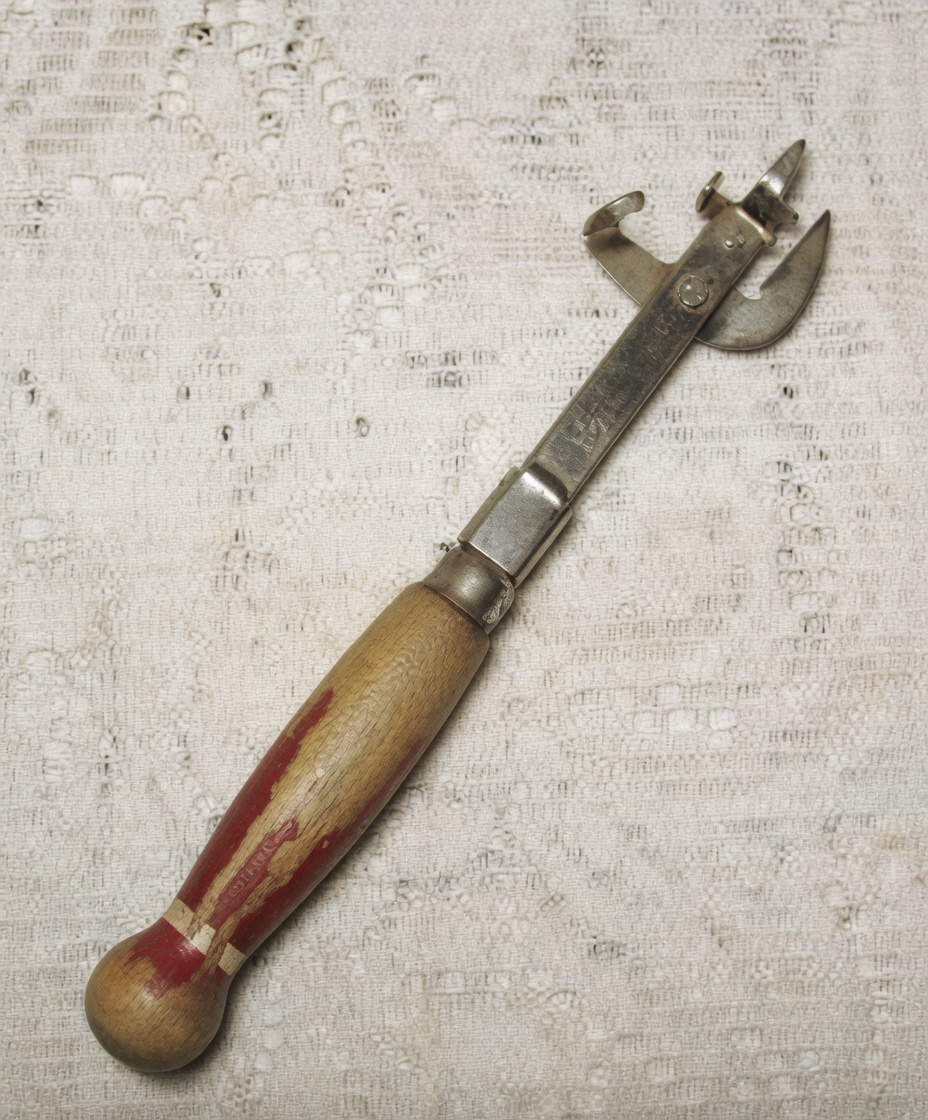
A simple photo posted on Reddit recently exploded into a viral mystery that had thousands of people scratching their heads. Someone cleaning out their grandmother’s kitchen drawer found a strange metal object that looked more like a medieval torture device than anything you’d use for cooking. Sharp points, a weird lever mechanism, and an overall intimidating design left most younger viewers completely baffled. Guesses poured in ranging from a fishing tool to a camping gadget, a weapon, or even some kind of old medical instrument. The truth, however, turned out to be much more everyday — and a fascinating window into how dramatically kitchen tools have evolved.
This puzzling item is a classic vintage can opener, specifically an early “puncturing” or “lever-style” model that was standard in homes for decades before safer, smoother designs took over. Unlike today’s comfortable ergonomic openers with rotating wheels and built-in safeguards, these older versions required strength, skill, and a steady hand. You would jab the sharp point into the top of a metal can, then carefully lever and cut around the rim. It worked reliably, but it often left behind jagged, razor-sharp edges that could easily slice a finger if you weren’t careful.
The viral post captured something many of us feel when we encounter objects from previous generations. What was once completely ordinary now looks alien. Younger people who grew up with electric openers or pop-top cans had never seen anything like it. Their confusion sparked lively discussions across social media, with older users jumping in to share memories and demonstrate how the tool worked. Some even posted videos of themselves using similar antique openers, turning the mystery into a fun intergenerational conversation.
The history of can openers is surprisingly dramatic and tied directly to the invention of canned food itself. In the early 1800s, canned goods were created for military use, but opening them was a nightmare. Soldiers often had to use knives, rocks, or bayonets, which was time-consuming and dangerous. The first dedicated can opener appeared in 1858, invented by Ezra Warner. His design was bulky and more suited for army kitchens than home use. It wasn’t until 1870 that William Lyman patented a version with a rotating cutting wheel, which became the foundation for many later designs.
By the mid-20th century, the specific style that went viral — the lever puncturing type — had become a staple in American and European kitchens. Families relied on it daily to open everything from beans and soup to fruits and vegetables preserved in tin. These tools were built to last, often made of sturdy steel that could survive years of heavy use. Many are still perfectly functional today, which is why you occasionally find them tucked away in drawers during estate sales or moves.
What makes these older can openers fascinating is how they reflect the resourcefulness and toughness of earlier generations. People didn’t expect kitchen tasks to be effortless. They accepted that opening a can required some muscle and attention. Today’s versions prioritize safety and convenience above all else, with features like smooth edges, easy-grip handles, and even battery-powered motors. The shift shows how our expectations for everyday life have changed — we want things faster, safer, and more comfortable than ever before.
Beyond the practical differences, these vintage tools carry a certain nostalgic charm. Many people who grew up watching their grandparents use them speak fondly of the distinctive sound the can opener made — that satisfying crunch as it pierced the metal. Some collectors actively seek out old models, appreciating their durability and simple engineering. In a world full of single-use plastic gadgets, there’s something satisfying about a tool that was built to work for decades.
The viral mystery also sparked important conversations about generational knowledge gaps. So many everyday skills and objects from the past are disappearing from collective memory. Younger people might excel at technology but feel lost when faced with analog tools that their parents or grandparents took for granted. This can opener discussion became a gentle reminder of how much wisdom and practical know-how older generations carry. It encouraged people to ask questions, listen to stories, and maybe even try using some of these old tools themselves.
Of course, not everyone looks back with pure nostalgia. Many who used these older can openers remember the minor injuries and frustration they sometimes caused. The sharp lids were notorious for creating “can cuts” that were surprisingly painful. Modern designs solved this problem beautifully, creating lids that roll smoothly without leaving dangerous edges. This evolution in kitchen safety reflects broader improvements in how we design products for everyday life.
If you ever come across one of these mysterious gadgets in your own home, don’t toss it out immediately. Clean it up, research the model, and you might discover a piece of family history worth keeping. Some people even restore and display them as conversation starters. Others keep working examples as backups for power outages or camping trips, where simple, reliable tools still shine.
The popularity of this viral post reveals something deeper about our relationship with the past. In an increasingly digital world, physical objects from earlier times feel almost magical because they represent a slower, more hands-on way of living. They remind us that convenience isn’t the only measure of value. Sometimes the slightly difficult, character-building tools teach us patience and appreciation for simple tasks.
Next time you open a can with a quick twist of a modern opener, take a moment to appreciate the engineering that makes it feel effortless. And if you’re lucky enough to find one of those old-fashioned versions, hold onto it. It might not look friendly, but it carries stories, history, and a surprising amount of charm. These forgotten kitchen gadgets aren’t just relics — they’re tangible connections to the people who came before us and the everyday challenges they solved with creativity and resilience.
The internet’s collective confusion over this simple tool ultimately brought people together in a positive way. It sparked curiosity, laughter, learning, and appreciation across generations. In the end, what looked like a mysterious and intimidating object turned out to be something wonderfully ordinary — a humble reminder that the most interesting discoveries are often hiding right in our own kitchen drawers.
Most Popular!
-
 The Ultimate Wedding Revenge: When the Mother Who Abandoned Her Six Daughters Showed Up with Her Millionaire Boss, the Bride Opened a Box That Destroyed Lives Forever
-
The Beach Shaming Disaster: What My 8-Year-Old Said to the Prying Stranger Left Everyone Speechless
-
My Husband Abandoned Me With Twin Babies for a Luxury Fishing Trip — When He Returned, I Had Already Packed His Bags
-
The Three-Dollar Miracle: How a Dust-Covered Vase Revealed a Heartbreaking Decades-Old Secret
-
The $80,000 Battle to Erase a Birthmark: Why One Mother Risked Everything for Her Daughter’s Future
-
The Silent Thief: Why Millions of Men Are Living with a Time Bomb They Can’t See
-
The Final Curtain Falls: Beloved Sanford and Son Legend Hal Williams Gone at 91
-
Found at a Yard Sale: This “Useless” Vintage Contraption Is Actually a Forgotten Piece of Human History