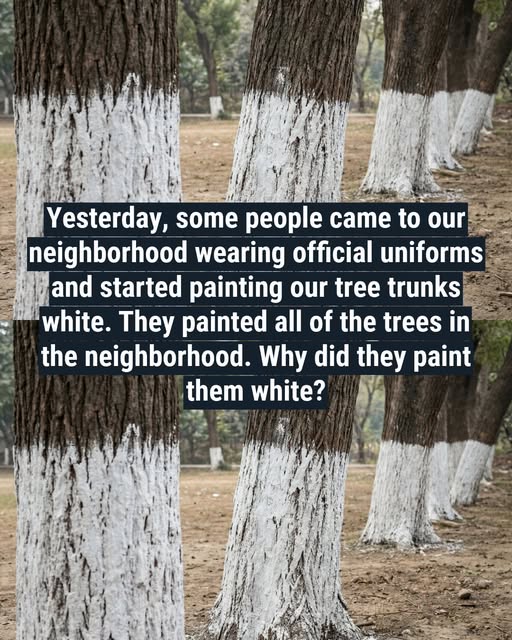
You drove past the orchard and did a double take at the rows of trees with their lower trunks painted a bright, stark white. At first it looked like a quirky decorative choice or perhaps a marker for landscaping crews. But this “white coat” is far more than an aesthetic whim. It is a vital, life-saving intervention known as trunk whitewashing, and it serves as a primary defense against a silent killer that strikes during the coldest months of the year.
The Silent Killer Hiding in Winter Sun
The primary enemy this paint fights is sunscald. During winter, the low-angle sun can heat dark tree bark on sunny days, causing the tissue to expand. When temperatures drop sharply at night, that same bark contracts rapidly, cracking and damaging the living layers beneath. Young or thin-barked trees are especially vulnerable, and the damage can weaken or even kill the tree over time.
Why the White Paint Makes a Difference
White paint reflects sunlight and keeps the bark temperature more stable. By reducing the extreme heating and cooling cycle, it prevents the bark from splitting and protects the delicate cambium layer where new growth happens. This simple coat acts like sunscreen and insulation all in one, helping trees survive the harsh winter months without expensive or invasive treatments.
The Right Way to Apply It
Experts recommend using a water-based, non-toxic white latex paint diluted with water. The mixture is brushed or sprayed onto the lower trunk and major branches from the ground up to about four or five feet. The best time to apply is in late fall or early winter, after the leaves have dropped but before the deep freeze sets in.
When and Where It Matters Most
This practice is especially important for young fruit trees, newly planted ornamentals, and any tree with thin, dark bark. In commercial orchards it protects valuable crops and reduces long-term maintenance costs. In suburban gardens it helps homeowners keep their landscape healthy without constant worry about winter damage.
The Hidden Cost of Skipping It
Trees that go unprotected can suffer cracked bark, entry points for insects and disease, and reduced fruit production the following season. In severe cases the damage can be fatal. The emotional toll for gardeners who lose a favorite tree after years of care can be surprisingly heavy, making this simple preventive step worth the small effort.
The Science Behind the Tradition
Researchers have studied trunk whitewashing for decades and consistently find it reduces temperature swings by up to 20 degrees Fahrenheit on sunny winter days. The practice is not new — farmers and orchardists have used it for generations — but modern formulations make it safer for the environment and more effective than ever.
The Small Step That Saves Big
Many homeowners and small orchard owners are surprised how easy and inexpensive it is to protect their trees. A single gallon of paint can cover multiple trunks, and the application takes less than an hour per tree. The payoff comes in healthier trees, better fruit yields, and the peace of mind that comes from knowing you’ve done everything possible to help them survive winter.
The Hopeful Lesson for Every Gardener
This quiet tradition ultimately shows that sometimes the simplest solutions are the most powerful. A coat of white paint can mean the difference between a thriving tree and one that struggles for years. As you prepare your own landscape for the coming seasons, consider giving your trees this small but meaningful layer of protection.
The Question Every Gardener Should Ask
As you look at your own trees this season, ask yourself this: have you done everything you can to protect them from winter’s hidden dangers? A simple coat of white paint might be the one step that keeps your landscape healthy and beautiful for years to come. What small preventive measure will you take today to give your trees the best chance at a long, productive life?