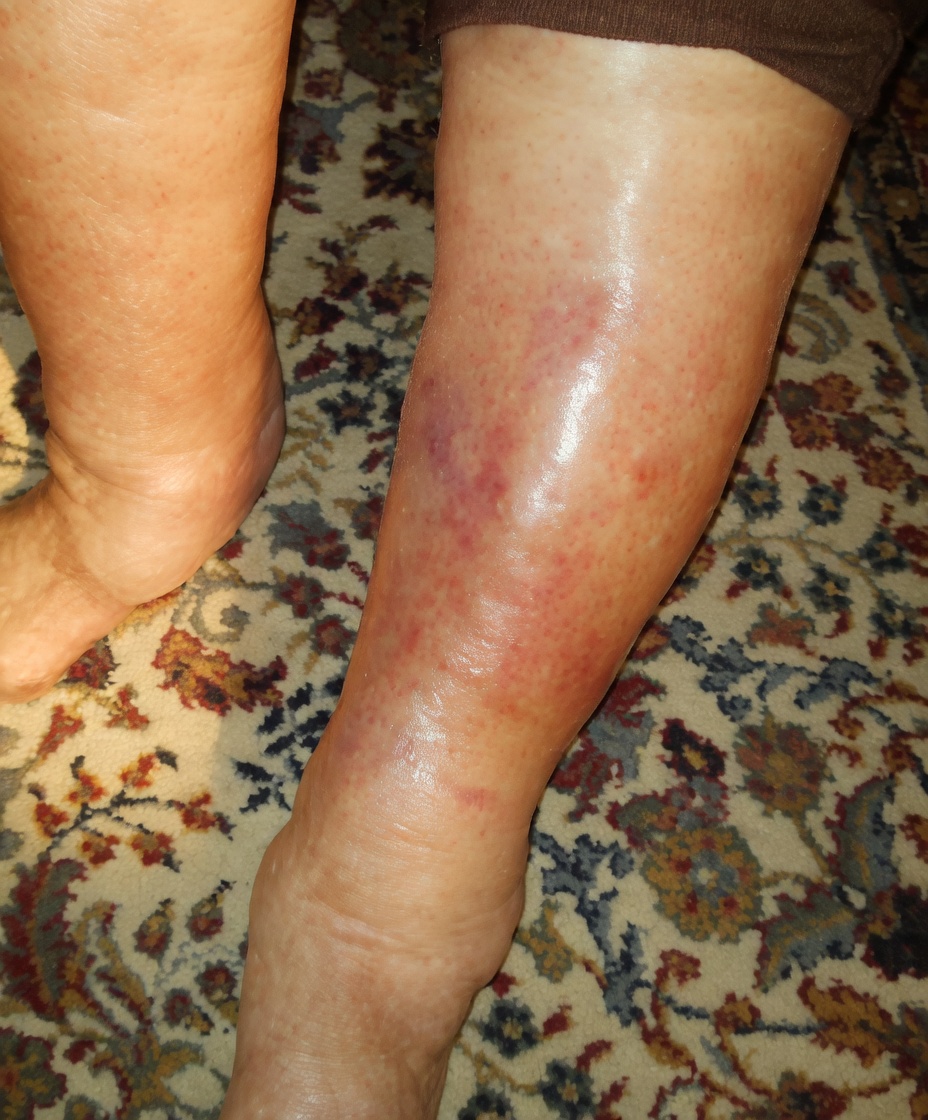
You glance in the mirror one morning and notice a small red patch on your skin that wasn’t there yesterday, maybe on your leg or your face, and you assume it’s nothing more than a minor irritation or an insect bite that will fade on its own in a few days, but what if that seemingly innocent blemish is actually the first visible sign of a bacterial infection that can spread rapidly through your lymphatic system and become far more serious than you ever imagined if left untreated, turning a routine skin issue into a medical emergency that demands immediate attention rather than the usual wait-and-see approach most people take with minor rashes or spots.
Erysipelas is a relatively common but potentially serious bacterial infection that affects the upper layers of the skin and the lymphatic system, most often caused by group A Streptococcus bacteria — the same type responsible for strep throat — and what makes it distinct from similar conditions like cellulitis is its appearance, typically forming a bright red, swollen patch with sharply defined, raised borders that can develop quickly, sometimes within hours, and most commonly appears on the lower legs or the face, especially the cheeks and nose.
The symptoms tend to come on suddenly and can be both visible and systemic, meaning they affect the whole body, including sudden redness and swelling of the skin, warmth and tenderness in the affected area, clearly defined borders of the rash, fever and chills, and a general feeling of fatigue or being unwell, with facial cases often causing more pronounced swelling that can spread rapidly and become especially concerning if not addressed promptly.
The infection occurs when bacteria enter the skin through a break or vulnerability, which can be very small and sometimes go unnoticed, such as cuts or scratches, insect bites, surgical wounds, or skin conditions like eczema or athlete’s foot, and once inside, the bacteria spread through the lymphatic vessels, which is why swelling and inflammation can escalate quickly and why early recognition is so important to prevent complications.
Certain conditions increase the likelihood of developing erysipelas, including lymphedema or impaired lymphatic drainage, chronic skin conditions, diabetes, a weakened immune system, obesity, and previous episodes of erysipelas, with people who have recurring infections often having an underlying issue affecting circulation or skin integrity that makes them more vulnerable.
Diagnosis is usually based on the clinical appearance and symptoms, and in some cases doctors may order blood tests if a systemic infection is suspected, with treatment typically including antibiotics that can be oral or intravenous depending on the severity, along with pain relief, anti-inflammatory medication, elevation of the affected limb if applicable, and plenty of hydration and rest.
Most patients begin to improve within a few days of starting treatment, but completing the full course of antibiotics is essential to ensure the infection is fully cleared and to reduce the risk of recurrence or more serious complications.
If left untreated, erysipelas can lead to serious issues such as abscess formation, spread of the infection to deeper tissues, bloodstream infection known as sepsis, or recurring episodes that become harder to manage over time, making prompt medical care one of the most important factors in a positive outcome.
Although erysipelas can appear alarming due to its sudden onset and vivid symptoms, it is highly manageable when treated early, and the key lies in recognizing the warning signs and seeking medical attention without delay rather than assuming it will simply go away on its own like a minor rash.
Understanding this condition is not just about awareness — it is about acting quickly to protect both your skin health and your overall well-being, because a simple skin blemish that looks harmless at first glance can sometimes be the first visible signal of something that requires professional care before it escalates into a more serious problem.
As you check your skin or notice any unusual redness or swelling, ask yourself this: are you quick to dismiss small changes as nothing important, or are you willing to pay attention and seek help early so that a minor issue doesn’t turn into something far more dangerous?