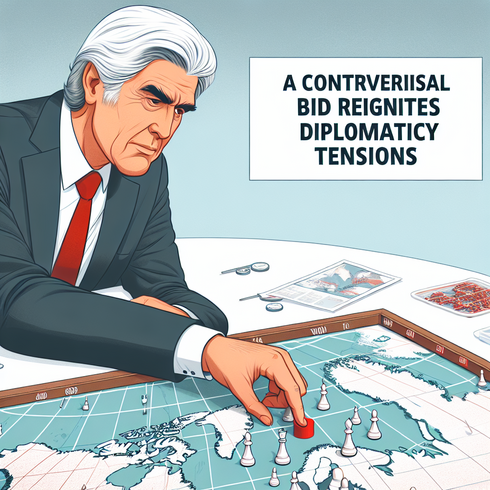
Former President Donald Trump has once again stirred international conversation by reviving his idea of acquiring Greenland for the United States. This time, he has appointed Louisiana Governor Jeff Landry as a special envoy to the territory, raising concerns about the legitimacy and intention behind the move. While Trump’s administration first floated the idea in 2019, the return of the proposal has struck an even more discordant tone amid rising geopolitical sensitivity in the Arctic region.
Officials in both Denmark and Greenland have expressed outright dismay at the renewed interest. Danish leaders view the initiative as a disrespectful challenge to their sovereignty, given Greenland’s semi-autonomous status under the Danish crown. Greenlandic politicians themselves have been vocal in emphasizing their desire for self-determination, not to be seen as a commodity or strategic pawn for any world power. The surprise announcement has only added to growing diplomatic strain between Copenhagen and Washington.
Trump has long touted Greenland’s strategic value, citing its location in the Arctic and abundant natural resources. From a defense perspective, the U.S. already maintains a significant presence in the region through the Thule Air Base. However, turning a strategic alliance into a literal land acquisition introduces a dated and provocative approach to foreign policy that harks back to the 19th century era of manifest destiny and territorial expansionism. Appointing a domestic partisan figure as envoy only amplifies the lack of diplomatic nuance in this endeavor.
The broader concern is that this move could damage America’s reputation as a reliable and respectful partner on the global stage. Reviving colonial-era ambitions sends an unhelpful signal at a time when Western nations are striving to maintain unity in the face of global threats—from climate change to military aggression. Attempting to purchase a land mass and ignoring the will of its people reveals a disregard for international protocols and democratic values.
Ultimately, Trump’s Greenland scheme seems less about actionable foreign policy and more about spectacle and legacy-building. While the Arctic holds strategic and environmental importance, engaging with Greenland should be done through mutual respect and partnership, not through provocative land deals. As global dynamics shift, sustainable relationships will prove far more valuable than territorial ambitions steeped in controversy.