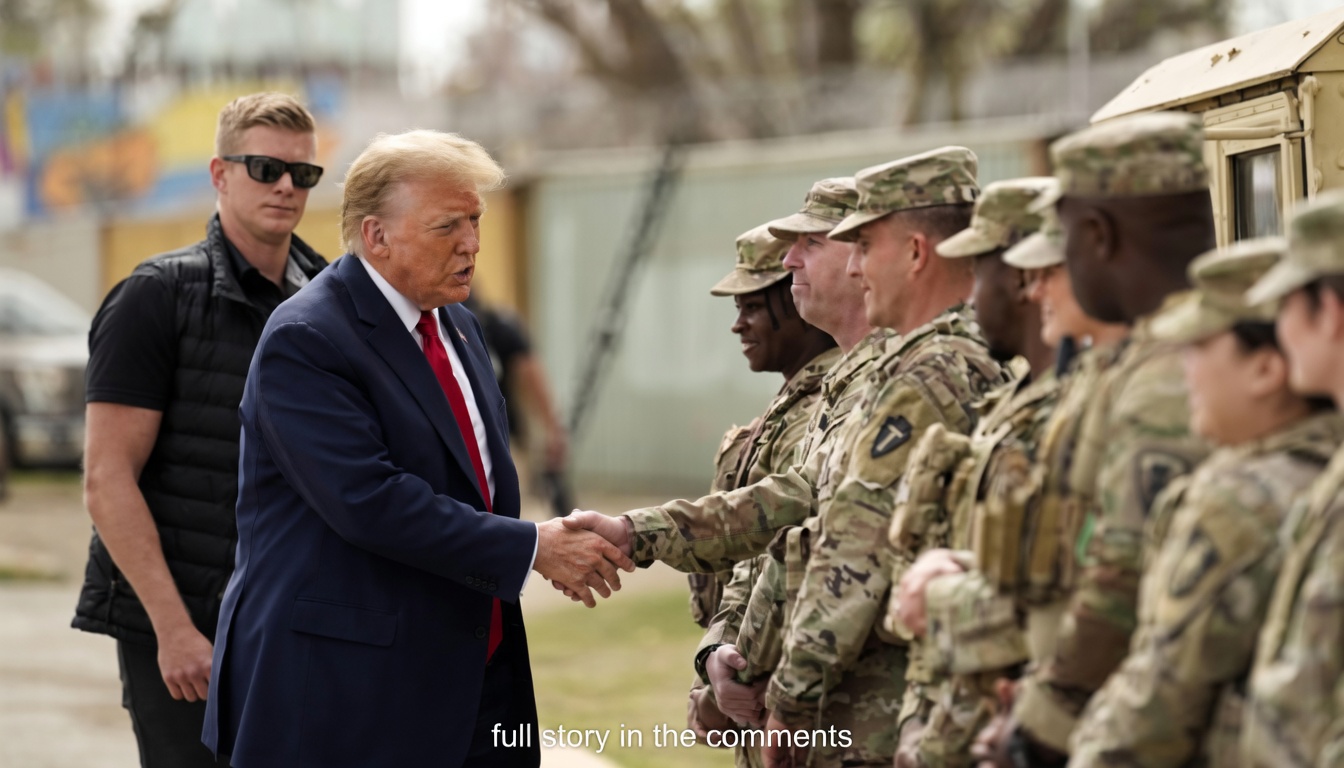
You watched the news footage of uniformed Marines unloading gear near the Florida Everglades and felt the weight of the moment settle over the country. The Pentagon had just confirmed that 200 U.S. Marines were being stationed in the Sunshine State under direct orders from President Trump to support Immigration and Customs Enforcement operations. The sight of active-duty troops on domestic soil for this mission left many Americans pausing to catch their breath.
The Historic Deployment That Changed the Conversation
The administration described the move as purely logistical, aimed at providing administrative and support functions so ICE agents could focus on enforcement. Yet the decision quickly became one of the most talked-about actions of the current term, drawing reactions from coastal towns to Capitol Hill. For many older Americans who remember past debates over military involvement at home, this felt like a significant shift in how federal authority operates.
Why the Everglades Became the Focal Point
Florida’s vast Everglades region already housed a new high-security detention facility that some had nicknamed “Alligator Alcatraz.” The Marines’ arrival added another layer to the ongoing immigration enforcement efforts in the state. Families with roots in Florida watched closely because the operation touched on issues of security, borders, and the role of the military in everyday American life.
Public Reactions Split the Nation
Supporters viewed the deployment as a strong stand for law and order, arguing that extra logistical help was long overdue. Critics raised concerns about the precedent of using Marines in domestic roles, worrying it could blur important lines between military and civilian agencies. The emotional divide ran deep, with neighbors and family members finding themselves on opposite sides of heated dinner-table discussions.
The Legal and Practical Questions Raised
Legal experts immediately began debating the boundaries of presidential authority and the Posse Comitatus Act, which generally limits military involvement in domestic law enforcement. The administration emphasized that the Marines would handle only paperwork, vehicle maintenance, and clerical tasks — no direct contact with detainees. Still, the practical reality of armed service members assisting a civilian agency left many wondering where the line should be drawn.
How This Move Redraws Authority
The turning point came when the public realized this was not just a temporary assignment but part of a larger strategy to strengthen enforcement infrastructure across multiple states. It forced a national conversation about the balance between security needs and traditional limits on federal power. Many saw it as a bold statement that certain challenges required new approaches, even if they tested long-standing norms.
The Hidden Costs and Unseen Impacts
As the Marines settled into their support roles, the emotional toll became clear in communities on both sides of the issue. Some families felt safer knowing resources were being added, while others worried about the long-term effects on civil liberties and the image of America abroad. The financial and human costs of such operations added another layer of complexity to an already charged debate.
What the Deployment Really Signals
The climax of the announcement arrived when officials confirmed the Marines’ presence would continue indefinitely to back up ongoing ICE missions. This single decision appeared to redraw the borders of how American authority is exercised at home, sparking fresh questions about the future role of the military in domestic policy matters.
In the immediate aftermath the country remained deeply divided, with heated discussions filling airwaves and family gatherings alike. The cost was measured not only in logistics but in the erosion of trust between different segments of society. Yet for some it also represented a moment of clarity about national priorities and the willingness to take decisive action.
Looking Ahead to the Legacy of This Choice
This deployment ultimately highlights the tension between security and tradition in modern America. It leaves citizens reflecting on where authority should begin and end. As you watch these developments unfold in your own community, what do you believe the right balance should be when it comes to protecting borders while preserving the principles that have defined the nation for generations?