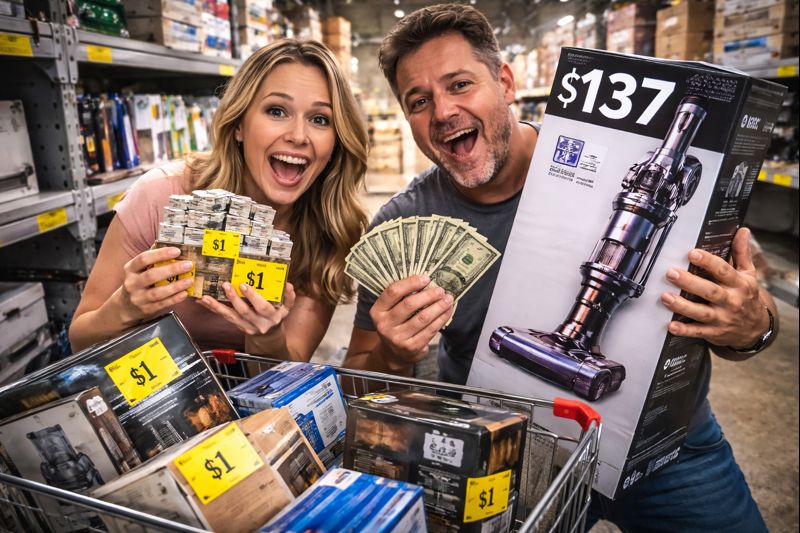
It sounds fake at first. Almost like one of those internet stories that falls apart once you read the fine print. A couple buys everyday household items for pocket change… and somehow turns them into serious money. Not hundreds. Not thousands. Millions. But when you hear what they’re actually doing — and how simple it is — the real shock isn’t that they’re rich. It’s how many people walk past this opportunity every single day without realizing it.
And that’s exactly what Kristen Herbert and Justin Herbert are counting on.
From Spare Change to Serious Cash
The Herberts aren’t tech founders. They’re not influencers selling courses. And they didn’t invent a new product. Instead, they mastered something most shoppers overlook completely: flipping household items.
“I paid a dollar for each one of these,” Kristen said, holding up small everyday products.
“They’ll resell for four dollars each,” Justin added casually.
That may not sound impressive — until you realize they do this at scale.
They scour clearance aisles, overstock sales, liquidation pallets, and retail markdowns. Items people ignore because they’re not “exciting” are exactly what the Herberts look for.
Because boring sells.
The Vacuum That Changed Everything
One of their most eye-opening flips? A Dyson vacuum cleaner.
They found it on clearance at Lowe’s for $137. To most shoppers, that’s still expensive. To them, it was a gold mine.
They flipped it for a significant profit — one of thousands of similar transactions they complete every year.
“People trust known brands,” Justin explained. “If it’s discounted and in demand, it moves fast.”
And that’s the key: brand + discount + demand.
Million Dollars. Let That Sink In.
Here’s where most people stop scrolling and read twice.
“We’ll clear a million dollars in sales this year,” Justin said.
Not revenue projections. Not future goals. Actual sales.
And no, they didn’t start with huge capital. They reinvested profits again and again, slowly scaling up from small items to bigger-ticket appliances.
Why This Works (When Other Side Hustles Fail)
Unlike trendy online businesses, flipping appliances doesn’t rely on algorithms, ads, or virality. It relies on something far more predictable: people constantly need household products.
Vacuum cleaners break. Coffee machines wear out. Fans, heaters, blenders, air fryers — demand never stops.
Retailers, meanwhile, are desperate to move excess inventory. That gap is where the Herberts operate.
They buy low. They resell fast. They repeat.
Where They Find Their Inventory
The couple sources products from:
- Retail clearance aisles
- Big-box store markdowns
- Overstock and liquidation sales
- Bulk deals on discontinued items
Many of these products are brand new. Some have damaged boxes. Others are seasonal items stores want gone immediately.
To the store, they’re a problem.
To the Herberts, they’re profit.
The Real Secret Most People Miss
The biggest misconception? That you need rare items or special connections.
“You don’t,” Kristen said. “You just need consistency.”
They don’t chase one huge flip. They focus on hundreds of small, reliable wins. A few dollars profit here. Twenty dollars there. Over and over.
It adds up faster than people expect.
Is It Really That Simple?
Simple doesn’t mean easy. The Herberts track prices, understand resale platforms, and know what moves quickly. They’ve learned which items sit and which sell within hours.
But the barrier to entry is shockingly low.
No warehouse.
No employees at the start.
No complex business model.
Just sharp buying decisions.
The Cliffhanger Question
Every day, people walk through clearance aisles thinking they’re “saving money.”
Kristen and Justin walk through the same aisles thinking one thing:
How much can this make me?
They’ll clear a million dollars this year flipping items most shoppers ignore.
So the real question isn’t whether this works.
It’s this:
If opportunity is sitting on a clearance shelf… how many times have you walked right past it?