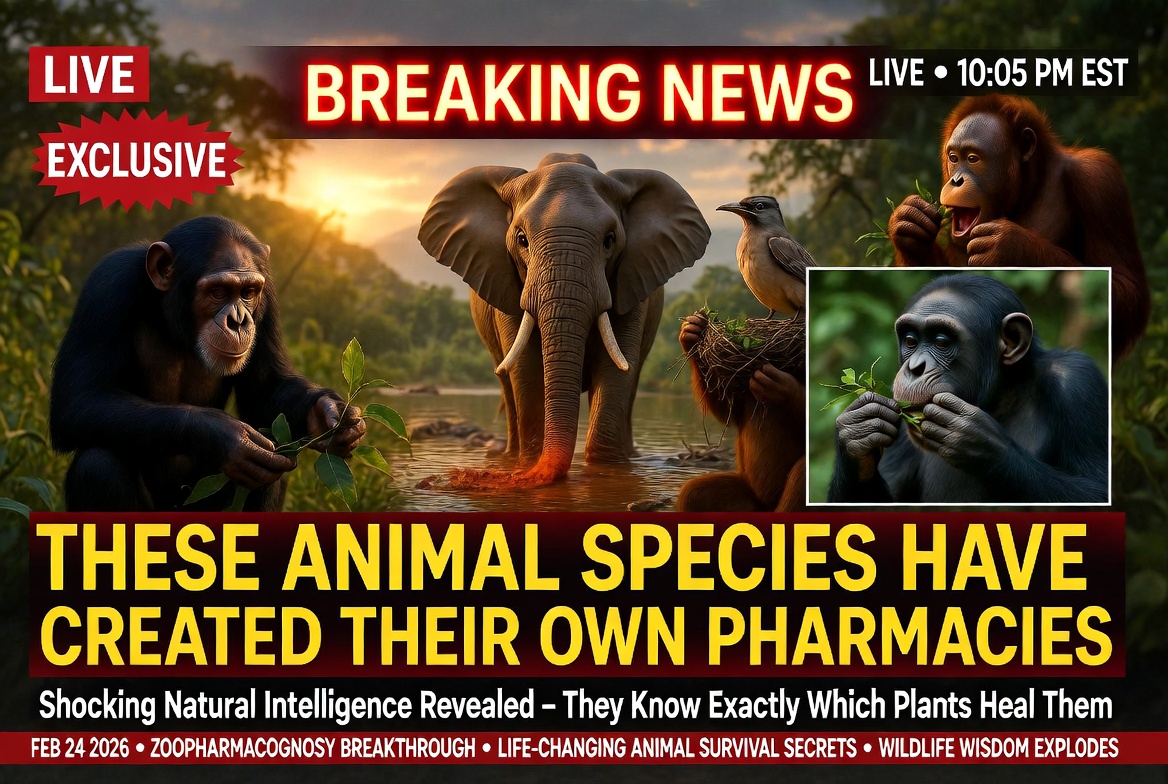
In one of the most fascinating and life-changing wildlife revelations of 2026, scientists have confirmed that several remarkable animal species have developed their own sophisticated pharmacies in the wild — using specific plants, clay, herbs and even insects to treat infections, parasites, pain, and wounds with incredible precision.
This powerful zoopharmacognosy breakthrough (the study of how animals self-medicate) shows that animals possess a deep, instinctive knowledge of natural medicine that rivals human herbal traditions — and it’s changing everything we thought we knew about animal intelligence.
Here are the most astonishing animal species that have created their own pharmacies:
1. Chimpanzees – The Forest Pharmacists Chimpanzees in Tanzania and Uganda carefully select and chew the bitter leaves of the Aspilia plant when they have intestinal parasites. They swallow the leaves whole (without chewing the bitter juices first) so the leaves act like a natural scrub, sweeping parasites out of their digestive system. Researchers have observed them doing this only when sick — a clear sign of deliberate self-medication.
2. Elephants – The Clay Detox Experts Pregnant elephants in Kenya travel miles to specific riverbanks to eat red clay rich in kaolin. This natural clay binds toxins and relieves morning sickness and stomach upset — exactly the same ingredient used in human anti-diarrhea medicines. They instinctively know which clay deposits have the right minerals for detoxification.
3. Birds – The Nest Pharmacists Starlings, finches and other birds line their nests with specific aromatic herbs like lavender, yarrow and wild carrot. These plants release natural volatile oils that act as powerful insecticides and antibiotics, protecting chicks from parasites and infections. Birds choose different herbs depending on the exact threats in their environment — showing remarkable precision.
4. Orangutans – The Wound Healers In Borneo and Sumatra, orangutans chew the leaves of the Dracaena plant into a paste and apply it directly to open wounds. The plant contains powerful anti-inflammatory and antibacterial compounds. Scientists filmed a young orangutan treating a deep facial wound this way — and it healed perfectly with almost no scarring.
5. Woolly Monkeys & Capuchins – The Insect Repellent Experts Capuchin monkeys in Costa Rica rub crushed millipedes all over their fur. The millipedes secrete a natural insect-repellent chemical that protects them from mosquitoes and ticks. The monkeys only do this during peak mosquito season — another example of seasonal, purposeful pharmacy use.
Why This Discovery Is So Life-Changing These behaviors prove that animals don’t just react instinctively — they actively diagnose problems and select targeted natural remedies. This challenges old beliefs that only humans possess medicinal knowledge and shows that the animal kingdom has been practicing sophisticated herbal medicine for millions of years.
Researchers from Oxford University and the Jane Goodall Institute say this intelligence could help humans discover new medicines. Many plants used by animals are now being studied for new antibiotics and anti-parasitic drugs.
The Emotional Side of Animal Pharmacies Watching a sick chimpanzee travel miles to find the right leaf, or an elephant mother protecting her unborn calf with special clay, fills scientists and wildlife lovers with deep respect and wonder. These animals are teaching us that nature has built-in solutions if we only observe closely enough.
This inspiring story of animal intelligence and natural healing reminds us how connected we still are to the wild world — and how much we can learn from our animal neighbors.
If this shocking revelation about animals creating their own pharmacies has amazed you, if it made you see wildlife in a new light, or if you love stories of incredible natural intelligence, please share it right now.
Which animal’s pharmacy surprised you the most? Drop a ❤️🌿 below and tell us — your comment might spark an amazing conversation!
We will continue following new discoveries in animal self-medication as scientists explore this fascinating field.