Tattoos have always carried personal significance far beyond their appearance on the skin. For people in their 40s, 50s, and beyond, body art often marks important life chapters—milestones like raising children, overcoming hardships, honoring loved ones, or rediscovering purpose in retirement years. What was once seen mainly as youthful rebellion has evolved into a thoughtful way to document resilience, faith, love, and remembrance. In recent years, a particularly understated design has captured widespread attention for its emotional depth packed into the smallest possible space.
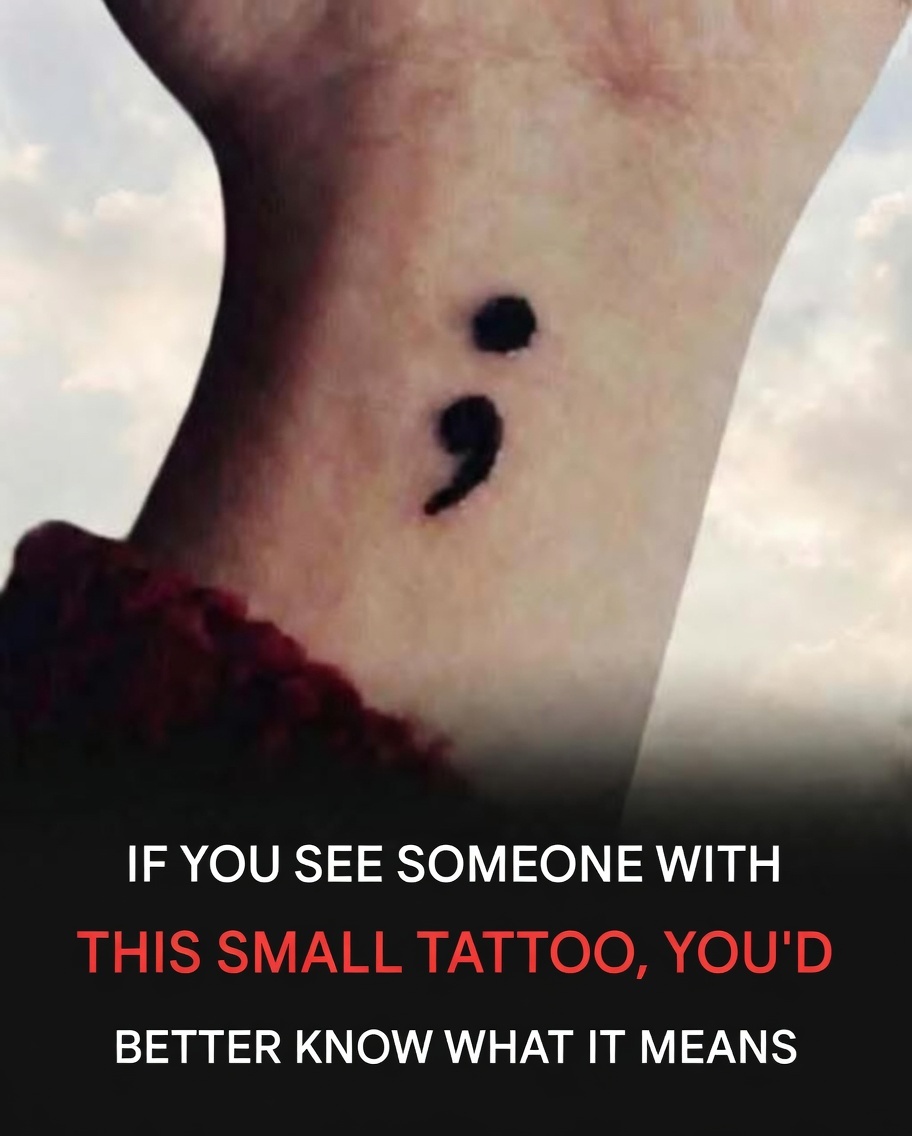
The design in question is deceptively simple: a single, tiny semicolon. Measuring no larger than a grain of rice in many cases, this punctuation mark has become one of the most recognized symbols of mental health awareness and survival. Its meaning stems from the way a semicolon functions in writing—it indicates that a sentence could have ended, but the author chose to continue instead. Applied to life, it represents choosing to keep going after moments when ending everything felt like the only option.
The semicolon project’s origins trace back to a grassroots movement that began over a decade ago. A young woman struggling with her own mental health challenges proposed the idea of a semicolon tattoo as a permanent reminder of survival and hope. The concept spread rapidly through social media, support groups, and word of mouth. What started as a personal gesture quickly grew into a global symbol embraced by people from all walks of life who have faced depression, anxiety, addiction, suicidal thoughts, grief, or other forms of deep emotional pain.
For many adults over 40, the appeal lies in its quiet power. Larger, more visible tattoos can feel bold or attention-seeking, but a tiny semicolon allows the message to remain deeply private while still serving as a constant, personal anchor. Placed on a wrist, behind the ear, on a finger, near the collarbone, or along the ribcage, it becomes a secret strength visible only when the wearer chooses to share it. This discretion resonates with those who value privacy in their healing journeys.
The emotional weight of the symbol often surfaces during life’s heavier seasons. Midlife can bring accumulated stresses—career shifts, empty nests, health scares, caring for aging parents, or the quiet realization that time moves faster than expected. For some, these years include confronting past traumas or mental health struggles that were pushed aside during busier decades. Seeing or choosing the semicolon becomes a gentle affirmation that perseverance matters, that survival itself is an achievement worth honoring.
Family connections add another layer of meaning for many who choose this design. Parents get it to mark their determination to stay present for children and grandchildren despite inner battles. Spouses ink it together as a shared vow to support one another through dark times. Adult children choose it to remember a parent who fought silently against mental health challenges. In each case, the tattoo transforms personal pain into a legacy of endurance and love.
Mental health conversations have shifted dramatically in recent decades. What was once whispered about in shame now receives open discussion, workplace accommodations, therapy access, and community support. The semicolon has played a role in normalizing these talks. Wearing it sparks gentle conversations when noticed—opportunities to share resources, offer empathy, or simply let someone know they are not alone. For retirees or those nearing that stage, these exchanges can strengthen social bonds at a time when isolation risks increase.
Practical considerations also influence the choice of such a small, meaningful tattoo. Minimalist designs tend to age well, require less upkeep, and heal quickly with lower risk of complications. Cost remains accessible, often fitting comfortably within budgets already stretched by healthcare, home maintenance, or retirement savings. Many artists offer discounted or donation-based sessions specifically for semicolon tattoos, recognizing their role in mental health advocacy.
The design’s simplicity invites personalization without losing its core message. Some incorporate faint heartbeat lines, tiny dates, initials of lost loved ones, or subtle color accents. Others keep it stark black for maximum impact. Placement choices carry symbolism too—a wrist for daily visibility and grounding, an ankle for moving forward step by step, or over the heart for internal strength. These decisions make the tattoo feel uniquely one’s own while remaining part of a larger collective story.
Emotional healing rarely follows a straight line. The semicolon reminds wearers that progress includes setbacks, that strength shows up in continuing rather than in never struggling. On tough days—when grief resurfaces, anxiety spikes, or loneliness creeps in—the sight of that small mark can serve as a reset button, a visual cue to breathe, reach out, or simply keep going one more hour.
Broader cultural acceptance of tattoos has helped destigmatize both body art and mental health topics simultaneously. Older generations who once viewed tattoos skeptically now see them as legitimate forms of self-expression and remembrance. This shift allows more people in their later years to explore meaningful ink without fear of judgment, opening doors to new ways of honoring personal growth.
Financial security ties into this conversation as well. Mental health challenges can strain savings through therapy costs, medication, or lost work time. Building emergency funds, understanding insurance mental health benefits, and exploring low-cost community resources provide practical layers of protection. The semicolon movement often pairs emotional symbolism with calls for better access to care, reinforcing that survival includes both inner resilience and external support.
Ultimately, the tiny tattoo speaks to universal human experiences—pain, choice, continuation. It honors those who have walked through darkness and emerged willing to keep writing their story. For anyone who has ever felt the weight of silent struggles, it offers quiet solidarity and proof that even the smallest mark can carry profound power.
In a world that often demands loud declarations of strength, the semicolon chooses subtlety. It reminds us that true endurance frequently looks ordinary on the outside while holding extraordinary meaning within. For those over 40 reflecting on decades lived and years ahead, this small symbol invites gratitude for every continued sentence and hope for all the ones still to come.