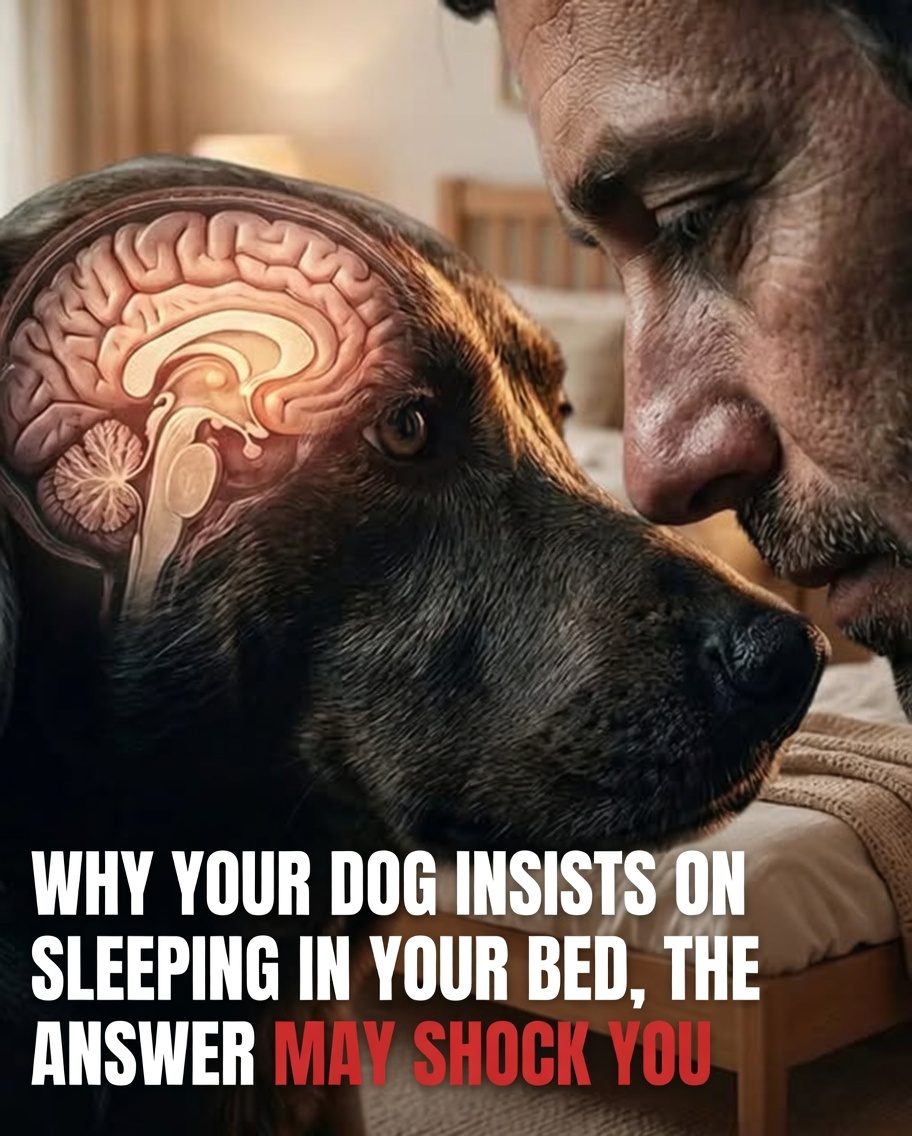
Any pet owner has experienced the minor domestic comedy of walking into a room only to find their favorite armchair occupied by a sprawled Golden Retriever or their pillow claimed by a curled, purring tabby. In that moment, it is easy to assume our animal companions are engaging in a bit of lighthearted mischief or perhaps a subtle power play for territory. However, animal behaviorists suggest that the motivation behind these “seat-stealing” antics is far more profound than mere playfulness. These choices are governed by a complex intersection of biological necessity, evolutionary instinct, and a deep-seated emotional attachment to the human they trust most. Far from being random or dominant, the behavior is a deliberate act of closeness, safety-seeking, and love — one that reveals more about the pet-owner bond than almost any other daily interaction.
At its core, the drive to occupy your seat or bed begins with scent. Dogs and cats experience the world primarily through olfaction — their sense of smell is anywhere from 10,000 to 100,000 times more powerful than ours, depending on the breed and species. When you sit in a chair or sleep in your bed, you leave behind a rich cocktail of pheromones, skin cells, sweat, and personal odor molecules that create an olfactory “fingerprint. ” For your pet, that scent is the most comforting, familiar, and safest thing in their environment. By curling up in the exact spot you just vacated, they are literally wrapping themselves in your presence. It’s not about claiming ownership — it’s about borrowing your security blanket. Behaviorist Dr. John Bradshaw, author of Dog Sense and Cat Sense, explains it this way: “Your scent is their home. When you leave the room, they don’t just miss you emotionally — they miss the chemical reassurance that you’re still nearby. ”
This instinct traces back to evolution. In the wild, wolves and feral cats seek out the warmest, safest resting spots — places that retain heat and carry the scent of the pack leader or a trusted group member. Domestic dogs and cats retain that same drive. Your chair or bed is the warmest, most scent-saturated location in the house because you spend so much time there. It’s elevated (safer from ground threats), enclosed on multiple sides (providing a sense of protection), and saturated with your scent (signaling “this place belongs to my safe human”). When your pet chooses your spot over their own bed — even if their bed is orthopedic and expensive — they are prioritizing emotional comfort over physical luxury. It’s not disrespect; it’s devotion.
Temperature regulation also plays a significant role, especially for dogs. Humans run hotter than most pets — our average body temperature is around 98. 6°F, while dogs average 101–102. 5°F and cats 100. 5–102. 5°F. But because we’re larger and generate more heat over time, the furniture we use retains warmth long after we leave. A chair or bed you’ve just occupied becomes a perfect thermal oasis — warm enough to soothe joints, relax muscles, and signal safety. This is particularly important for older pets or those with arthritis, who instinctively seek heat sources. Behaviorists note that dogs with joint pain or anxiety disorders show an even stronger preference for human-warmed spots, as the heat mimics the comforting body contact they crave from the pack.
For cats, the behavior often ties to social bonding and safety signaling. Cats are both solitary hunters and highly social with their chosen humans. When they choose your bed or chair, they are marking it with their own scent glands (located on cheeks, paws, and tail base) while simultaneously absorbing yours. This creates a blended scent profile — a chemical declaration that “this human belongs to me and I belong to them. ” It’s the feline equivalent of wearing your partner’s hoodie. Studies from the University of Lincoln and Oregon State University have shown that cats who sleep on or near their owners exhibit lower stress hormone levels and higher oxytocin (the “bonding hormone”) compared to cats left alone. The bed or chair isn’t just comfortable — it’s a direct line to the person they trust most.
The emotional layer runs even deeper. Pets are acutely attuned to routine and attachment. Your seat or bed is where you relax, where you cuddle them, where you’re most likely to give affection. By occupying that space when you’re gone, they are self-soothing — recreating the feeling of closeness. Separation anxiety often manifests this way: the pet seeks out the human’s strongest scent trail to calm the stress of absence. In multi-pet households, the pet who chooses your spot is often the one with the strongest bond — the “velcro dog” or “lap cat” who follows you room to room. They aren’t trying to dominate you; they’re trying to stay connected.
Of course, not every instance is purely emotional. Some pets simply prefer the elevation or view your chair provides. Others like the texture of your blanket or the way the cushion molds to their body. But even those preferences usually trace back to association — your chair feels good because it smells like you, sounds like you (from all the phone calls and TV watching), and reminds them of the times you’ve held them there. The behavior is almost always positive reinforcement: your presence makes the spot rewarding, so they return to it.
For pet owners over 40 — many of whom have lived through multiple dogs, cats, and life stages — these moments carry extra weight. We remember the first pet who claimed our chair after a long day at work, the old dog who waited on our bed when we were sick, the cat who slept on our pillow when we lost someone we loved. These aren’t acts of entitlement; they’re acts of loyalty. They’re proof that the bond goes both ways. We feed them, walk them, care for them — and they repay us by choosing us, over and over, in the most literal way possible: by taking our place when we’re gone.
Understanding this can shift how we respond. Instead of shooing them off or buying an identical but “pet-approved” chair, many owners now leave a worn T-shirt on the seat or bed — a scent bridge that comforts the pet without displacing the human space entirely. Others create “shared” zones — a dog bed next to the human chair, a cat perch near the pillow — so everyone feels included. The key insight from behaviorists is simple: when your pet takes your spot, they’re not stealing from you. They’re borrowing your comfort because you are their comfort.
So the next time you walk in and find your dog curled up in your recliner or your cat stretched across your pillow, pause before nudging them away. Look at the way they sigh contentedly, eyes half-closed, body relaxed. They’re not being naughty. They’re being loved. And they’re loving you back — in the oldest, most instinctual way they know how: by surrounding themselves with the scent, warmth, and safety that only you can provide.
The conversation is just getting started — and for countless pet owners over forty who’ve shared their space (and their hearts) with animals, it is already changing everything for the better.
Your pet doesn’t choose your seat because they think they’re in charge. They choose it because they think you’re home. And in their world, there’s no safer place to be.