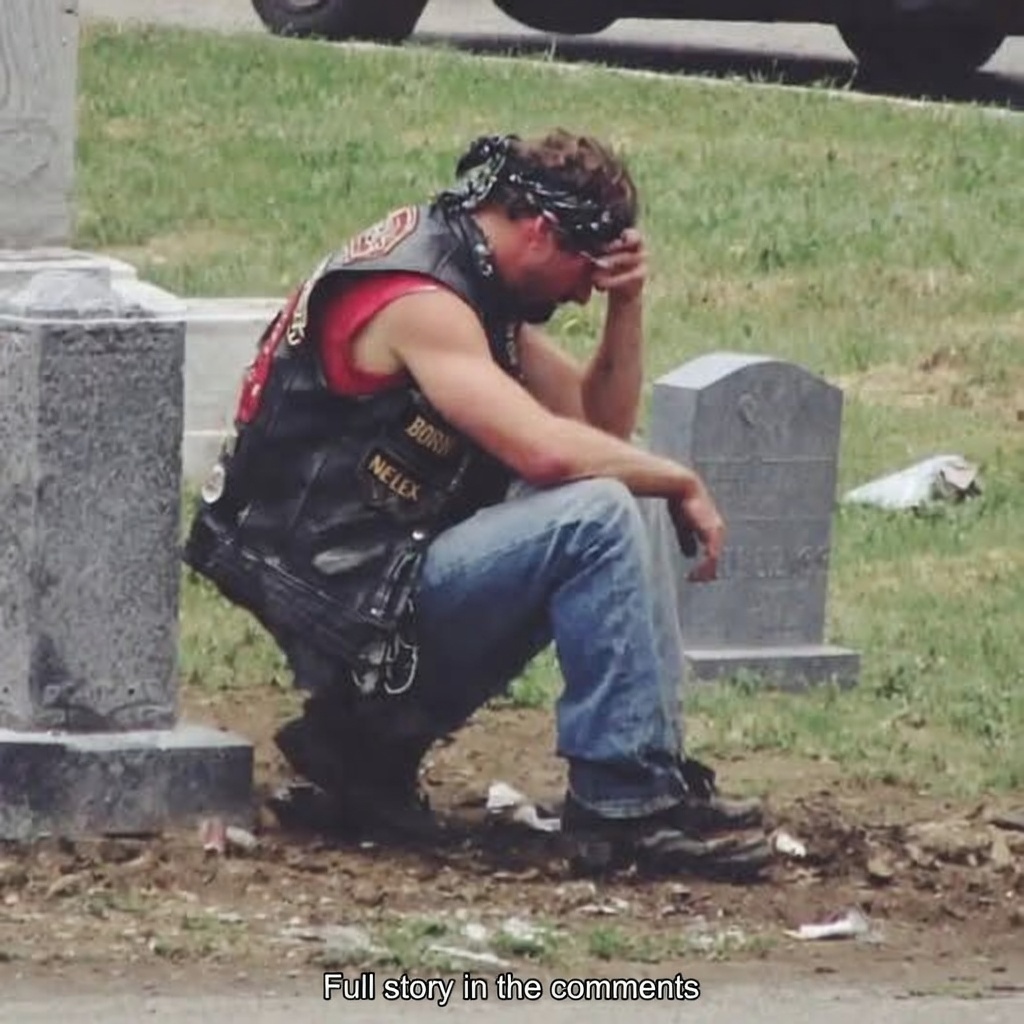
The gravel crunched under my shoes the same way it always did as I walked the familiar path to Section D, Row 12. Fourteen months of Saturdays, same white roses from the corner florist, same whispered update about the kids, same quiet ache that never quite dulled. Sarah’s headstone was simple—her name, our wedding date, the day she left us at forty-three to breast cancer. I placed the flowers, traced the carved letters with my thumb, and let the silence settle around me like an old coat. That morning the air felt heavier than usual, the pines whispering secrets they usually kept to themselves.
I saw him before he saw me. A man in his late forties, graying at the temples, standing exactly where I stood every week. He held a small bouquet of white roses—identical to mine—and laid them gently beside the ones I’d left the previous Saturday. My stomach dropped. No one else came here regularly; her parents were gone, her sister lived across the country, our children were too young to make the trip alone. I stepped behind a tree, heart hammering, watching him kneel and speak softly to the stone. I couldn’t hear the words, but the way his shoulders shook told me enough. This wasn’t a casual visitor. This was someone who mourned her.
I almost walked away. The thought of confrontation felt obscene in this place. But curiosity—or maybe something deeper—pulled me forward. When he stood and turned, our eyes met. Recognition flashed across his face, then guilt, then something like relief. “You must be David,” he said quietly. My name in his mouth felt wrong, like he’d read it off a file he wasn’t supposed to have. I nodded, throat tight. He extended a hand, then pulled it back, unsure. “I’m Michael. I… I need to tell you something. ”
We sat on the low stone bench nearby, the kind meant for reflection. He stared at the ground while he spoke. Twenty-one years earlier, before Sarah and I met, she had a brief relationship during college. Michael was the other student, the one she never mentioned. It ended when she discovered she was pregnant. She chose to end the pregnancy—alone, without telling him—because she was terrified of derailing her future and his. She never contacted him again. Years later, when she was already married to me and raising our two children, she found him online, learned he had never married, never had kids. Guilt ate at her. She reached out anonymously through a mutual friend, just to know he was okay. He was. She never revealed herself.
But Michael had suspected. He started visiting the cemetery after her obituary appeared, piecing together dates and details. He came every few weeks, always leaving white roses—the same kind she’d loved in college. He never intended to intrude on our family. He just needed to say goodbye to the woman he’d loved once and the child they never had. “I didn’t want to hurt you,” he said, voice breaking. “I just wanted her to know I understood. And I’m sorry—for all of it. ”
The words landed like stones in still water. I sat there feeling every emotion at once—anger that he existed, grief for a loss I never knew she carried, confusion that she’d kept this from me for twenty years. Yet beneath it all was something softer: recognition that Sarah had carried her own quiet pain, the same way I carried mine now. She’d chosen silence to protect me, to protect our life together. Michael wasn’t a threat; he was another person who loved her and lost her.
We talked for over an hour. He told me about the letters he never sent, the questions he never asked. I told him about our marriage, our children, the way she laughed at my terrible jokes until the end. When we stood to leave, he asked if he could keep visiting. I told him yes—but only if he let me know when he’d be there. I needed time to process, but I also needed to honor that Sarah had mattered to more than just us. We shook hands—awkward, but real—and walked separate paths out of the cemetery.
The immediate aftermath was a storm inside me. I cried in the car, called my sister, sat with the kids that night and held them tighter than usual. I didn’t tell them yet; they were still healing. But I started talking to Sarah differently at the grave—asking questions instead of just telling her things. Forgiveness came slowly, not for Michael, but for her choices, for the secrets she kept to spare me pain. I realized love isn’t diminished by what came before; it’s deepened by understanding the full story.
In the reflective close, that stranger at the grave taught me something I hadn’t expected. Grief doesn’t belong to one person alone; it belongs to everyone who loved her. Legacy isn’t just the life we build together—it’s the quiet ripples we leave in others, even the ones we never speak about. As I place white roses now, sometimes two bunches side by side, I feel less alone. Sarah’s story was bigger than our marriage, and that doesn’t diminish it—it honors it. What secret from a loved one’s past surprised you when it surfaced? Or how did learning a hidden truth change the way you remember someone? Share in the comments below.