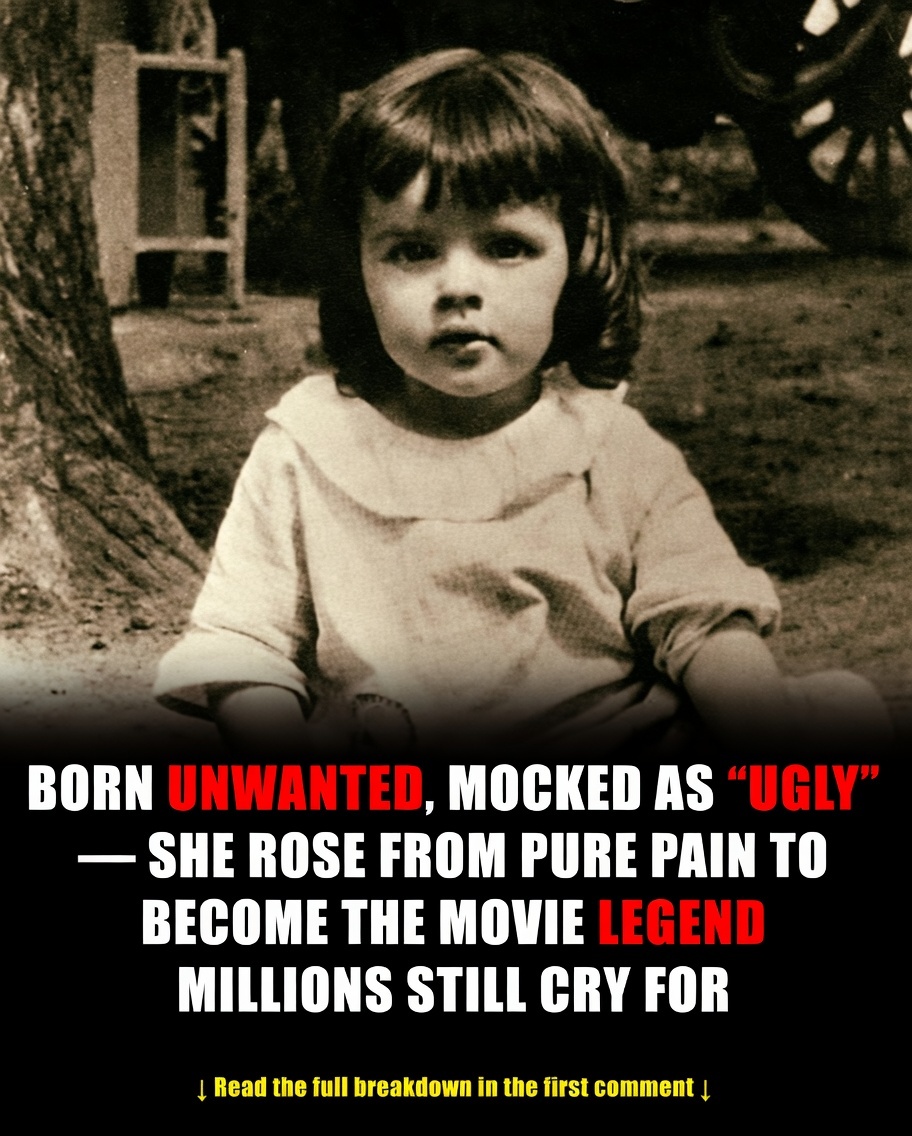
“Somewhere over the rainbow, skies are blue…” Those words, sung by a 16-year-old Judy Garland in 1939, have become one of the most beloved and hopeful lines in cinematic history. Generations have found comfort in them. Children still watch The Wizard of Oz and believe in magic. Adults hear them and remember innocence. But behind the Technicolor dream was a black-and-white reality so brutal it still shocks people today. Judy Garland — born Frances Ethel Gumm — was not just a child star. She was a child laborer, a human asset, a girl whose childhood was systematically erased so the world could have its rainbow.
She was two years old when her mother Ethel first put her on stage. By four, she was performing nightly in movie theaters between films, singing for tips. Her mother controlled every aspect: no sugar, no playtime, no normal meals. When Judy was tired or sick, Ethel gave her “pep pills” (amphetamines) to keep her going. At night, to help her sleep, barbiturates. This wasn’t occasional. It was routine. By age 12, Judy was already on a cycle of uppers and downers that would define the rest of her life.
When MGM signed her at 13, the exploitation became industrial. Studio executives wanted her to stay small — eternally youthful. They put her on extreme diets: chicken broth, black coffee, cigarettes to suppress appetite, and constant criticism about her weight. She was told she had “a fat Irish face” and needed to be “prettier. ” They gave her pills to keep her awake on set for 18-hour days, then more pills to knock her out. She was so exhausted she sometimes fell asleep standing up. When she cried about it, they told her she was being ungrateful.
The Wizard of Oz was filmed when she was 16. She was given barbiturates to sleep and amphetamines to work. She was forced to wear a corset so tight it bruised her ribs to make her waist look smaller. She was isolated from other children her age. The adults around her — producers, directors, even some co-stars — treated her like property. The famous line “There’s no place like home” was delivered by a girl who barely knew what home felt like.
The pattern continued for years. Prescription drugs became addiction. Public breakdowns followed. Suicide attempts. Failed marriages. Hospitalizations. She fought for her life every day, but the damage was already done. She died at 47 from an accidental barbiturate overdose — the same drugs the studio had first given her when she was 13.
Judy Garland’s story is not just tragic. It is a warning. It shows what happens when a child is treated as a product instead of a person. It shows how fame can destroy as much as it creates. It shows that behind every golden age of Hollywood was a cost paid by real children who were never allowed to be children.
For those of us over 40 who grew up loving her music, watching her films, or singing “Over the Rainbow” to our own kids, the truth behind the rainbow is painful. We see now what we couldn’t see then: a girl who gave the world joy while being slowly robbed of her own.
She left behind a voice that still heals millions. But she never got to heal herself.
Rest in peace, Frances Ethel Gumm. You were more than Dorothy. You were a miracle who survived a machine that tried to break you. And your light still shines — even if it cost you everything.