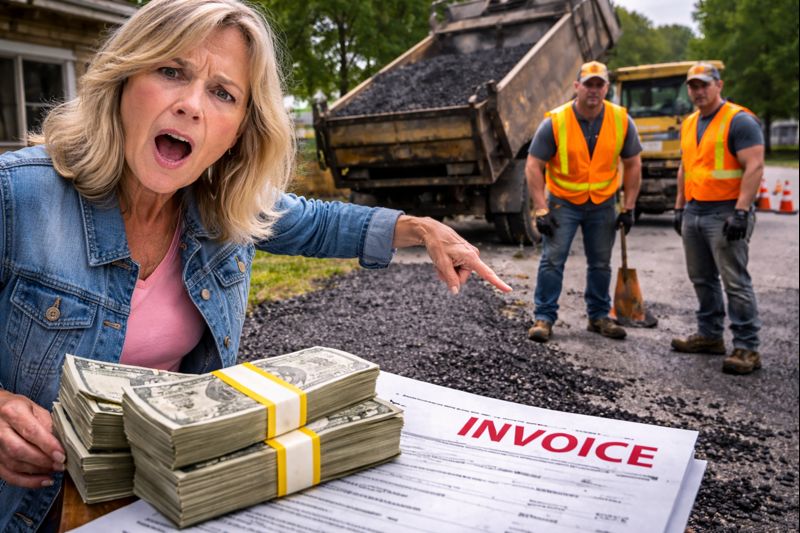
It began with a knock that seemed harmless. Friendly. Almost helpful. A crew stood outside offering to “fix” something Tracy Becker never asked to be fixed. Two weeks later, she was standing over cracked, uneven asphalt outside her business, being demanded for $28,000, and warned that if she didn’t pay, they’d tear it all out. What followed wasn’t just a bad contractor story — it was a textbook paving scam that left one woman shaken, furious, and fighting back.
A Job She Never Asked For
Tracy Becker owns a business in Port Alberni. Nearly two weeks ago, a crew showed up unannounced, claiming they were “already in the area” and could quickly pave part of the property.
Tracy says she never signed a contract. Never agreed on a price. In fact, she says she didn’t even want new asphalt.
“He came walking up like it was already decided,” Tracy explained. “Before I knew it, they were doing the work.”
By the time she realized what was happening, it was already too late.
From Surprise Work to Shock Demand
The paving job, according to Tracy, was rushed and poorly done. Uneven edges. Sloppy finish. Asphalt she says doesn’t even match what was promised — if anything was promised at all.
Then came the bill.
$28,000.
Tracy says she was stunned. There had been no clear quote. No written agreement. No explanation that the work would cost anywhere near that amount.
When she refused to pay, things escalated fast.
“They Told Me They’d Rip It All Out”
According to Tracy, the crew didn’t just argue. They threatened.
“They said they’d pull it all up if I didn’t pay,” she said. “And I told them — go ahead. Pull it up. We’re not paying for it anyway.”
That threat is a common tactic in paving scams, consumer advocates say. Crews pressure property owners by creating fear — of damage, legal trouble, or total loss — hoping intimidation will force payment.
In Tracy’s case, it had the opposite effect.
A Classic Paving Scam Pattern
Experts say Tracy’s story follows a familiar script:
- Unsolicited workers show up unannounced
- They claim leftover materials from another job
- Work begins quickly, often without clear consent
- A massive bill appears afterward
- Threats follow when payment is refused
These scams often target small business owners, seniors, and busy property managers — people caught off guard and pressured in the moment.
“It’s designed to confuse and overwhelm,” one consumer protection expert explained. “By the time you realize what’s happening, they’re already demanding money.”
Examining the Damage
Standing outside her business, Tracy examined the asphalt she never wanted. She pointed out areas where the paving looked uneven and poorly finished.
“This isn’t even good work,” she said. “And they expect $28,000 for it?”
Contractors and paving professionals who reviewed similar cases say legitimate paving jobs always involve:
- Written contracts
- Clear pricing upfront
- Permits when required
- Time for the customer to decide
None of that, Tracy says, happened here.
Why These Scams Keep Working
Paving scams are difficult to police because crews often move quickly from town to town. By the time complaints are filed, they’re already gone.
Many victims pay out of fear — worried about lawsuits, property damage, or confrontation.
Tracy refused.
“I’m not being bullied,” she said. “This is my property.”
What Authorities Recommend
Consumer protection agencies urge anyone facing a similar situation to:
- Never agree to unsolicited work
- Demand written contracts and quotes
- Refuse work that starts without consent
- Call local authorities if threatened
- Document everything with photos and video
And most importantly: don’t pay under pressure.
A Warning to Other Property Owners
Tracy decided to speak out so others wouldn’t fall into the same trap.
“If they did this to me,” she said, “they’re doing it to others.”
She’s now warning business owners and homeowners to be cautious of anyone offering “quick deals” at your door.
The Question That Lingers
An unwanted job. A shocking bill. A threat meant to scare her into silence.
Tracy stood her ground.
But her story leaves a chilling question for anyone who owns property:
If a crew shows up uninvited and starts working — do you know your rights before they demand thousands?