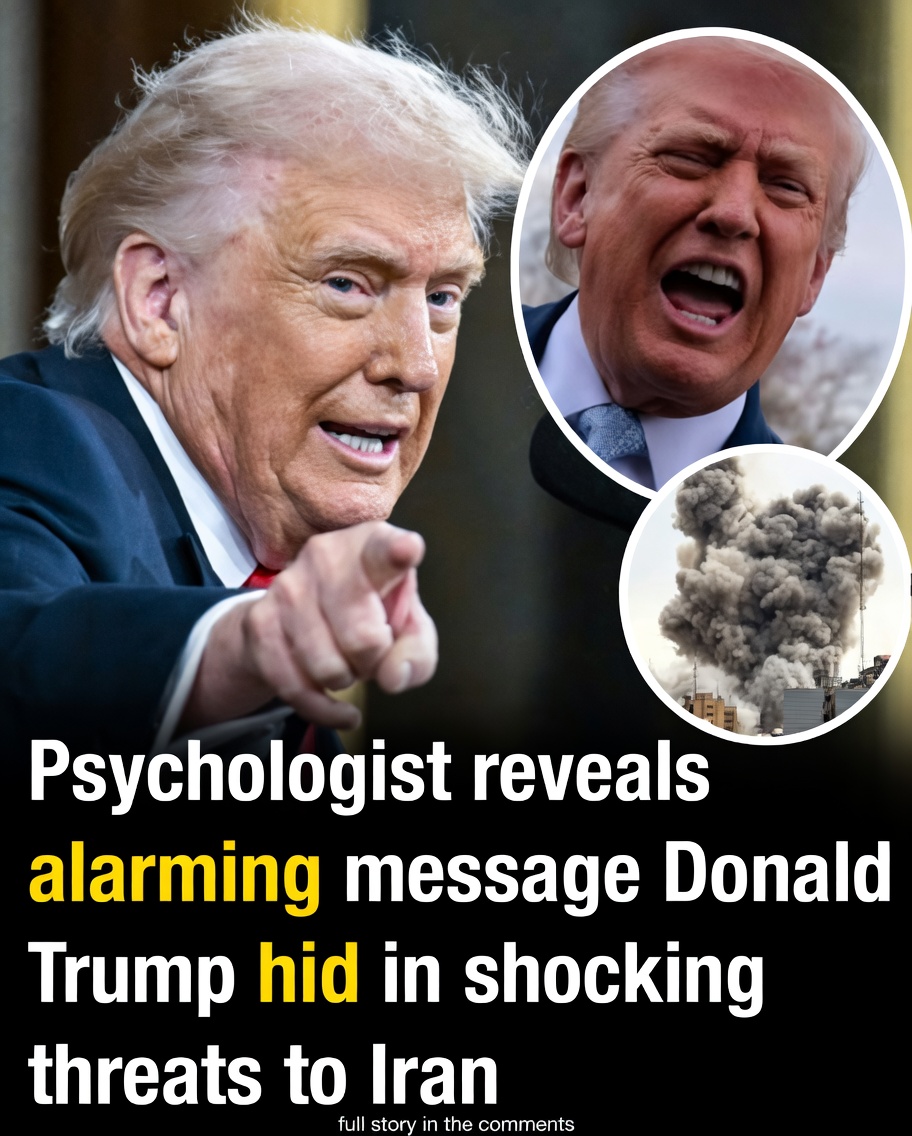
You watched the clip of Donald Trump’s social media post and felt a chill run down your spine as the words appeared on screen: “A whole civilization will die tonight, never to be brought back again. I don’t want that to happen, but it probably will.” The statement was raw, direct, and carried the kind of weight that immediately sent ripples through global newsrooms, diplomatic channels, and living rooms around the world. What appeared at first glance to be another escalation in the already tense standoff with Iran quickly drew a different kind of scrutiny when a clinical psychologist stepped forward with a striking analysis, suggesting that Trump’s increasingly intense rhetoric was not simply political posturing or military signaling. Instead, the psychologist argued, the language hid a deeper, more alarming psychological message, one that went beyond the surface threats and pointed to something far more complex playing out in the President’s mind and strategy, a revelation that forced even seasoned observers to pause and reconsider the true intent behind the words that had the power to change the course of history in a single night.
The Back-Story of Escalating Rhetoric
The post came on the heels of remarks delivered at the White House, where Trump escalated his warnings by stating that Iran could be “taken out in one night,” while also calling for the opening of the Strait of Hormuz and setting a firm deadline for what he described as an “acceptable” agreement. The language was unfiltered and carried the kind of urgency that immediately raised fears of imminent military action, leaving diplomats scrambling and families worldwide holding their breath.
The Emotional Stakes for the World
For millions of people, the threats were not abstract. They carried the very real possibility of conflict that could affect economies, security, and the lives of ordinary citizens far beyond the region. The psychologist’s analysis added another layer of unease, suggesting that the words were serving a broader psychological purpose that extended beyond direct political or military messaging.
The Complication of Interpreting the Message
The complication arose when the psychologist pointed out the unusual pivot in Trump’s language. After the stark warning about a civilization dying, the post shifted toward hope for “complete and total regime change” and the possibility that “something revolutionarily wonderful can happen.” This contrast created confusion and concern among experts who saw it as more than simple negotiation tactics.
The Turning Point in the Psychologist’s Insight
The turning point came when the psychologist suggested that the alarming message was not just bluster but a deliberate psychological strategy. By framing the threat in such absolute terms, Trump may have been attempting to create maximum pressure while leaving room for a dramatic reversal, a tactic that could serve to unsettle opponents and rally domestic support at the same time.
The Practical Insight Behind the Rhetoric
Experts note that leaders often use language as a tool to shape perception and behavior. In this case, the psychologist argued that the hidden message was about projecting strength and inevitability while keeping an escape hatch open for negotiation, a complex psychological play that could explain the rapid shift from doom to cautious optimism in the same post.
The Climax of Global Reaction
The post and the psychologist’s analysis quickly became the center of intense debate. World leaders, analysts, and citizens alike wrestled with the implications, wondering whether the words were a genuine warning, a negotiating tactic, or something deeper and more personal playing out in real time on the world stage.
In the Immediate Aftermath
In the hours following the statement, social media and news outlets were flooded with reactions ranging from alarm to skepticism. The psychologist’s interpretation added fuel to an already volatile situation, forcing people to consider not just what was said, but why it was said in that particular way.
The Hopeful Lesson That Still Resonates
This moment serves as a powerful reminder that words from those in power carry layers of meaning that go beyond the surface. Understanding the psychological dimensions behind political rhetoric can help us navigate uncertainty with clearer eyes and a more measured response, even when the stakes feel impossibly high.
As you reflect on the psychologist’s analysis of Trump’s threats and feel the weight of words that could shape the future, ask yourself this: when leaders speak in such absolute and shifting terms, how can we separate the psychological strategy from the real risks, and what responsibility do we have to look deeper before reacting?