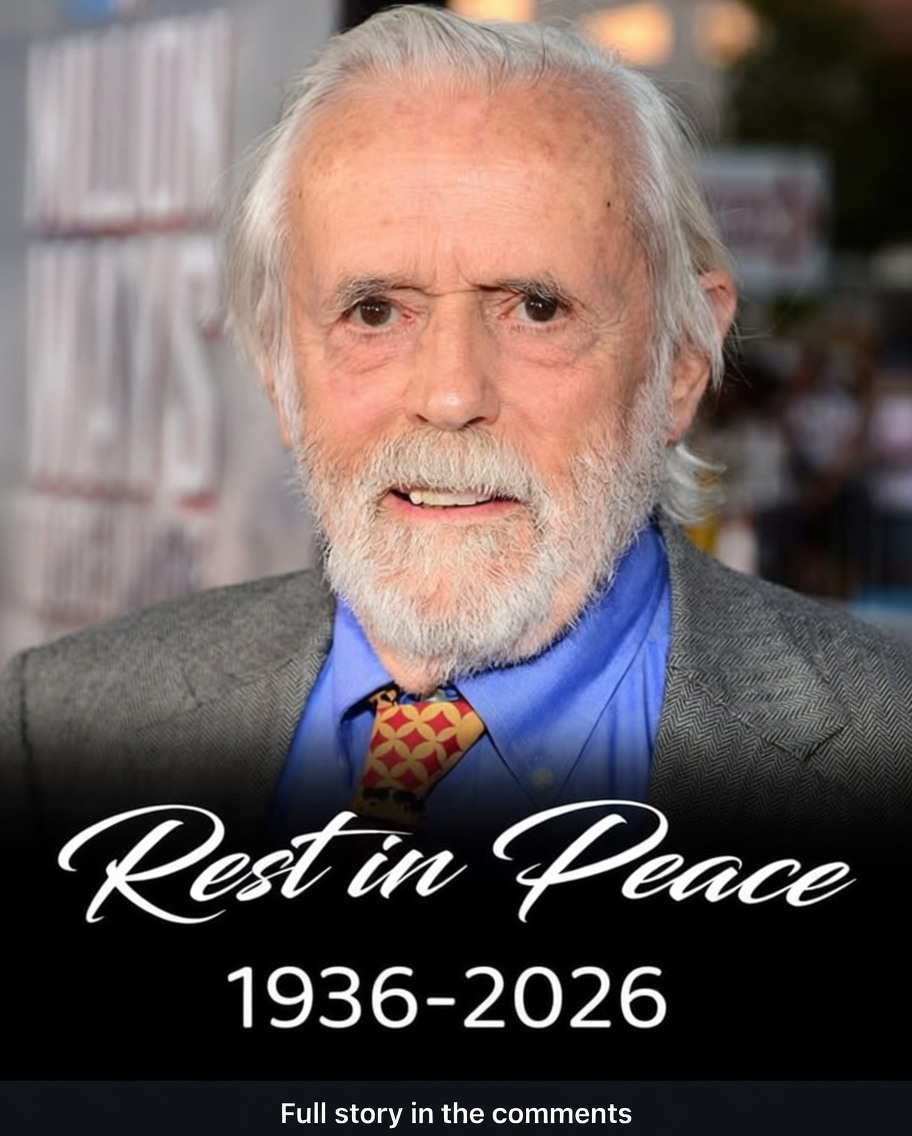
The news arrived quietly, the way Matt Clark himself often appeared on screen—unassuming, yet impossible to ignore once noticed. At 89, the veteran character actor passed away peacefully at his home, surrounded by family. No dramatic illness, no long public battle—just the gentle close of a life that had spanned more than half a century of American film and television. His death was confirmed by loved ones in a brief family statement, asking for privacy while thanking fans for decades of support. The world of cinema lost one of its most dependable presences, a man whose face told stories even when his lines were few.
Matt Clark was never the leading man, and he never tried to be. Born in 1936, he grew up in a working-class family and served in the military before finding his way to acting through community theater and small stages. His breakthrough came in the 1960s and 1970s Westerns and gritty dramas—roles as sheriffs, outlaws, ranch hands, and weary travelers. He had a face carved by experience: deep lines around the eyes, a voice like worn leather, a presence that said “I’ve seen things. ” Directors loved him for it. He could steal a scene with a single glance or a single line, then fade back into the background, letting the story breathe.
His filmography reads like a history of American cinema. He appeared in classics like “The Outlaw Josey Wales,” “Pat Garrett and Billy the Kid,” “Jeremiah Johnson,” and “The Bridge at Remagen. ” He worked with icons—Clint Eastwood, Robert Redford, Sam Peckinpah, John Huston—and held his own every time. Later he moved into television, becoming a familiar face on shows like “The Waltons,” “Bonanza,” “The Streets of San Francisco,” and “War and Remembrance. ” He played cops, judges, fathers, villains, and everymen with equal ease. No matter the role, he brought the same truth: people are complicated, scarred, and still worth rooting for.
Off screen, Matt lived simply. He married his wife Joy in 1959; they raised five children together and stayed married until her death in 2018. He was a private man, rarely giving interviews, never chasing fame. He preferred quiet life in the California mountains, reading, painting, spending time with grandchildren. Friends described him as generous, thoughtful, quick with a joke but slow to anger. He mentored younger actors, always encouraging them to “find the truth in the moment. ” His legacy wasn’t measured in awards (though he earned respect and several nominations)—it was measured in the trust he inspired every time he stepped in front of a camera.
The complication of his passing is the silence it leaves. Character actors like Matt Clark are the backbone of storytelling; when they go, the whole frame feels slightly less steady. Younger generations may not know his name, but they’ve seen his work—on late-night reruns, streaming Westerns, classic TV marathons. His death reminds us how much we owe to the performers who never sought the spotlight but made every scene better simply by being in it.
The turning point for many fans came with tributes from those who knew him best. Clint Eastwood posted a simple black-and-white photo of them on set with the caption: “A good man and a great actor. Rest easy, Matt. ” Robert Redford shared a memory of working together, calling him “the most honest actor I ever knew. ” Countless fans flooded social media with clips of his best scenes—quiet moments that suddenly felt monumental. His family asked for donations to veterans’ charities in lieu of flowers, honoring his service and his lifelong support for fellow veterans.
The hidden truth in Matt Clark’s career is that greatness doesn’t always shout. He never won an Oscar, never had his face on a billboard, never made headlines for scandal or excess. He simply showed up, did the work, and made every project better. His life was a masterclass in humility, consistency, and quiet excellence. He raised a family, loved one woman for nearly sixty years, served his country, and left behind performances that still move people decades later.
The immediate aftermath has been a gentle wave of remembrance. Classic films featuring him have seen streaming spikes. Western fan pages shared montages of his roles. Old interviews resurfaced—Matt speaking softly about the craft, about listening more than talking, about respecting the story above ego. His children spoke briefly to the press, thanking fans for the love shown to their father. “He never wanted the spotlight,” his daughter said. “But he loved knowing he made people feel something. ”
In the reflective close, Matt Clark’s passing reminds us that true legacy isn’t built on fame—it’s built on showing up authentically, day after day, year after year. At 89, he left behind a body of work that feels timeless, a family that loved him deeply, and a quiet example of how to live with dignity. As you think about your own life—perhaps planning retirement, updating a will, or simply appreciating the people who make your days better—remember his lesson: you don’t need the marquee to matter. You just need to be real. Which Matt Clark role touched you most? Or who in your life has been the “quiet cornerstone” you’re grateful for? Share in the comments below.