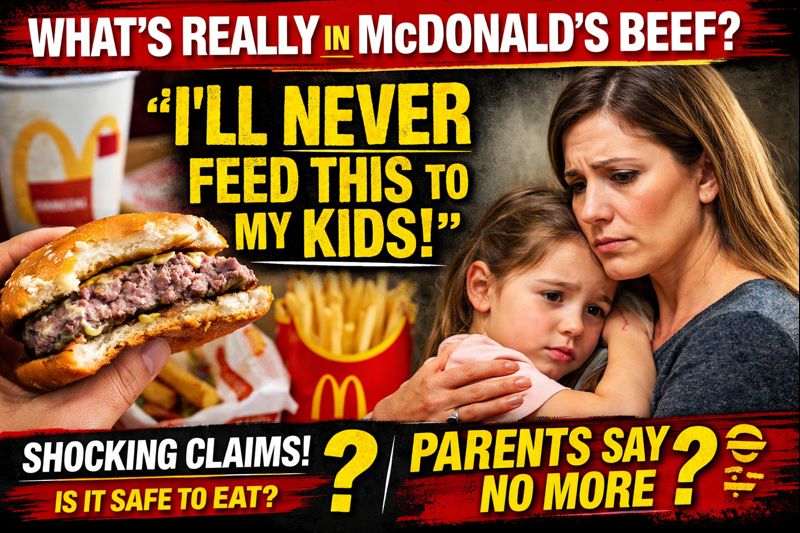
Parents are saying it out loud now. Not in whispers. Not in private. On social media, in viral videos and comment sections, consumers are openly questioning something many once trusted without a second thought: what’s really inside McDonald’s beef? One user’s claim that the beef is “not good” has snowballed into a much bigger conversation — one that has left people asking whether fast food convenience comes at a hidden cost.
McDonald’s says its beef is processed with care. But many consumers aren’t convinced anymore.
“Something About It Feels Wrong”
The backlash didn’t start with a scientific study or an official investigation. It started with people. Regular customers. Parents. Viewers watching short clips online and sharing personal reactions. Some say the beef looks overly processed. Others say it doesn’t resemble “real food” anymore. A growing number go further — claiming they’ve stopped eating McDonald’s altogether.
One comment echoes across platforms:
“I won’t eat this. And I definitely won’t give it to my kids.”
That sentence alone has been repeated thousands of times, liked, shared, and stitched into new videos. Whether these claims are factual or emotional, the impact is undeniable.
McDonald’s Pushes Back: “Our Beef Is 100% Real”
McDonald’s has responded to similar concerns before — and its stance remains firm. The company states that its beef patties are made from 100% real beef, with no fillers and no artificial preservatives in many regions. According to McDonald’s, the beef is seasoned simply with salt and pepper and processed under strict quality and safety controls.
The company says it works closely with regulated suppliers, follows government food safety standards, and conducts routine inspections across its supply chain. In previous transparency campaigns, McDonald’s even opened its kitchens and production processes to cameras, aiming to show consumers exactly how their food is made.
But here’s the problem: trust is no longer automatic.
Why Parents Are the Most Concerned
Food experts say this reaction isn’t just about McDonald’s. It’s about a wider shift in how people think about food — especially for children. Parents today are more cautious than ever, questioning ingredients, sourcing, and long-term health effects.
Fast food, once seen as an occasional treat, is now under constant scrutiny. With rising awareness around childhood nutrition, obesity, and ultra-processed foods, even the perception of poor quality can be enough to turn families away.
For many parents, the logic is simple:
“If I don’t fully understand what it is, I don’t want my child eating it.”
Social Media Changes Everything
In the past, companies controlled the narrative through ads and press releases. Today, a single emotional video can undo years of branding. Social media doesn’t wait for lab results. It reacts to feelings, visuals, and personal stories.
That’s why even unverified claims gain traction. When thousands of people agree in comments, doubt spreads fast. Official statements start to feel distant — and corporate — compared to raw, emotional consumer reactions.
Is This About Beef — Or About Trust?
So far, no verified evidence has proven McDonald’s beef to be unsafe. Regulatory bodies continue to allow its sale. Millions still eat there daily. Yet something has clearly changed.
The controversy reveals a deeper issue: people no longer want reassurances — they want absolute transparency. They want to know how food is sourced, how it’s processed, and whether “fast” food can ever truly be “good” food.
The Cliffhanger Question
McDonald’s insists its beef meets safety standards. Consumers insist something doesn’t feel right.
So who do people believe?
As more users say they’re walking away — and refusing to feed their kids McDonald’s — one question remains unanswered:
Is this just another internet scare… or the beginning of a real shift in how people view fast food forever?