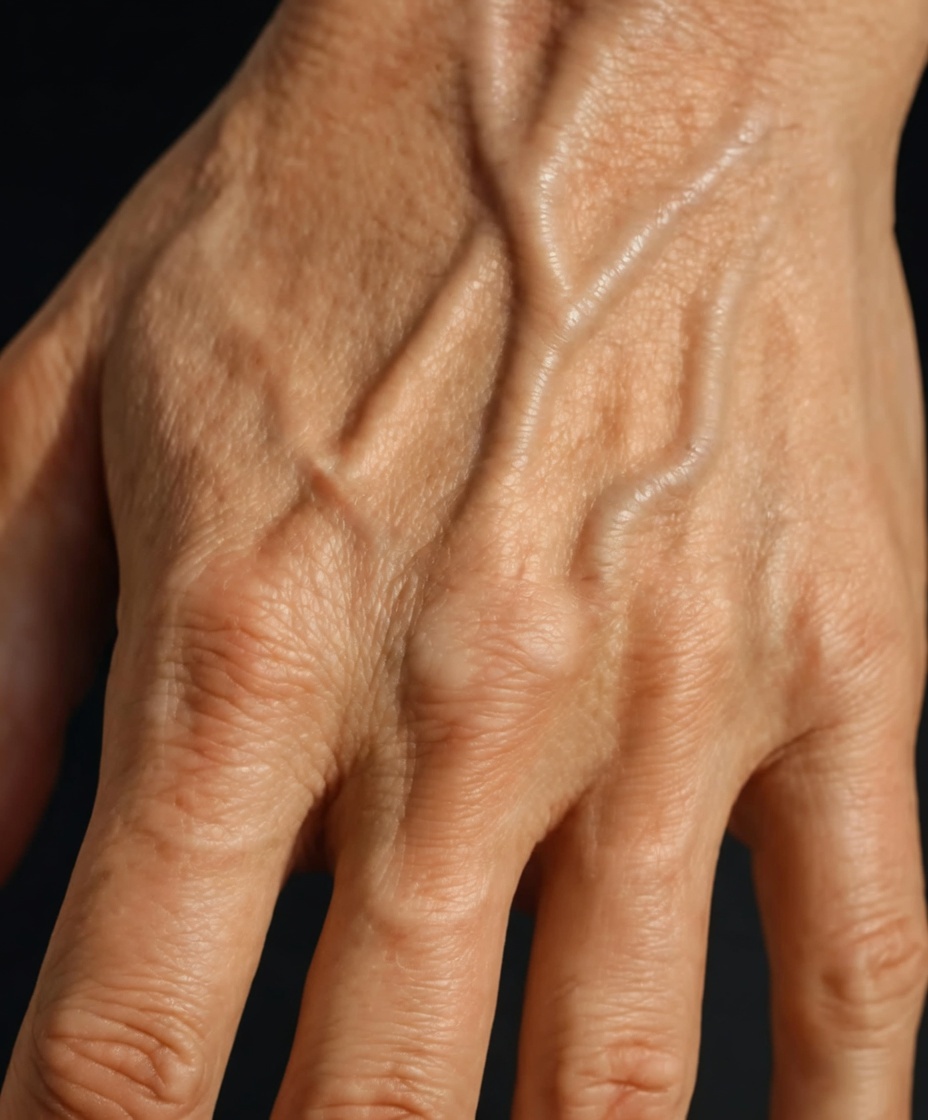
Visible veins — those blue-green lines that suddenly stand out on the backs of hands, forearms, legs, or even chest — become much more noticeable after 40. Social media loves to spin it positively: “Prominent veins = low body fat, great circulation, athletic build! ” But the reality is more nuanced — and sometimes the opposite.
Here’s what actually happens.
As we age, skin thins and loses collagen and subcutaneous fat. That cushioning layer that once hid veins gradually disappears, making them more prominent even if nothing else has changed. At the same time, vein walls lose elasticity, valves weaken, and blood can pool more easily — leading to varicose or spider veins in legs, or simply more visible “normal” veins elsewhere.
So visible veins often mean:
Natural aging & thinner skin (most common, harmless reason)
Lower body fat percentage (yes, athletes and very lean people show more — but most of us aren’t in that category)
Genetics (fair skin + family history = earlier/more noticeable veins)
Dehydration or low blood volume (veins pop more when fluid is low)
Hormonal shifts (menopause, pregnancy, thyroid changes can make them stand out)
Prolonged standing/sitting (poor circulation causes pooling)
The GOOD news: in most cases, newly visible veins after 40 are cosmetic — not dangerous. They don’t mean poor circulation. In fact, strong, healthy veins often look more prominent because blood is flowing well.
The BAD news: sometimes they do signal issues worth checking.
Red flags to never ignore include:
Sudden bulging, rope-like veins that appear overnight (possible clot or deep vein issue)
Veins that are red, warm, swollen, or painful (phlebitis or infection risk)
One leg/arm much more veiny than the other (asymmetry can indicate blockage)
Visible veins + leg heaviness, swelling, itching, or skin discoloration (chronic venous insufficiency)
Veins on chest/breasts that appear suddenly (rarely, can signal underlying pressure changes)
When should you see a doctor? If veins are painful, changing rapidly, or accompanied by swelling/redness/leg cramps/ulcers. A simple ultrasound (venous duplex) can check for clots or valve problems. Most people just need reassurance — or cosmetic options like sclerotherapy/lasers if they bother you.
Practical tips if veins bug you:
Stay hydrated (dehydration makes them pop more)
Elevate legs when sitting
Wear compression socks for long flights/drives
Strength train legs (muscle pump helps circulation)
Moisturize + gentle massage (won’t hide veins but improves skin health)
Avoid extreme heat (hot baths/showers dilate veins temporarily)
A 58-year-old reader shared: “I panicked when my hand veins became super visible last year. Thought it was heart trouble. Turned out my skin just thinned — doctor laughed and said ‘welcome to your 50s. ’ I started moisturizing more and stopped stressing. Best decision. ”
Bottom line: visible veins after 40 are usually just your skin telling its age story — not a medical emergency. But trust your gut. If something feels off, get it checked. Peace of mind is free.
So next time you see those blue lines — breathe. You’re not falling apart. You’re just… living longer.
The conversation is just getting started — and for countless people over forty, it is already changing everything for the better.
Your body has carried you this far. The visible lines are proof of every mile — not weakness. Wear them with quiet pride. 🩸✨