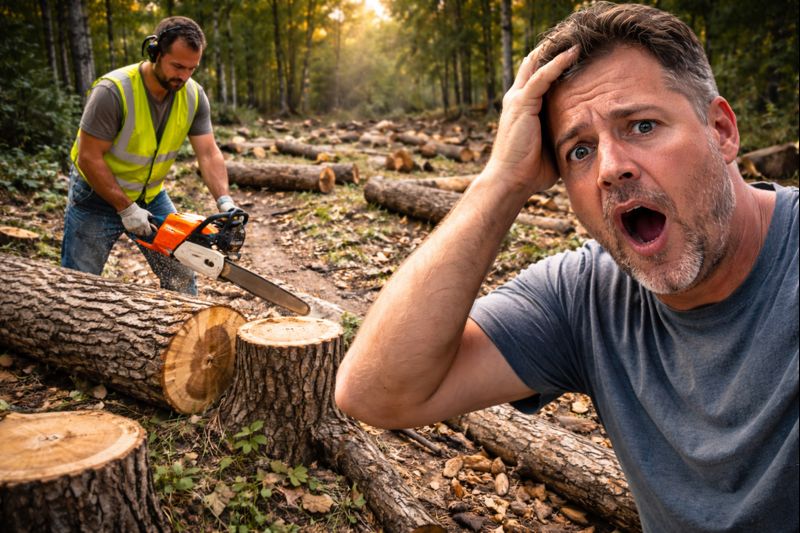
At first, he thought it was a storm. Trees don’t just disappear on their own. But there were no broken fences, no high winds, no weather warnings. Just silence… and then the sound that made his stomach drop. Chainsaws. When this homeowner stepped onto his property, the scene looked like a war zone. Dozens of massive trees were gone. Some older than the United States itself. And the person responsible? Someone who never asked permission.
Now, that moment could cost a neighbor up to $1.5 million.
A Forest Reduced to Stumps
The homeowner returned from work expecting nothing out of the ordinary. Instead, he found 40 trees cut down across his land. Thick trunks lay scattered on the ground. Fresh sawdust covered the soil. The trees weren’t small or replaceable — several were estimated to be over 150 years old.
“This wasn’t a storm,” he said. “This was deliberate.”
When asked what could have caused so much destruction in such a short time, the answer was blunt:
“It was a hurricane of chainsaws.”
The Moment Everything Changed
According to reports, the chainsaws weren’t a coincidence. As the homeowner walked toward the wooded area behind his house, he could still hear them running. That’s when he realized the damage was still happening — in real time.
The man allegedly responsible was identified as Sammy Shinway, a 40-year-old neighbor.
Authorities say Shinway had no legal right to cut down the trees.
And yet, nearly an entire section of forest was gone.
Why This Is a Huge Legal Problem
Tree law experts say cases like this are far more serious than most people realize. Mature trees aren’t just landscaping — they’re property, assets, and in some states, protected resources.
When someone cuts down trees on land they don’t own, courts can impose triple damages, meaning the responsible party may have to pay three times the value of each tree.
That’s how a few hours with chainsaws can turn into a seven-figure penalty.
In this case, experts estimate the total damages could reach $1.5 million, based on:
- The number of trees (40)
- Their age and size
- Their ecological and property value
- Restoration and replacement costs
“You Can’t Replace 150 Years”
Environmental specialists say some of the trees lost may have been irreplaceable within a human lifetime.
“You can plant new trees,” one expert explained, “but you can’t replace 150 years of growth.”
Beyond aesthetics, mature trees:
- Prevent erosion
- Provide wildlife habitat
- Regulate temperature
- Increase property value
Losing them instantly can permanently change land use and environmental balance.
What Was the Motive?
Investigators are still piecing together why the trees were cut down in the first place. Early reports suggest a property line dispute, but no formal agreement or survey reportedly allowed the work to proceed.
That’s where many homeowners get into serious trouble.
Assuming land boundaries — instead of confirming them — is one of the fastest ways to end up in court.
A Cautionary Tale for Homeowners Everywhere
Legal experts say this case should serve as a warning. Even if a tree appears to be “on your side,” cutting it down without a proper survey, written permission, or court approval can result in devastating consequences.
And hiring a contractor doesn’t protect you. If you ordered the work, you’re still liable.
What Happens Next?
Authorities are reviewing evidence, including:
- Property surveys
- Witness statements
- Contractor records
- Environmental assessments
If the court rules against Shinway, the financial penalties could follow him for years.
And for the homeowner who lost his forest, no amount of money can truly undo the damage.
The Cliffhanger Question
Forty trees. Some older than 150 years. Gone in a single day.
All because someone didn’t stop to ask one simple question:
“Is this actually my land?”
As this case moves forward, one thing is clear — when it comes to trees, mistakes don’t just fall… they cost millions.