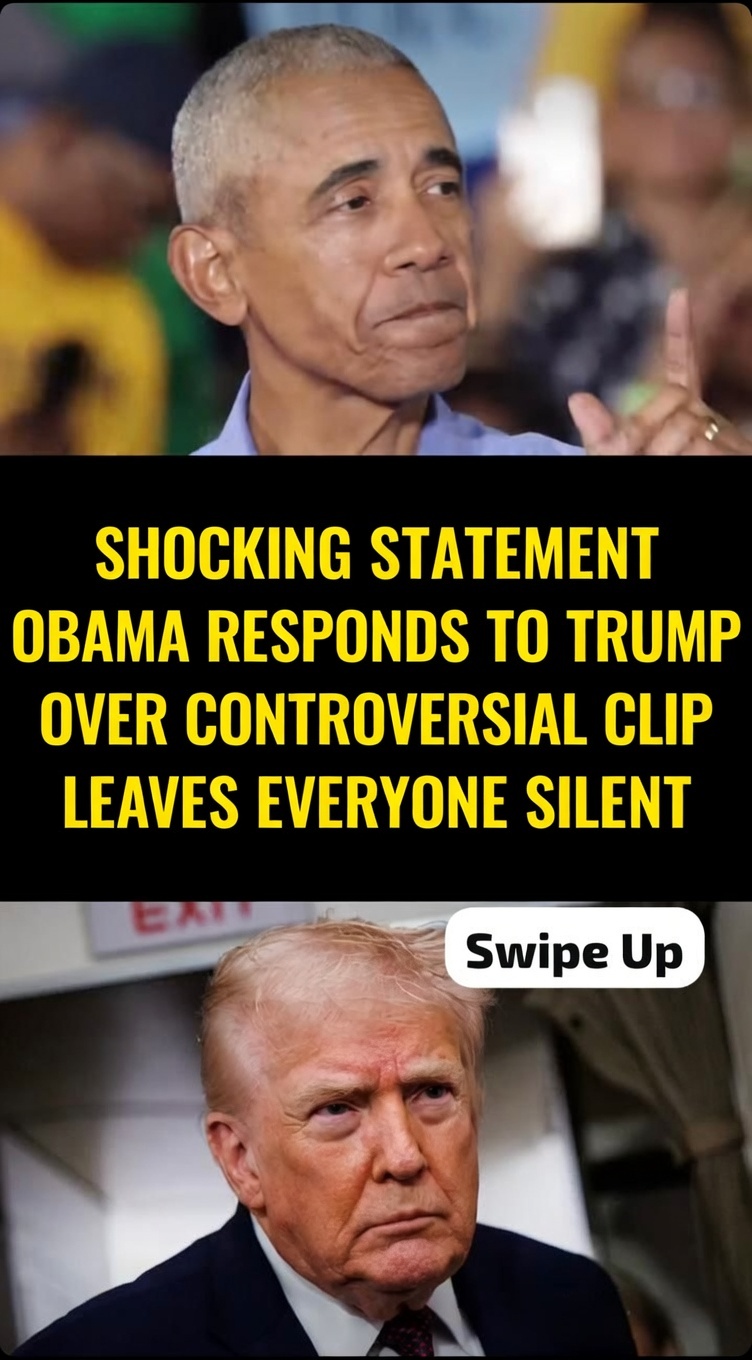
Former President Barack Obama recently spoke about the increasingly harsh tone of modern political discourse following controversy surrounding a social media post shared by President Donald Trump. The episode drew widespread public attention and sparked renewed debate about civility in American politics. The controversy began when a video circulated on the social media platform Truth Social on February 5. The clip included an edited segment depicting the faces of Barack Obama and Michelle Obama superimposed on apes in a racist meme, spliced into a longer video promoting conspiracy theories about the 2020 election. The post, shared late Thursday night from Trump’s official account, triggered immediate bipartisan outrage, with calls for its removal coming from both Republicans and Democrats. By Friday morning, the video was deleted, but the damage was done — amplifying long-standing concerns about racism, online toxicity, and the erosion of respect in public life. For many Americans over 40, who grew up with political debates that stopped short of dehumanizing imagery, this incident felt like a new low in an already polarized era.
The video itself was just over a minute long, focusing primarily on unfounded claims of voter fraud in 2020. But at the 60-second mark, a brief AI-generated clip appeared: two primates dancing to “The Lion Sleeps Tonight,” with the Obamas’ smiling faces superimposed on their bodies. It was a blatant racist trope, evoking centuries-old dehumanization of Black people. Trump initially defended the post through White House spokespeople, dismissing criticism as “fake outrage” from the media. By midday Friday, however, the administration blamed it on a staff error, claiming Trump hadn’t seen the full clip before it was shared. The president himself refused to apologize, telling reporters aboard Air Force One: “I didn’t make a mistake. I just looked at the first part. ” The refusal only fueled the fire, with civil rights groups like the NAACP condemning it as “beyond offensive” and calling for accountability.
Obama’s response came a week later, on February 14, in a podcast interview with Brian Tyler Cohen. Without naming Trump directly, Obama addressed the broader “devolution of the discourse” in American politics, using the incident as a prime example. “First of all, I think it’s important to recognize that the majority of the American people find this behavior deeply troubling,” Obama said. He lamented the loss of “shame about this among people who used to feel like you had to have some sort of decorum and a sense of propriety and respect for the office. ” Describing the current climate as a “clown show” on social media and television, Obama suggested that such tactics get attention but ultimately alienate most voters. “It is true that it gets attention. It’s true that it’s a distraction,” he added, implying that inflammatory posts like this one hurt their perpetrators more than help. For listeners over 40, Obama’s measured tone evoked memories of his own presidency, when he navigated crises with calm rhetoric rather than viral provocations.
The backlash was swift and bipartisan. Republican figures like Senator Mitt Romney called the post “beneath the dignity of the office,” while House Minority Leader Hakeem Jeffries labeled it “racist garbage. ” Even some Trump allies distanced themselves, with one anonymous advisor telling CNN it was “a staff screw-up that made us look bad. ” The NAACP demanded a formal apology, stating: “Depicting Black leaders as animals is not a joke — it’s a dangerous echo of America’s darkest history. ” Social media platforms faced scrutiny too; Truth Social, owned by Trump’s media company, was accused of lax moderation, though it defended the post’s initial presence as “free speech” before removal. Hashtags like #ApologizeTrump and #NoRoomForRacism trended for days, with millions sharing personal stories of racism and calls for unity.
This incident has reignited national conversations about civility in politics, especially among Americans over 40 who recall a time when presidential discourse carried weight and restraint. Many remember Obama’s 2008 campaign emphasizing “hope” and bipartisanship, contrasting sharply with today’s viral memes and personal attacks. Parents discuss with adult children how social media amplifies toxicity, turning policy debates into character assassinations. Grandparents share stories of the Civil Rights era, reminding younger generations that symbols like animal depictions have real historical pain attached. Community groups have organized town halls on “respectful dialogue,” while schools incorporate lessons on media literacy and racism in curricula.
Trump’s refusal to apologize has deepened divisions. Supporters rally around “free speech” and “anti-PC” rhetoric, viewing the outrage as overblown. Critics see it as evidence of ongoing racism in leadership, pointing to Trump’s past controversies like the Central Park Five case or “birther” claims against Obama. Polls show a dip in approval among independents over 45, with 58% calling the post “unacceptable. ” The White House has pivoted to damage control, emphasizing policy wins like economic growth and border security, but the meme’s virality ensures it lingers.
Obama’s comments, delivered in a 47-minute interview, went beyond the video to critique the overall “clown show” in media and politics. He expressed optimism that most Americans reject such behavior, predicting it would backfire electorally. “There’s this sort of clown show that’s happening in social media and on television,” he said, adding that people crave decency and propriety. For Obama, the incident exemplifies a loss of shame that once kept discourse in check. Historians note this echoes past presidential rebukes, like Eisenhower’s warnings on military-industrial complex or Carter’s malaise speech — calls for moral reflection amid crisis.
The broader implications touch families over 40 deeply. Many are reevaluating online habits, muting toxic accounts or discussing with grandchildren how words can wound. Support for anti-hate legislation has surged, with petitions for stronger social media regulations gaining traction. Mental health experts report increased anxiety from political toxicity, advising limits on news consumption. Churches and civic groups host “civility workshops,” fostering dialogue across divides.
As February 2026 draws to a close, the controversy refuses to fade. Trump’s post may have been deleted, but its echo remains — a reminder of how fragile civility is in the digital age. Obama’s response offers a counterpoint: hope that decency still prevails, that shame can return, that respect for the office endures. For a nation weary of division, it’s a message that resonates.
The conversation is just getting started — and for countless Americans over 40 yearning for a return to respectful discourse, it is already changing everything for the better.
One post can ignite a firestorm. One response can call for calm. In the harsh tone of 2026 politics, Obama’s words remind us: civility isn’t weakness. It’s the foundation of a nation worth fighting for.