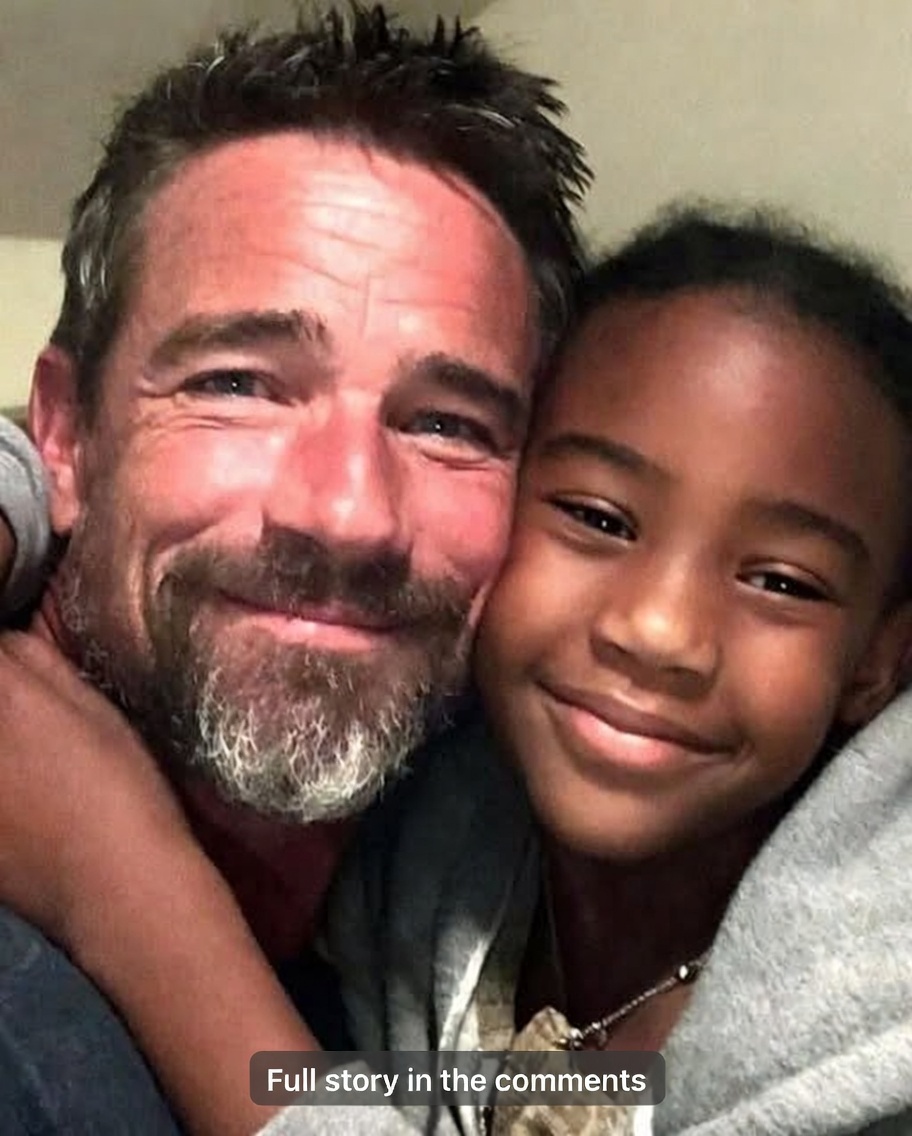
I stood in our kitchen, still in my work clothes, coffee mug forgotten in my hand, while Nora sat at the table with her head in her hands. The wedding was four days away. Invitations sent, cake ordered, Sarah’s dress hanging in her closet with the little pearl buttons she loved. I had spent the previous night in a hotel with my daughter, trying to keep my voice steady while she talked excitedly about walking down the aisle in matching flowers. Now Nora was crying, and I felt the ground tilting beneath me.
“Tell me why,” I said again, quieter this time. “Why can’t Sarah be at our wedding? ” Nora lifted her face, mascara streaked, and whispered the words that made the room spin. “Because… she looks exactly like my sister. ”
I stared at her, waiting for the rest, but she just kept crying. “My little sister,” she said. “Emily. She died when she was 12. Car accident. I was 19. I was supposed to be watching her that day. ”
The kitchen light suddenly felt too bright. I sat down hard on the chair opposite her. Sarah—my Sarah—had been adopted at 18 months old. We never knew much about her birth family. The agency said the mother was young, the father unknown, no relatives came forward. Sarah had come to us with big brown eyes, a shy smile, and a laugh that could melt anyone. Over the years people sometimes said she looked like Nora—same dark hair, same dimple in the left cheek—but I’d always thought it was just one of those sweet coincidences couples notice when they’re happy.
Nora kept talking, words tumbling out like they’d been locked behind a door for years. “I didn’t see it at first,” she said. “Not when we started dating. Not when I fell in love with both of you. But the closer we got to the wedding, the more I looked at Sarah and saw Emily. Same age now that Emily never got to be. Same smile. Same way she tilts her head when she’s thinking. Every time I see her in that flower-girl dress I feel like I’m watching my sister walk down the aisle—the aisle she never got to have at her own wedding, or prom, or anything. And I can’t… I can’t breathe when I picture it. ”
She reached for my hand. I didn’t pull away, but I couldn’t move either. “I love Sarah,” she said. “I swear I do. She’s amazing. But being in a wedding with her standing there looking exactly like the little girl I failed… it feels like I’m being punished. Like the universe is saying, ‘Here’s what you could have had if you’d been better. ’ I can’t do it. I can’t stand at the altar knowing she’s behind me wearing white and flowers and looking like my dead sister. ”
I sat there for a long time. The wall clock ticked. Somewhere upstairs Sarah was probably reading or texting friends about the wedding. My daughter. My whole world since the day we brought her home. And now the woman I loved was telling me that loving her back was tearing her apart because of a ghost I never knew existed.
The complication settled in like cold water. Nora wasn’t rejecting Sarah because she didn’t want her. She was rejecting the wedding because she couldn’t face the mirror Sarah held up—unintentionally, innocently—showing her every regret she’d carried since she was 19. I thought of all the times Nora had braided Sarah’s hair, helped with homework, cheered at soccer games. She hadn’t been pretending. She really did love her. But love wasn’t enough to quiet the screaming memory inside her head.
I asked the only question that mattered. “Would you still marry me if Sarah wasn’t part of the ceremony? ” Nora looked at me like I’d slapped her. “I don’t want to exclude her forever,” she whispered. “I just… I can’t do the wedding with her there. Not like this. Not when she looks so much like Emily. I’d be crying through the whole thing, and not happy tears. ”
I stood up. My legs felt unsteady. “I need to think,” I told her. “And you need to decide if you can love both of us—the real us—or if the past is always going to stand between you and Sarah. ” I left the house again. I drove to the hotel, sat on the bed while Sarah slept in the other room, and stared at the ceiling until dawn.
The hidden truth hit hardest in the silence. Nora hadn’t fallen out of love with Sarah. She’d fallen into grief so deep it had disguised itself as rejection. The little girl I adopted wasn’t a problem to Nora—she was a living reminder of the sister she couldn’t save. And I had to decide whether I could ask my daughter to step aside for one day so the woman I loved could breathe, or whether I had to protect Sarah’s place in our family above everything else.
The immediate aftermath was the longest night of my life. I called my sister at 3 a. m. She listened without interrupting, then said the only thing that made sense: “You don’t have to choose between them. You have to choose what kind of family you want to build going forward. ” I went home at sunrise. Nora was still at the kitchen table, eyes swollen, coffee cold. I sat beside her. “We postpone the wedding,” I said. “We get you help—therapy, grief counseling, whatever it takes. Sarah stays in our lives, every day, no exceptions. When you’re ready to see her without seeing Emily, we set a new date. If that day never comes… then we don’t get married. ”
She cried again, but this time she nodded. “I don’t want to lose either of you,” she whispered. “Then don’t,” I told her. “We’ll carry Emily together. But Sarah gets to be Sarah—not a replacement, not a ghost. Just our daughter. ”
We’re not married yet. The date is open. Nora started therapy the next week. She and Sarah still have movie nights, still braid hair, still laugh at my terrible jokes. Sometimes Nora looks at Sarah and her eyes fill, but now she breathes through it instead of running. It’s slow. It hurts. But it’s honest.
In the reflective close, this isn’t a story about canceling a wedding. It’s about choosing love when grief tries to rewrite the rules. Sarah is still dreaming of being a flower girl someday. Nora is still working to make sure that day feels like joy instead of punishment. And I’m still learning that family isn’t built on perfect pictures—it’s built on showing up even when the past is screaming in your ear. Forgiveness isn’t a feeling; it’s a decision you keep making. What hidden grief changed a relationship for you? Or what hard conversation saved something precious? Share in the comments below.