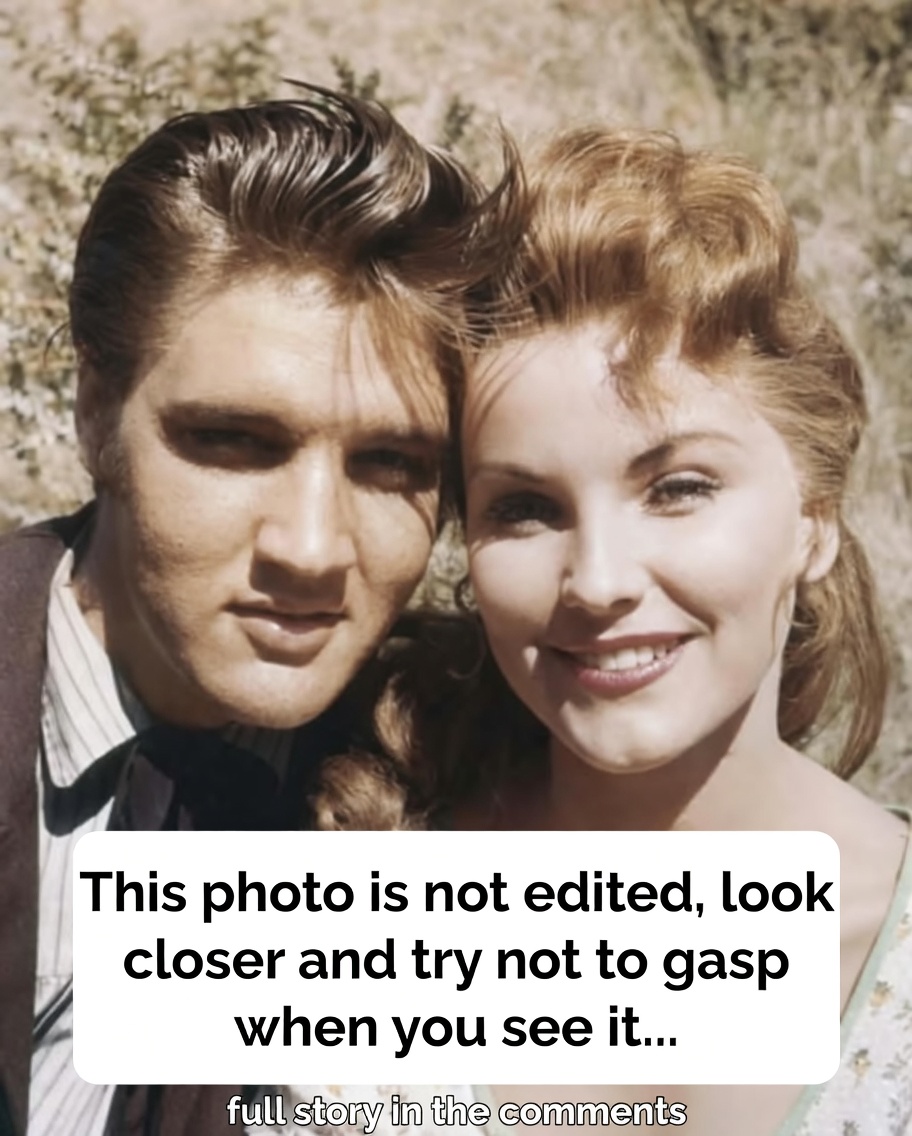
You sit down to watch Love Me Tender for what feels like the hundredth time, expecting the same nostalgic ride you’ve always enjoyed. Young Elvis Presley, full of raw energy and that unmistakable swagger, making his big-screen debut in a Civil War-era western. The music swells, the camera lingers on his face, and you smile because you already know the story by heart. But this time something feels different. You notice small moments you never paid attention to before — details that suddenly make the whole movie feel heavier, more personal, and far more revealing about who Elvis really was in 1956. The more you look, the more the film stops being just entertainment and starts feeling like a window into a young man’s private struggle.
The Film Everyone Thought They Understood
Love Me Tender was marketed as a simple vehicle to launch Elvis into Hollywood. Fans rushed to theaters in November 1956 to see their idol in his first acting role. On the surface it delivered exactly what they wanted: a handsome young star, a few songs, a dramatic story set against the backdrop of the post-Civil War South. The studio expected a quick cash-in on his exploding popularity, and audiences expected the same charismatic performer they saw on stage. But beneath the western drama lies a much more complicated truth about the man behind the guitar. What fans never noticed was how much of Elvis’s real-life fear, grief, and uncertainty bled into every frame.
The Original Ending That Shocked Fans
One of the most shocking details fans rarely notice is that Elvis’s character, Clint Reno, was originally supposed to die at the end of the film. The story was written as a straight tragedy. When test audiences and early leaks revealed this, fans went into an absolute frenzy. Letters poured into 20th Century Fox begging them not to kill off Elvis. The backlash was so intense that the studio panicked and ordered a last-minute reshoot. This wasn’t a minor creative tweak — it was a direct response to thousands of screaming fans who refused to accept their idol’s on-screen death. The power fans held over Hollywood in 1956 was already remarkable.
The Compromise That Created the Ghost Scene
Instead of reshooting the entire ending, the studio came up with a strange compromise. Clint still dies in the final gunfight, but they added a ghostly overlay of Elvis singing the title song “Love Me Tender” over the grave scene. This is why the final moments feel so eerie and dreamlike. The ghostly singing was not an artistic choice — it was a desperate fix to keep fans happy. Elvis’s voice floats over the burial as if he is singing from beyond the grave. The effect is haunting, and it reveals how much control the public already had over his image just one year after he exploded onto the national scene.
Elvis’s Deep Discomfort With Acting
Another hidden truth is how nervous and insecure Elvis was during filming. He was terrified of acting. He had no formal training and felt completely out of place among experienced actors like Richard Egan and Debra Paget. He often asked director Robert D. Webb for reassurance between takes. The pressure of being the biggest music star in the world while trying to prove himself as an actor took a heavy emotional toll. Elvis later admitted he felt like an imposter on set. The same man who could command a stadium full of screaming fans was shy and uncertain when the cameras rolled for his first movie.
The Song That Wasn’t Originally Written for Him
“Love Me Tender” was not an original composition for Elvis. The melody came from the 1861 Civil War song “Aura Lea.” Music director Ken Darby rewrote the lyrics and gave partial credit to his wife Vera Matson and Elvis (even though Elvis didn’t write it). Elvis recorded it with such raw emotion that it became a massive hit, but the song itself has a much older, sadder history. The fact that the title track was borrowed from a 19th-century ballad adds another layer of melancholy to the film. It feels like Elvis was singing something ancient and sorrowful, almost as if the music itself knew the pain he was carrying.
The Pressure of Sudden Fame
By the time Love Me Tender was released, Elvis was already a phenomenon. The movie was rushed into production to capitalize on his exploding popularity. This created tension on set and in his personal life. He was twenty-one years old, carrying the weight of the entire entertainment industry on his shoulders while still trying to figure out who he was. His mother Gladys was deeply worried about him being away from home and the toll fame was taking. She reportedly cried during a private screening because she felt the film showed her son growing up too fast and being pushed into a world she didn’t trust.
The Real Man Behind the Charisma
Looking closer at the film today, you can see the vulnerability in Elvis’s eyes. The charisma is there, but so is the uncertainty of a young man suddenly thrust into a new world. The movie captures a pivotal moment when the boy from Memphis was transforming into the global icon, but not without inner conflict and fear. The way he moves, the way he sings, the way he looks directly into the camera — it all feels more raw when you know how much pressure he was under. Fans never noticed these small cracks in the armor because they were too busy falling in love with the legend being born right in front of them.
Why These Details Matter Today
These hidden details change how we see both the movie and Elvis himself. They show a young man under immense pressure, navigating fame while trying to stay true to his roots. The film is no longer just a fun western musical — it becomes a snapshot of a soul at a crossroads. The ghostly ending, the fan backlash, the borrowed song, the nervousness on set — all of it paints a picture of an artist who was already being shaped by outside forces before he ever had a chance to find his own voice in Hollywood.
The Lasting Impact on Elvis’s Career
The experience on Love Me Tender set the tone for Elvis’s entire Hollywood journey. He would go on to make many more films, but he never forgot the fear and excitement of that first role. The lessons he learned in 1956 followed him for the rest of his life. He would later fight for more serious roles, but the studio system and fan expectations often kept him locked into the same formula. The movie that launched his film career also revealed how much of his life would be controlled by the very people who claimed to love him.
A New Way to Watch an Old Classic
The next time you watch Love Me Tender, you’ll see it differently. You’ll notice the ghost singing over the grave, the uncertainty in Elvis’s performance, and the weight he carried even in his earliest days as a movie star. And perhaps you’ll feel a deeper respect for the young man who stepped into the spotlight when the whole world was watching. The film that introduced Elvis Presley to Hollywood was never just a movie — it was the beginning of a complicated, bittersweet relationship between a gifted artist and the fame that both made him and, in many ways, trapped him. What small detail in your favorite Elvis movie suddenly feels more meaningful now that you know the truth behind it?