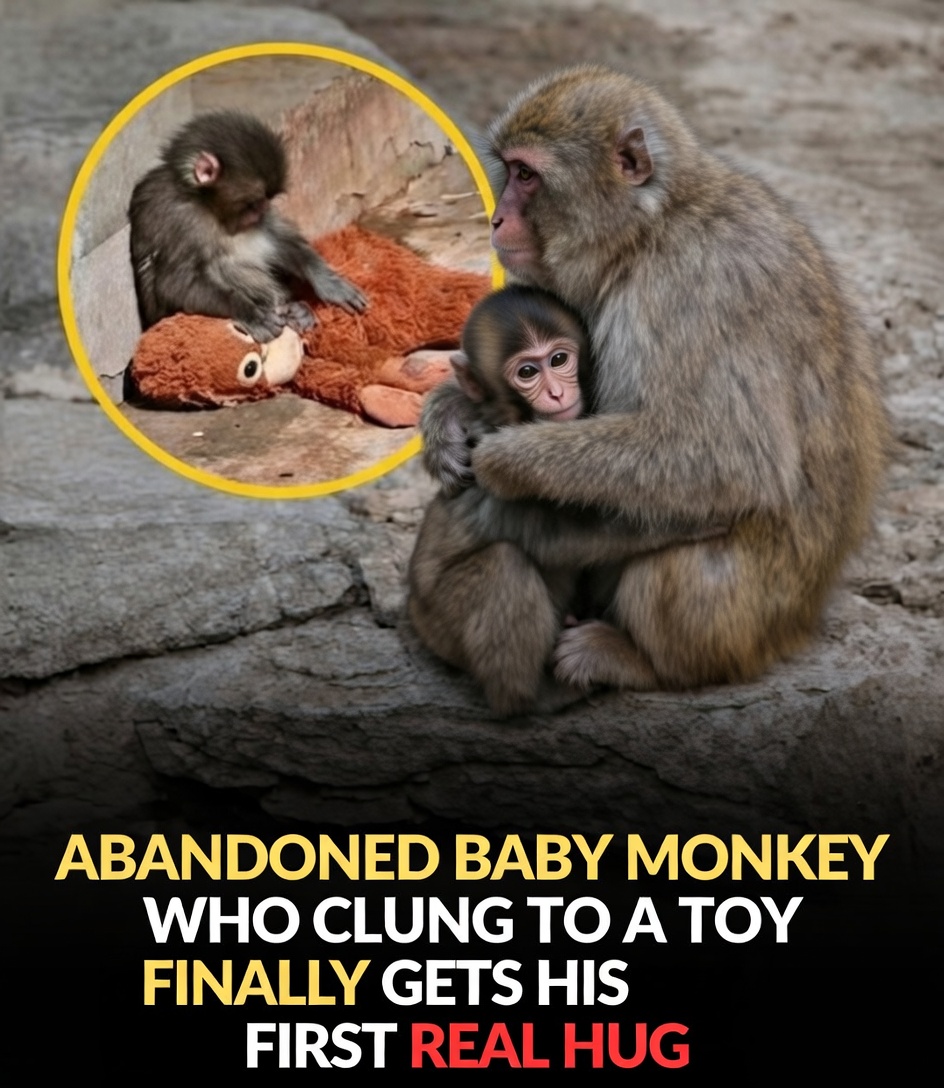
In a story that’s restoring faith in humanity and bringing smiles to faces worldwide, a tiny orphaned baby howler monkey named Lulo has finally experienced the warmth and safety of a real loving hug after weeks of clinging desperately to a worn stuffed teddy bear toy for comfort.
The incredible journey began on February 20, 2026, near the lush forests bordering Manuel Antonio National Park in Costa Rica. Local villagers heard faint, heartbreaking cries coming from the roadside where a female howler monkey had been tragically struck by a vehicle earlier that morning. When rescuers arrived, they discovered the 4-month-old baby – barely the size of a small house cat – curled up tightly in a discarded cardboard box someone had left behind, his little arms and legs wrapped around an old children’s teddy bear as if his life depended on it.
Wildlife experts at the Tropical Wildlife Rescue and Rehabilitation Sanctuary explain that baby howler monkeys are highly dependent on their mothers for the first year of life. Without her warmth, milk, and constant physical contact, Lulo’s instinct for survival kicked in – he latched onto the soft toy as a substitute source of security, refusing to release it even as rescuers gently transported him to safety.
Upon arrival at the sanctuary, Lulo was immediately given a full veterinary examination. He was dehydrated, underweight, and showing clear signs of severe stress and separation anxiety. Sanctuary veterinarian Dr. Sofia Ramirez noted, “His tiny body was trembling, but he never let go of that teddy bear. It was his only anchor in a world that had suddenly become terrifying.”
For the next several days, the dedicated team at the sanctuary provided round-the-clock care. They set up a special incubator-like nursery with soft blankets, heat lamps, and a feeding schedule of specialized milk formula designed for orphaned primates. Yet Lulo remained almost completely attached to his toy. He would only eat when the teddy bear was right beside him, and he slept curled around it every night.
Lead primate caretaker Maria Gonzalez, who has worked with rescued wildlife for over eight years, took a special interest in Lulo’s case. “I could see the fear in his big dark eyes every time we approached,” Maria shared in an exclusive interview. “He wasn’t aggressive – he was just broken-hearted and scared. So we took it incredibly slow.”
The rehabilitation process was patient and methodical. Caretakers began by sitting quietly near Lulo’s enclosure for hours each day, speaking softly and offering small pieces of fresh fruit. Gradually, they introduced gentle touches while the teddy bear remained close by. Video footage from the sanctuary’s cameras shows the slow but beautiful progress: first, Lulo allowed a finger to stroke his back while clutching the toy. Then, after ten days, he accepted being held briefly with the teddy bear still in his arms.
The turning point came yesterday morning, February 24, 2026. During a routine enrichment session in the sunny outdoor nursery, Maria sat on the floor and extended her arms. For the first time, Lulo slowly loosened his grip on the teddy bear, looked up at her with trusting eyes, and climbed into her lap. What followed was captured on video and has already been viewed more than 15 million times across social media platforms.
In the emotional 45-second clip, the tiny baby howler monkey wraps his arms around Maria’s neck, buries his face against her shoulder, and lets out a soft contented sigh. His little body visibly relaxes as he receives the first genuine, warm, skin-to-skin hug since losing his mother. Maria’s eyes fill with tears as she whispers, “You’re safe now, little one. You’re home.”
The moment is pure magic – the kind of real-life animal rescue story that reminds us why dedicated sanctuaries and caring people make all the difference in the world.
Why This Story Is Touching Millions of Hearts Worldwide
Howler monkeys are an iconic species of Costa Rica’s rainforests, known for their loud, haunting calls that echo through the trees at dawn and dusk. Unfortunately, they face increasing threats from habitat loss, vehicle collisions, and the illegal pet trade. Orphaned infants like Lulo are heartbreakingly common, and without immediate intervention, most do not survive.
The Tropical Wildlife Rescue and Rehabilitation Sanctuary has successfully rehabilitated and released more than 180 primates over the past decade. Their work focuses not just on physical recovery but on emotional healing – something that is absolutely vital for social primates who thrive on touch, bonding, and family groups.
Animal behavior experts say that the act of clinging to objects is a natural coping mechanism for orphaned infants across many mammal species. Studies on primate psychology show that consistent, gentle physical contact is essential for healthy brain development and reducing long-term stress hormones.
Lulo’s story is a powerful example of wildlife rehabilitation success. After his breakthrough hug, he has begun exploring his enclosure more confidently, playing with soft ropes and branches, and even accepting small amounts of solid food without needing the teddy bear right next to him. The toy is still available if he needs it – sanctuary staff say they will never force him to give it up completely.
The Science and Compassion Behind the Rescue
Dr. Ramirez explained the medical side of Lulo’s care in detail. Upon intake, he weighed only 850 grams – well below the healthy range for his age. Blood tests revealed mild anemia and elevated stress markers. He received fluids, vitamins, and a tailored nutrition plan that has helped him gain nearly 200 grams in just four days.
But the real healing, she says, is psychological. “Primates need touch. In the wild, baby howlers are carried constantly by their mothers or aunts. When that contact is suddenly gone, they can shut down. The fact that Lulo is now seeking and accepting hugs shows his remarkable resilience and the effectiveness of our patient approach.”
Maria Gonzalez added, “Every day I see progress. Today he initiated the hug himself. That’s a huge milestone. It means he’s learning to trust again.”
The sanctuary is already receiving an outpouring of support from around the globe. Donations have poured in to help cover Lulo’s ongoing care costs, which include specialized formula, enrichment toys, and eventual integration with a small group of other young howlers being prepared for soft release back into protected forest areas.
How You Can Help Stories Like Lulo’s
Organizations like the Tropical Wildlife Rescue and Rehabilitation Sanctuary rely entirely on donations and volunteers. If Lulo’s story has moved you, there are simple ways to make a real difference:
• Donate directly to the sanctuary’s emergency fund for orphaned primates • Share this story to raise awareness about road safety near wildlife habitats • Support legislation protecting Costa Rica’s rainforests • Consider “adopting” a rescued animal through the sanctuary’s sponsorship program
Many people are also inspired to learn more about responsible wildlife tourism – always choose sanctuaries that never allow direct contact with wild animals for photos or entertainment.
What’s Next for Little Lulo
Lulo still has a long road ahead. Full rehabilitation for howler monkeys typically takes 12 to 18 months before they can be released into the wild. During that time, he will learn essential survival skills: foraging for leaves and fruit, climbing, socializing with other monkeys, and eventually developing his own distinctive howl.
Sanctuary staff are optimistic. His appetite is improving daily, his coat is becoming shinier and healthier, and most importantly – he now actively seeks out comforting hugs instead of only relying on the teddy bear.
Maria summed it up beautifully: “Lulo taught us all something important. No matter how scared or alone you feel, there is always hope when someone is willing to sit patiently and offer love without conditions.”
This heartwarming rescue is more than just a viral video – it’s a reminder of the incredible work happening every day in wildlife sanctuaries around the world, and of the deep emotional bonds possible between humans and animals when we choose compassion over indifference.
We will continue following Lulo’s progress with regular updates, photos, and videos as he grows stronger and prepares for his eventual return to the wild. In the meantime, his story has already inspired thousands to think differently about how we share this planet with our animal neighbors.
If you’ve ever felt moved by an animal rescue story, if you believe every baby deserves a chance at love and safety, or if you simply needed a reminder that kindness still exists in the world – share Lulo’s journey today.
What was your favorite part of this emotional breakthrough? Drop a ❤️ below and tell us how this story made you feel. And remember – every share helps spread awareness and support for real-life heroes saving precious lives just like Lulo’s.