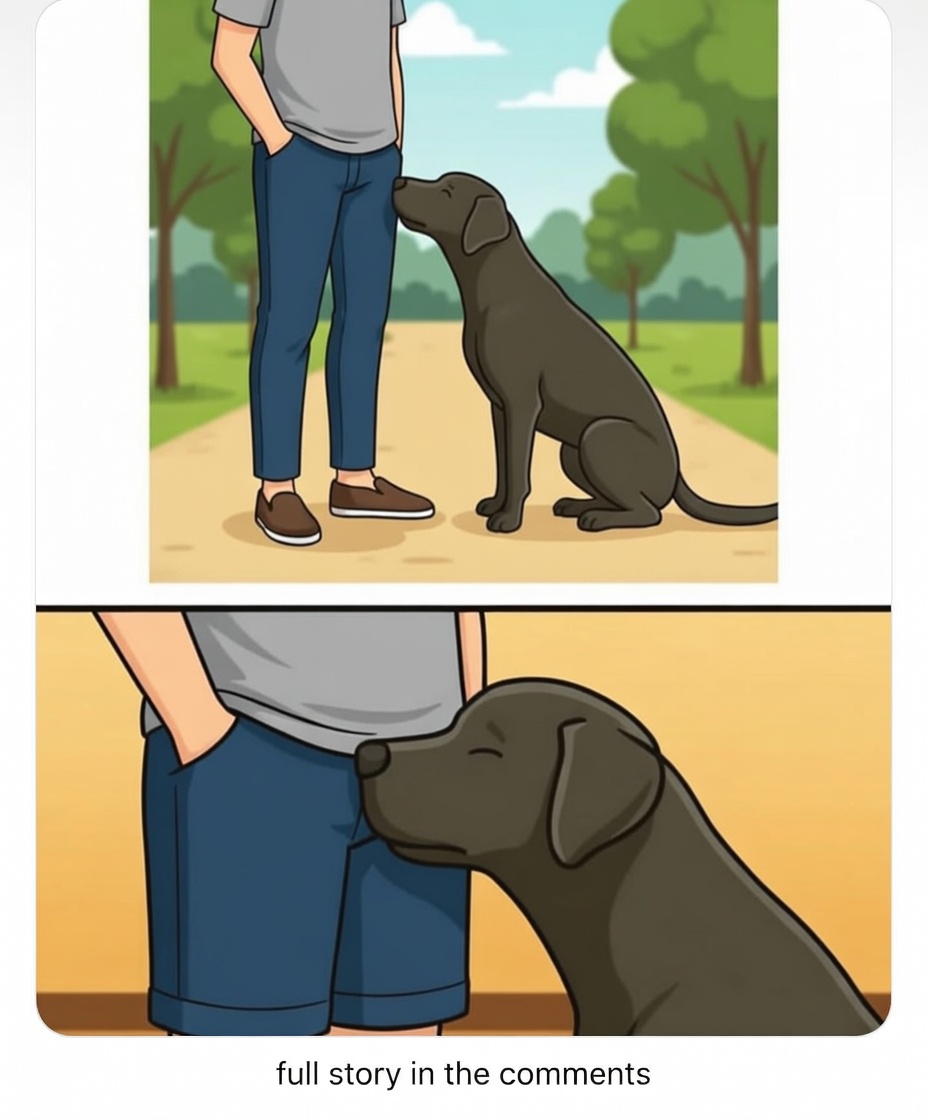
You’re standing at the park chatting with a neighbor when your friendly Labrador suddenly buries his nose right between your legs. The moment freezes. Heat rushes to your face as you try to gently nudge him away while pretending nothing happened. Everyone around you chuckles awkwardly, but inside you’re mortified. That single second feels like an eternity, and you wonder for the thousandth time why your dog keeps doing this embarrassing thing. The answer, it turns out, is far more fascinating than simple bad manners.
Dogs live in a world of smells that humans can only dream of. While we rely on sight and words to understand each other, a dog’s nose contains up to 300 million scent receptors compared to our measly six million. This super-powered sense of smell lets them read chemical signatures the way we read facial expressions. When a dog sniffs a person’s private areas, they’re not being rude—they’re gathering a complete personal profile in seconds. They detect hormones, diet, emotional state, and even early signs of health changes through the apocrine glands located in those exact spots.
This instinct comes straight from their wild ancestors. Wolves and wild canines used scent to identify friends, strangers, and potential mates within their pack. Private areas carry the strongest, most unique chemical information because they’re rich in sweat and scent glands. For your dog, sticking their nose there is the most efficient way to say “Who are you today?” It’s their version of a handshake combined with a background check. Understanding this ancient wiring helps explain why no amount of scolding ever seems to stop the behavior completely.
Beyond basic identification, dogs use this sniff to read emotional intelligence in ways that surprise even scientists. They can detect subtle shifts in your stress hormones, excitement levels, or even when you’re feeling under the weather. Many owners notice their dog sniffs more intensely right before someone gets sick or when a family member is anxious. That embarrassing moment at the park might actually be your dog checking in on you, offering comfort in the only language they know. It’s a form of silent communication that shows just how deeply tuned-in they are to our inner world.
The social friction happens because humans and dogs speak completely different sensory languages. What feels like a major boundary violation to us is simply normal dog conversation to them. They don’t understand personal space the same way we do. In dog society, sniffing is polite information-sharing, not invasion. Once you see it from their perspective, the act stops feeling like an attack on your dignity and starts looking like a genuine attempt to connect.
Training respectful boundaries becomes much easier once you understand the science. Instead of punishing the natural instinct, smart owners redirect it with a simple cue like “say hello nicely” and offer a hand or toy to sniff instead. Positive reinforcement works wonders because dogs want to please us. They quickly learn that a quick sniff of the offered hand gives them the same valuable information without embarrassing anyone. The key is patience and consistency rather than frustration.
The real turning point comes when you realize your dog isn’t trying to humiliate you—they’re trying to understand and care for you. That shift in perspective changes everything about how you respond in public. Many owners start smiling instead of cringing because they now see the behavior as a compliment. Their dog trusts them enough to seek detailed information and wants to stay emotionally connected. It transforms an awkward moment into a sweet reminder of the special bond you share.
What researchers have discovered is that this sniffing behavior even carries health benefits for both sides. Dogs have been shown to detect certain cancers, low blood sugar, and other medical conditions through scent alone. When they focus on private areas, they might actually be picking up on subtle biological signals long before symptoms appear. That embarrassing sniff could one day save a life or simply alert you to take better care of yourself.
The immediate aftermath of learning the science is usually a mix of relief and amazement. Owners who once felt mortified now laugh about it and even share stories with other dog parents. They set gentle boundaries while appreciating the incredible abilities of their four-legged friends. The relationship deepens because understanding replaces embarrassment. Walks in the park become less stressful and more joyful once you stop fighting your dog’s natural curiosity.
Today millions of dog owners walk their pets with a whole new perspective after discovering why this happens. The behavior that once caused red faces now feels like a fascinating window into how dogs experience our world. It reminds every pet parent that our dogs aren’t being naughty—they’re being brilliantly canine. Next time your dog dives in for that signature sniff, you might just smile and think “Thanks for checking on me, buddy.” What surprising thing has your dog taught you lately?
Most Popular!
-
 The Ultimate Wedding Revenge: When the Mother Who Abandoned Her Six Daughters Showed Up with Her Millionaire Boss, the Bride Opened a Box That Destroyed Lives Forever
-
The Beach Shaming Disaster: What My 8-Year-Old Said to the Prying Stranger Left Everyone Speechless
-
My Husband Abandoned Me With Twin Babies for a Luxury Fishing Trip — When He Returned, I Had Already Packed His Bags
-
The Three-Dollar Miracle: How a Dust-Covered Vase Revealed a Heartbreaking Decades-Old Secret
-
The $80,000 Battle to Erase a Birthmark: Why One Mother Risked Everything for Her Daughter’s Future
-
The Silent Thief: Why Millions of Men Are Living with a Time Bomb They Can’t See
-
The Final Curtain Falls: Beloved Sanford and Son Legend Hal Williams Gone at 91
-
Found at a Yard Sale: This “Useless” Vintage Contraption Is Actually a Forgotten Piece of Human History