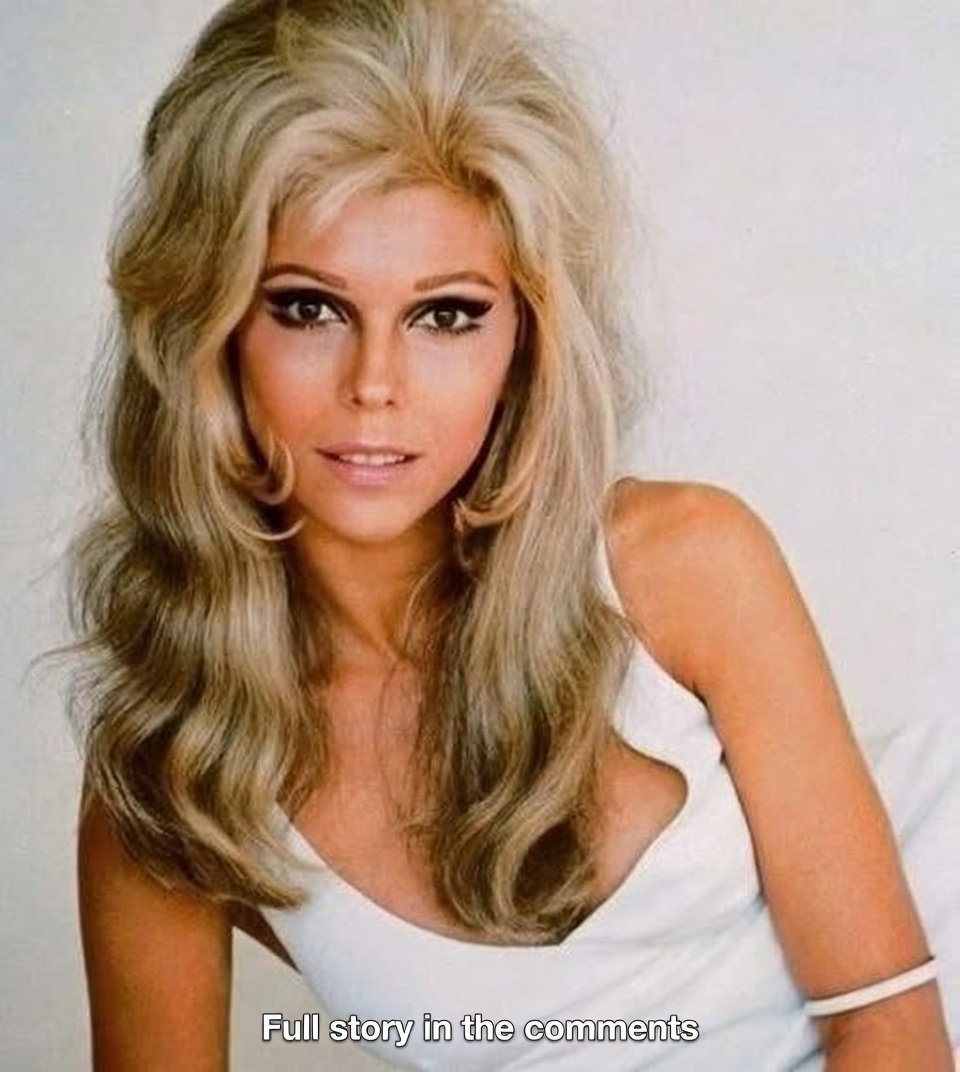
The year was 1966 and the world was listening. Nancy Sinatra’s voice—cool, confident, edged with a knowing bite—slipped through every car radio and transistor. “These Boots Are Made for Walkin’” wasn’t just a song; it was a statement. She wore white go-go boots, a miniskirt, and an attitude that said she wasn’t just Frank Sinatra’s daughter. She was Nancy. The record went to number one in the U.S. and U.K., sold millions, and made her a symbol of 1960s independence. Photographers followed her. Talk shows booked her. For the first time, the spotlight felt like it belonged to her, not borrowed from her father’s shadow.
Success arrived fast and loud. She followed with “Sugar Town,” “Somethin’ Stupid” (a duet with Frank that topped charts again), and a string of memorable singles. She appeared in films, posed for Playboy, and became a fashion icon—boots, mini-dresses, heavy eyeliner, the whole look that screamed control. Behind the scenes, though, the pressure was building. Every hit invited comparison. Every photo shoot demanded perfection. Every interview circled back to one question: “What’s it like being Frank Sinatra’s daughter?” She answered with grace, but the question never stopped coming. The boots that walked her to fame also walked her into a cage she couldn’t quite escape.
By the early 1970s the hits slowed. The music industry shifted—disco rose, rock splintered, and Nancy’s polished pop sound began to feel dated. She released albums that didn’t chart the way the early ones did. Critics called her a one-hit wonder riding her father’s coattails. The public moved on to new faces. She tried acting, variety shows, even country music, but nothing recaptured the lightning of “Boots.” The phone stopped ringing as often. The invitations thinned. She was still working, still recording, but the world’s attention had drifted. Fame had lifted her high, then quietly set her down.
The disappearance wasn’t dramatic—no scandal, no breakdown, no public exit. She simply stepped back. By the mid-1970s Nancy was no longer a regular on television or radio charts. She focused on family—raising two daughters with her husband Hugh Lambert—while continuing to record sporadically. She wrote songs, produced tracks, stayed involved in music behind the scenes. But the public eye no longer followed her. Magazines stopped calling. Paparazzi moved on to younger stars. She became a memory from the 1960s, a voice tied to one iconic song and a famous last name. People wondered where she went, but few looked hard enough to find out.
The truth was simpler and sadder than any tabloid rumor. Nancy never vanished; she chose privacy. Fame had been thrilling and suffocating in equal measure. It gave her a career, but it also magnified every stumble, every comparison to her father, every moment she wasn’t “enough.” Walking away wasn’t defeat—it was survival. She protected her daughters from the same glare that had followed her. She protected her marriage from the rumors that swirl around public figures. She protected her own heart from the constant judgment of a world that loved to build idols and then tear them down.
Years passed in quiet. Nancy resurfaced occasionally—guest appearances, interviews, a 1995 album that showed she still had the voice and the bite. She spoke openly about the toll of fame, about the pressure to be perfect, about the loneliness that comes when the spotlight moves on. She never complained; she simply told the truth. Her father’s death in 1998 brought renewed attention, but she handled it with the same dignity she’d always shown. She mourned privately, supported her family, and kept living the life she’d chosen away from the cameras.
The emotional cost of fame lingered long after the hits stopped. Nancy carried the weight of expectation—hers, her father’s, the public’s—for decades. She watched younger artists rise and fall, saw how quickly adoration could turn to indifference. She learned that legacy isn’t measured in chart positions or magazine covers; it’s measured in the lives you touch quietly. Her daughters grew up knowing their mother as Mom first, not a celebrity. That was her greatest victory.
In later years Nancy embraced her past without apology. She reissued albums, performed select shows, and spoke candidly about mental health, the music business, and the price of being born into fame. She became an advocate for artists struggling with the same pressures she once faced. Her story reminded people that behind every hit single is a human being—flawed, feeling, trying to find balance between who they are and who the world wants them to be.
The reflective close is simple and powerful. Nancy Sinatra didn’t vanish; she chose to live on her own terms. Fame never protected her—it only made every fall louder. But she survived it, rebuilt quietly, and emerged with dignity intact. As you think about your own life—perhaps planning retirement, updating a will, or simply looking back on years of hard work—remember her lesson: success doesn’t define you, and neither does silence. Sometimes the bravest thing is walking away from the spotlight to protect what matters most. What part of Nancy’s story resonates with you? Or when did you choose peace over the spotlight? Share in the comments below.
Most Popular!
-
 The Ultimate Wedding Revenge: When the Mother Who Abandoned Her Six Daughters Showed Up with Her Millionaire Boss, the Bride Opened a Box That Destroyed Lives Forever
-
The Beach Shaming Disaster: What My 8-Year-Old Said to the Prying Stranger Left Everyone Speechless
-
My Husband Abandoned Me With Twin Babies for a Luxury Fishing Trip — When He Returned, I Had Already Packed His Bags
-
The Three-Dollar Miracle: How a Dust-Covered Vase Revealed a Heartbreaking Decades-Old Secret
-
The $80,000 Battle to Erase a Birthmark: Why One Mother Risked Everything for Her Daughter’s Future
-
The Silent Thief: Why Millions of Men Are Living with a Time Bomb They Can’t See
-
The Final Curtain Falls: Beloved Sanford and Son Legend Hal Williams Gone at 91
-
Found at a Yard Sale: This “Useless” Vintage Contraption Is Actually a Forgotten Piece of Human History