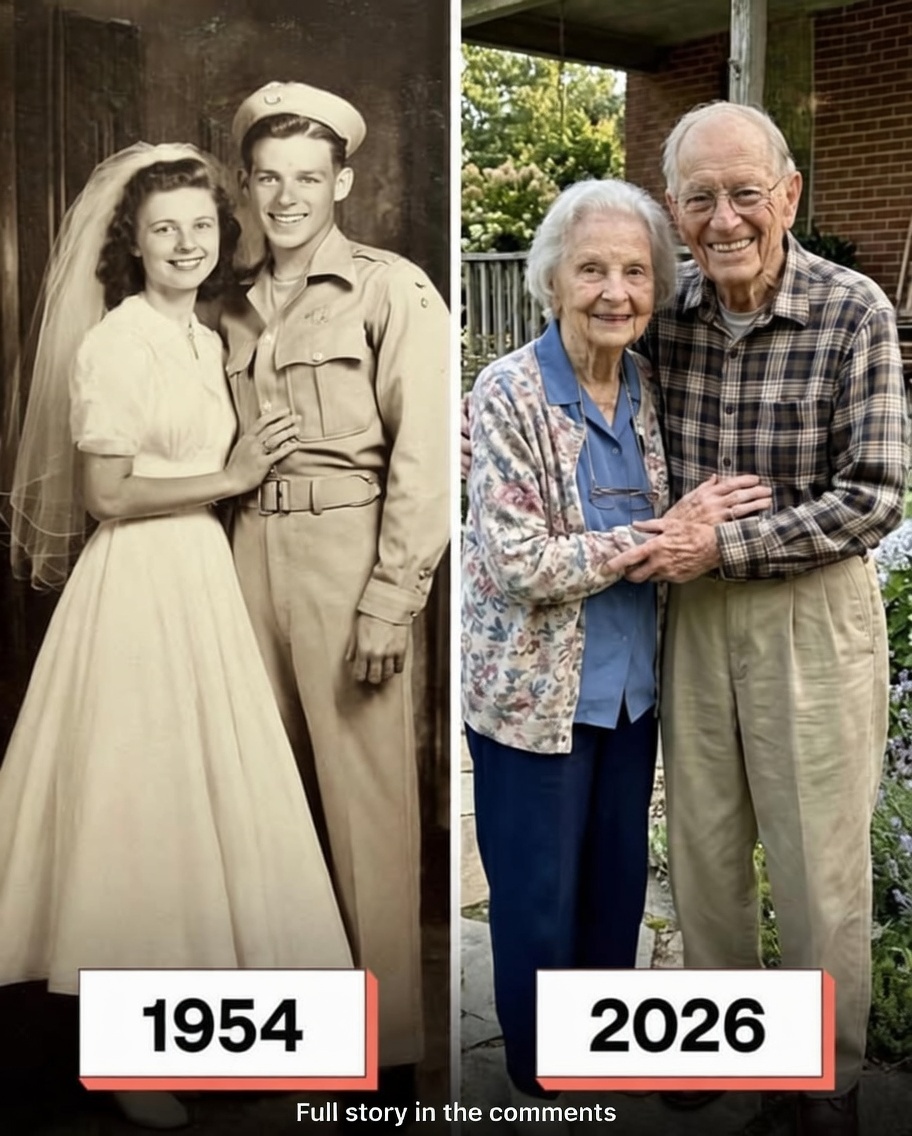
The chapel smelled of lilies and old wood polish. I sat in the front pew, hands folded over the program, watching sunlight cut through stained glass in thin, pale blades. Walter’s casket was closed—his choice, always private, even at the end. Seventy-two years together had taught me his rhythms: the way he hummed when he was content, the slight limp he never complained about after Korea, the quiet way he’d squeeze my hand when words weren’t enough. I thought I had every chapter memorized. The service moved gently—hymns we both loved, a few stories from our children, the pastor reading the same verse from Corinthians we’d chosen for our wedding. I kept my tears silent, saving them for later.
When it ended, people drifted past to offer hugs and murmured condolences. I nodded, thanked them, felt the familiar ache of being the last one standing after a long life together. Then an older man in a faded blazer approached. He wore a small Korean War veteran pin on his lapel. His eyes were rheumy but clear. “Ma’am,” he said, voice low and steady, “Walter asked me to give you this if he went first.” He placed a small, tarnished metal box in my palm—no bigger than a deck of cards—and stepped back. I thanked him, confused, and slipped it into my purse. I didn’t open it until later that night, alone in the house that suddenly felt too large.
I sat at the kitchen table where we’d eaten breakfast together for decades. The box was cool against my fingers. I lifted the lid slowly. Inside lay a folded letter in Walter’s careful handwriting, a single dog tag on a thin chain, and a tiny, faded photograph. The photo showed a much younger Walter—maybe 22—standing beside a Korean girl in a simple dress. She was holding a baby wrapped in a blanket. My heart stuttered. I unfolded the letter with trembling hands.
“Darling,” it began, “if you’re reading this, I didn’t have the courage to tell you while I was still breathing. In 1951, during my tour in Korea, I had a brief relationship with a woman named Soo-jin. She was kind to a scared kid far from home. When I shipped out, she was pregnant. I never knew if the child was born. I came home, married you, and buried that chapter so deep I almost convinced myself it didn’t happen. But I carried the guilt every day. The baby was a girl. I learned her name years later through a Red Cross letter: Mi-sook. She’s grown now, has children of her own. I never reached out—I was afraid of hurting you, of breaking what we built. If she ever finds her way to you, please tell her I loved her from a distance, and I loved you more than words could ever carry. Forgive me if you can. I tried to be the man you deserved.”
The dog tag had Soo-jin’s name scratched into the back in Walter’s hand. The photograph was creased from years of being carried in a wallet. I sat there until the kitchen lights came on automatically at dusk, staring at the face of a daughter I never knew existed. My husband—my Walter—had carried this secret for seventy years. Not out of deceit, but out of love twisted by fear and shame. He never wanted to risk losing me, so he silenced a part of himself.
The next morning I called our oldest daughter. We cried together on the phone. She was angry at first, then quiet, then determined. “We find her,” she said. It took three weeks of letters, calls, and help from a veterans’ organization. Mi-sook lived in Seoul, a retired nurse with three grown children. When I sent her the photograph and a copy of the letter, she wrote back within days. Her English was careful but warm. She had always known her father was an American soldier. She never expected to hear from him—or from me. We arranged a video call. When her face appeared on the screen, I saw Walter’s eyes looking back at me.
We spoke for hours. She told me about her mother, who never remarried, who raised her alone with stories of a kind man who had to leave. I told her about Walter—the husband who fixed leaky faucets, who danced badly but enthusiastically at weddings, who loved his family with everything he had. We cried together, strangers connected by one man’s hidden heart. She forgave him long ago. I was still working on it—not because I blamed him, but because I wished he had trusted me with the truth sooner.
The immediate aftermath was gentle and strange. Mi-sook sent photographs of her family, her grandchildren—my husband’s grandchildren. I framed one beside our wedding picture. Our children welcomed the news with open arms; they wanted to know their half-sister, to share stories of the father they loved. Camila—my stepmother from a different chapter—never understood, but that was her loss. I kept Walter’s dog tag on my nightstand, a reminder that love can hold secrets and still be true.
In the reflective close, Walter’s hidden daughter didn’t diminish our seventy-two years; she expanded them. He carried guilt so I wouldn’t have to. I forgave him the silence because I understood the why. Legacy isn’t just the life we lived together—it’s the lives we touched without knowing. As I look at our children and now Mi-sook’s family, I see his love stretching across oceans and decades. What secret from a loved one surprised you when it surfaced? Or how did learning a hidden truth change the way you remember someone? Share in the comments below.
Most Popular!
-
 The Ultimate Wedding Revenge: When the Mother Who Abandoned Her Six Daughters Showed Up with Her Millionaire Boss, the Bride Opened a Box That Destroyed Lives Forever
-
The Beach Shaming Disaster: What My 8-Year-Old Said to the Prying Stranger Left Everyone Speechless
-
My Husband Abandoned Me With Twin Babies for a Luxury Fishing Trip — When He Returned, I Had Already Packed His Bags
-
The Three-Dollar Miracle: How a Dust-Covered Vase Revealed a Heartbreaking Decades-Old Secret
-
The $80,000 Battle to Erase a Birthmark: Why One Mother Risked Everything for Her Daughter’s Future
-
The Silent Thief: Why Millions of Men Are Living with a Time Bomb They Can’t See
-
The Final Curtain Falls: Beloved Sanford and Son Legend Hal Williams Gone at 91
-
Found at a Yard Sale: This “Useless” Vintage Contraption Is Actually a Forgotten Piece of Human History