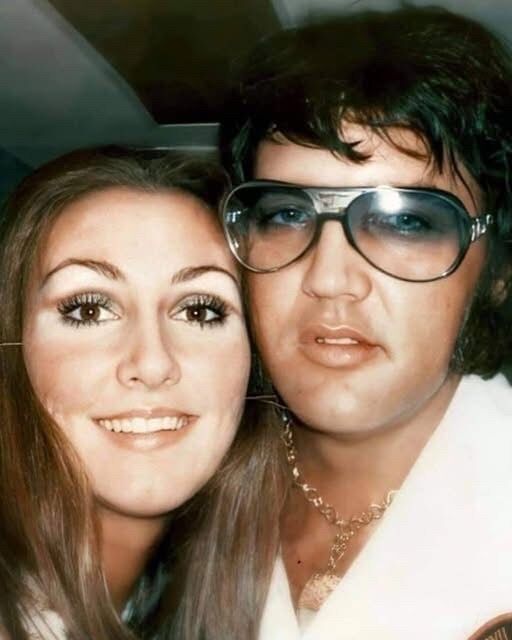
The room at Graceland felt smaller in the quiet moments, away from the flashing cameras and roaring crowds. You can picture Linda Thompson there in the early 1970s, sitting beside Elvis on the couch, his head resting on her shoulder as he shared thoughts no one else heard. She was in her early twenties, fresh from winning Miss Tennessee USA, when their paths crossed in 1972. What started as a whirlwind romance became a four-and-a-half-year chapter where she lived in his world, witnessing the vulnerability that fame often hid. Now, decades later, her recent reflections—shared through interviews, social media tributes, and thoughtful posts—paint a portrait of a man who was both larger than life and achingly human.
Those years bridged Elvis’s vibrant past with his more shadowed final chapter. Linda arrived after his marriage to Priscilla had ended, stepping into a home filled with family, friends, and constant activity. She described him as her first true love, an idol who became intimately real. Mornings might bring laughter over breakfast, evenings deep conversations about life, faith, and fears. He confided in her about his loneliness, the weight of being the most famous person on earth while feeling isolated at the core. For readers over forty, it echoes the quiet struggles many face—balancing public personas with private hearts, building legacies that outlast the noise.
The emotional bonds ran deep. Linda spoke of Elvis’s need for affection, how he craved closeness amid the chaos of tours and movies. She was there for late-night talks, for holding him when the world felt too heavy. Grandchildren today might hear stories of the King through old records or films, but Linda’s words add layers: he was a father devoted to Lisa Marie, a son protective of his family, a man who loved fiercely even as health challenges loomed. Her reflections highlight forgiveness—not just for others, but for the complexities of loving someone extraordinary.
The complication surfaced in the everyday realities of their life together. Fame brought endless scrutiny, and Elvis’s lifestyle—medications for pain, insomnia, the demands of performance—created strains. Linda later shared how she tried to help, keeping him grounded when possible. Yet the relationship ended in 1976, amicably but with lasting impact. She carried those memories forward, choosing dignity in silence for years before opening up more fully in her book and recent conversations. It’s a reminder that relationships, even legendary ones, involve hard choices—protecting privacy, navigating heartbreak, preserving what was good.
The turning point in her reflections often comes when she addresses his humanity directly. In recent tributes, like her heartfelt birthday message on what would have been his 91st, she emphasized indelible memories that time cannot erase. Attending premieres or sharing thoughts on projects like Baz Luhrmann’s concert film “EPiC,” she encouraged fans to see beyond the icon to the talent and heart. Practical insights emerge here: love teaches patience and compassion, even in loss. For those thinking about retirement savings or home equity, her story subtly nods to building security while cherishing emotional wealth—forgiveness after difficult times, legacy through kindness shared.
The hidden truth she reveals is the depth of his inner world. Elvis was needy, she said, intensely lonely despite the adoration. He shared innermost thoughts and feelings with her, a privilege she still holds sacred. Recent comments underscore this: he was her very human love, flaws and all, whose legacy endures because of genuine connections like theirs. It humanizes the myth, showing how one person’s quiet support can sustain another through fame’s isolation.
The immediate aftermath of their time together shaped Linda profoundly. She moved forward, raising a family, but the bond never fully faded. Emotional tolls linger—heartbreak that resurfaces in quiet moments, yet softened by gratitude. Fans and families feel it too: Elvis’s story sparks talks about enduring love, how relationships leave marks long after they end. Her willingness to reflect now offers comfort to those grieving losses or reflecting on their own pasts.
In the reflective close, Linda’s words offer gentle hope. Loving deeply, even when it hurts, builds a legacy of compassion and resilience. As you listen to his music or watch old footage with grandchildren, consider what she emphasizes: the man behind the music mattered most in private moments of tenderness. It encourages us to hold forgiveness close, to value human connections over perfection. At this stage in life—perhaps reviewing a will or planning for Medicare—what memories do you cherish that shaped who you are? What small act of understanding might you pass on? Share your thoughts on Linda’s reflections or your own Elvis stories in the comments below.
Most Popular!
-
 The Ultimate Wedding Revenge: When the Mother Who Abandoned Her Six Daughters Showed Up with Her Millionaire Boss, the Bride Opened a Box That Destroyed Lives Forever
-
The Beach Shaming Disaster: What My 8-Year-Old Said to the Prying Stranger Left Everyone Speechless
-
My Husband Abandoned Me With Twin Babies for a Luxury Fishing Trip — When He Returned, I Had Already Packed His Bags
-
The Three-Dollar Miracle: How a Dust-Covered Vase Revealed a Heartbreaking Decades-Old Secret
-
The $80,000 Battle to Erase a Birthmark: Why One Mother Risked Everything for Her Daughter’s Future
-
The Silent Thief: Why Millions of Men Are Living with a Time Bomb They Can’t See
-
The Final Curtain Falls: Beloved Sanford and Son Legend Hal Williams Gone at 91
-
Found at a Yard Sale: This “Useless” Vintage Contraption Is Actually a Forgotten Piece of Human History