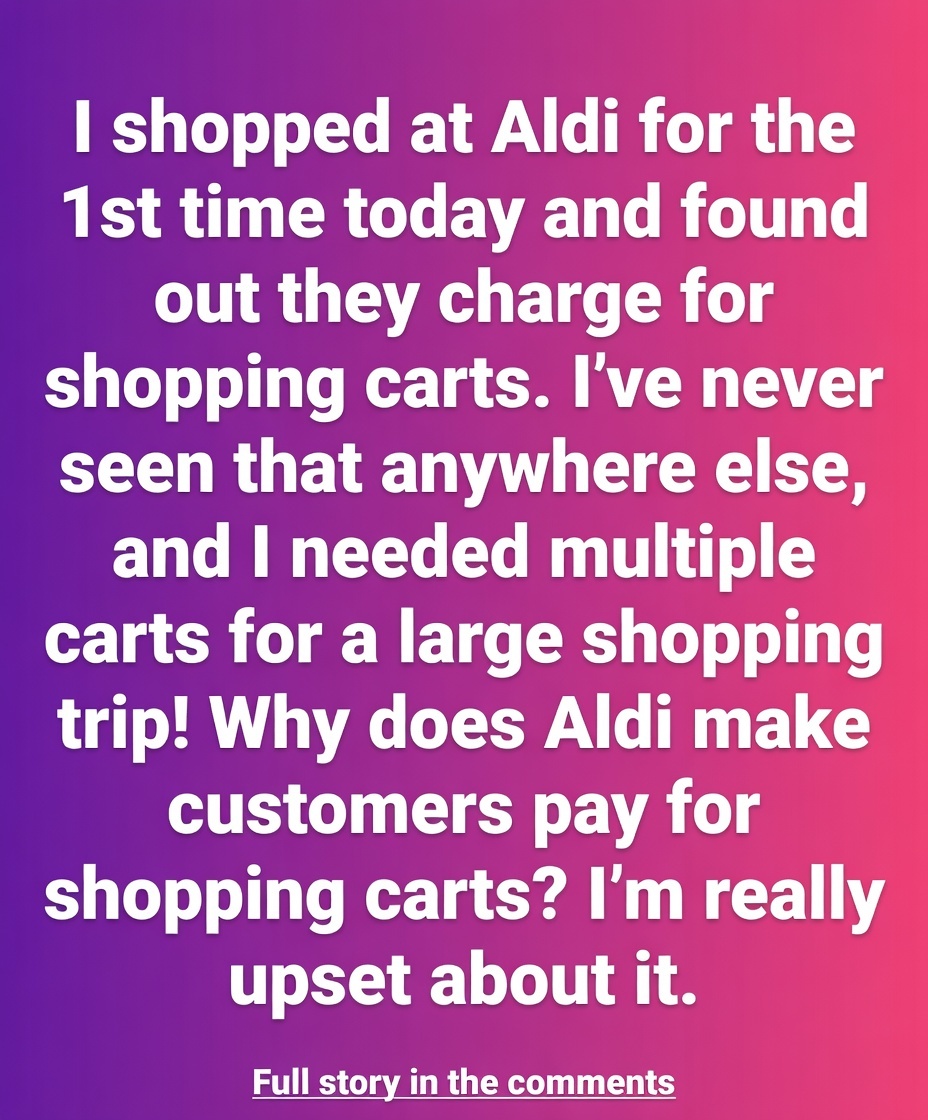
Walking into an Aldi for the first time can feel like stepping into a different shopping universe. The aisles are narrow, the selection is smaller, prices are shockingly low, and then there’s the carts — all locked together in neat rows at the entrance, refusing to budge unless you feed them a quarter. To anyone used to grabbing a cart for free at bigger grocery stores, it seems odd, even annoying. You dig through your purse or pockets, grumble about having to pay just to shop, and wonder why Aldi can’t be more like everywhere else. But that little coin slot isn’t a sneaky fee or a way to nickel-and-dime customers. It’s one of the smartest, most customer-friendly systems in retail — and once you understand why it exists, you’ll never look at a loose shopping cart the same way again.
The coin deposit system is simple: insert a quarter (or a dollar coin in some locations), the lock releases, and you take your cart. When you’re done shopping, you return the cart to the corral, re-lock it, and your quarter pops back out. No lost deposits, no extra cost — just a temporary hold that guarantees the cart comes back where it belongs. Aldi didn’t invent this; it’s been used in Europe for decades. But they brought it to the U.S. and stuck with it even when bigger chains went cart-free. The reason isn’t about making a few extra cents off forgetful shoppers. It’s about keeping costs down for everyone who actually buys groceries there.
Think about what happens at most stores without a deposit. Carts end up scattered across parking lots, wedged between cars, rolled into bushes, left blocking handicapped spaces, or pushed into drainage ditches during storms. Every day employees spend hours collecting them — time that costs the store money in wages. Damaged carts have to be repaired or replaced. Lost carts mean the store has to buy new ones more often. All those expenses get passed on to customers through higher prices. Aldi eliminates almost all of that waste with one simple quarter. People return carts because they want their money back. Parking lots stay cleaner. Employees can focus on stocking shelves instead of chasing rogue carts. Fewer carts get damaged or stolen. The savings add up fast — and Aldi passes those savings directly to shoppers in the form of rock-bottom prices.
Beyond the financial logic, the system creates a small but powerful behavioral nudge. It turns cart return into a personal incentive rather than a chore. You’re not just being a good citizen by returning your cart — you’re getting your own quarter back. That tiny reward works far better than signs, announcements, or guilt trips. Studies on behavioral economics show that immediate, tangible incentives change habits more effectively than abstract appeals to “do the right thing.” Aldi leverages that psychology perfectly. Even people who forget at first quickly learn — and soon they’re the ones teaching newcomers how the system works.
For older shoppers or those with mobility issues, the coin system can feel frustrating at first. But many Aldi locations now keep a few unlocked “courtesy carts” near the entrance for anyone who needs one without a coin. Staff are usually quick to help if someone struggles. The quarter isn’t meant to exclude — it’s meant to solve a widespread problem that affects everyone’s shopping experience. And because Aldi runs lean — no bagging, no fancy displays, minimal staff — every penny saved on cart management helps keep everyday prices 20–30% lower than competitors.
The environmental upside is real too. Fewer stray carts mean less metal waste, fewer carts rolling into traffic or waterways, and less need to manufacture replacements. It’s a small but measurable win for sustainability — something Aldi quietly prioritizes alongside low prices. Shoppers who value practical efficiency tend to appreciate it once they adjust. Those who hate it usually change their minds after one trip to a big-box store where carts are scattered everywhere and the parking lot looks like a junkyard.
At 71 I’ve shopped at enough stores to know the difference. I remember when Aldi first came to our town — people complained about the quarter. Now those same people won’t shop anywhere else. They bring their own quarter (or keep one in the car), return the cart every time, and enjoy prices that stretch their fixed incomes further. The coin isn’t a gimmick or a punishment. It’s a quiet agreement: you take care of the cart, the store takes care of your grocery bill. Simple. Effective. Fair.
Next time you slide that quarter in and hear the satisfying click of the lock releasing, remember it’s not Aldi charging you. It’s Aldi trusting you — and saving everyone money in the process. That one little coin keeps the system honest, the lots clean, the prices low, and the carts exactly where they belong. In a world of complicated retail tricks, Aldi’s deposit system is refreshingly straightforward: do your part, get your quarter back, and enjoy groceries cheaper than anywhere else. That’s not just smart business. It’s smart shopping for all of us.
Most Popular!
-
 The Ultimate Wedding Revenge: When the Mother Who Abandoned Her Six Daughters Showed Up with Her Millionaire Boss, the Bride Opened a Box That Destroyed Lives Forever
-
The Beach Shaming Disaster: What My 8-Year-Old Said to the Prying Stranger Left Everyone Speechless
-
My Husband Abandoned Me With Twin Babies for a Luxury Fishing Trip — When He Returned, I Had Already Packed His Bags
-
The Three-Dollar Miracle: How a Dust-Covered Vase Revealed a Heartbreaking Decades-Old Secret
-
The $80,000 Battle to Erase a Birthmark: Why One Mother Risked Everything for Her Daughter’s Future
-
The Silent Thief: Why Millions of Men Are Living with a Time Bomb They Can’t See
-
The Final Curtain Falls: Beloved Sanford and Son Legend Hal Williams Gone at 91
-
Found at a Yard Sale: This “Useless” Vintage Contraption Is Actually a Forgotten Piece of Human History