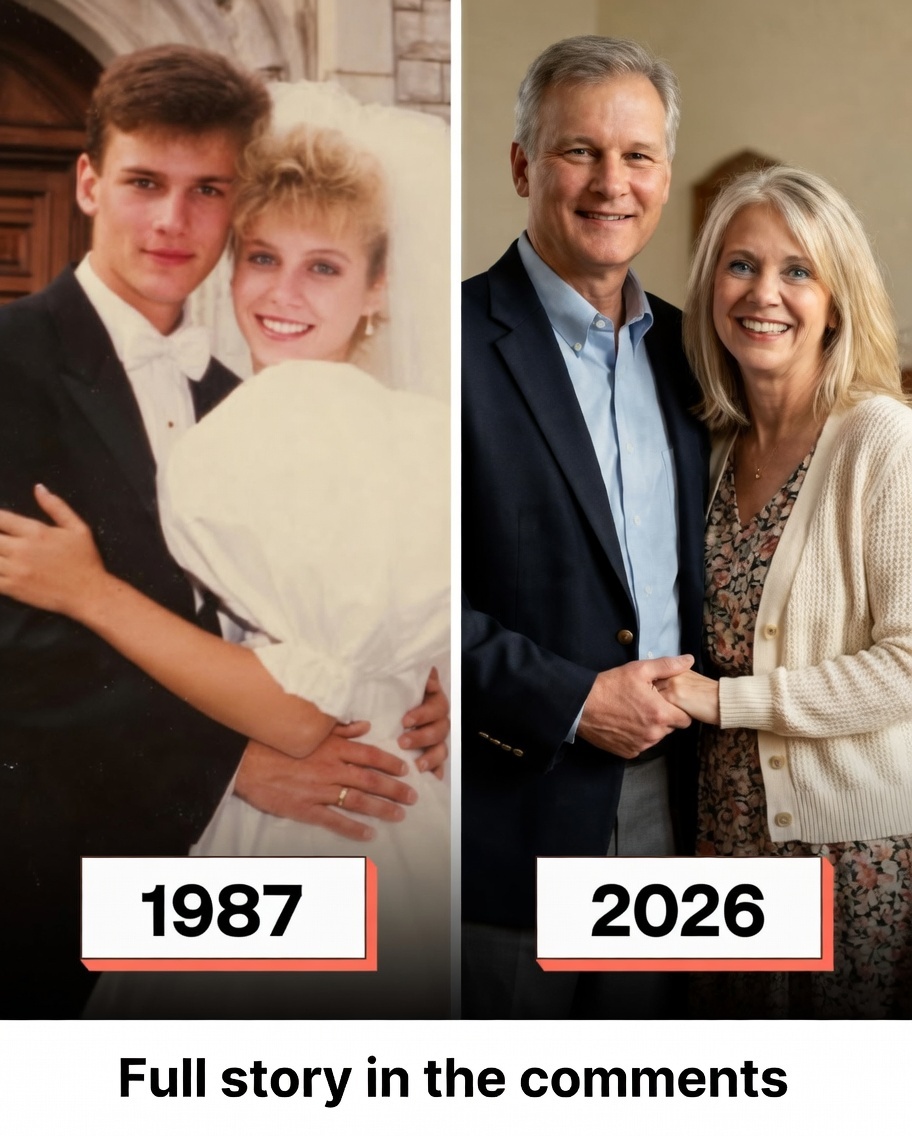
When you marry at nineteen, you think you have forever to figure each other out. Thomas and I started with almost nothing — a one-bedroom apartment above a laundromat, mismatched dishes from thrift stores, and a shared dream of building something lasting. We didn’t need drama or fireworks. We needed each other. That quiet steadiness carried us through miscarriages, job losses, raising two children who are now grown with families of their own, and the slow ache of aging bodies that don’t move the way they used to. Thirty-nine years. I thought I knew him completely. I thought trust like ours was unbreakable. Then he died — a heart attack so fast the paramedics said he probably never felt it. “At least he didn’t suffer,” everyone told me at the funeral. I nodded. Words like that are supposed to help. They don’t.
Grief after four decades isn’t loud explosions. It’s silence that echoes. It’s sitting at the kitchen table staring at the empty chair across from you. It’s reaching for the coffee pot and realizing you only need one mug now. The house felt too big and too small at the same time. I moved through the days like I was underwater — sorting his clothes, boxing his books, deciding what to keep and what to let go. And every time I passed the closet at the end of the hallway, I felt it pull at me. One door. Always locked. In thirty-nine years I had never seen inside. Not once. Whenever I asked, Thomas would give that gentle smile — the one that made me feel safe — and say, “Just old paperwork. Nothing interesting.” I believed him. Marriage that long is built on letting some things stay private. You stop asking. You trust.
But grief changes curiosity into something restless. On the tenth day after the funeral, I couldn’t walk past that door anymore without feeling it press against my ribs. I told myself it was practical — I owned the house now, I had the right to know what was in every corner. I called a locksmith. He arrived that afternoon, a kind older man who didn’t ask questions. He worked quietly while I stood at the end of the hallway, arms wrapped around myself, listening to the soft clicks of tools against metal. When the lock gave way, he stepped back politely. “All yours, ma’am.” The door creaked open on rusted hinges. A faint musty smell drifted out — paper, dust, something faintly sweet like old perfume. I stepped inside.
At first it looked ordinary. Shelves lined with banker’s boxes labeled in Thomas’s neat handwriting: “Taxes 1995–2000,” “Insurance Policies,” “Kids’ School Records.” I almost laughed at myself for being so dramatic. Then I noticed the box on the bottom shelf — unmarked, smaller than the others, covered in a thin layer of dust that looked undisturbed for years. I knelt down, pulled it out, and lifted the lid. Inside were dozens of letters. Envelopes addressed to Thomas in different handwriting — women’s handwriting. Postmarks from cities we’d never visited together. Dates spanning the entire marriage. My fingers felt cold as I opened the first one. “My dearest Tom,” it began. “I miss the way you hold me when the world feels too heavy. Tell me you still think of me the way I think of you.” Signed with a name I didn’t know: “L.”
I opened another. And another. Dozens of them. Some short notes slipped into greeting cards. Some long, aching letters written late at night. All from different women. All confessing love. All thanking him for secret weekends, for money sent quietly, for promises he never kept. There were photos too — Polaroids of younger Thomas with women I’d never seen, smiling in places I’d never been. Hotel rooms. Beaches. Parks. One photo showed him holding a baby — a little girl with his eyes. On the back, in faded ink: “Our daughter, 1998.” My breath stopped. We had two children together. He’d fathered another child during our marriage. And another. And another. Names and dates scrawled on the backs of photos. Birthdays I’d never known about. Lives he’d lived parallel to ours.
There were receipts too. Cash withdrawals from our joint account over the years — small amounts at first, then larger ones when the kids were young and money was tight. Money I’d thought went to bills, to groceries, to Christmas presents. Money that had gone to support other families. Other women. Other children. At the very bottom of the box was a single sheet of paper in Thomas’s handwriting, dated two years ago. “If you’re reading this, I’m gone. I never wanted to hurt you. I loved you in my way. The money was never about taking from you — it was about giving to them. Forgive me if you can. I couldn’t stop.”
I sat on the floor of that closet surrounded by the evidence of a life I didn’t know existed. Thirty-nine years. I had loved him every day. I had trusted him every day. I had built my entire world around a man who had been living two — or three, or four — lives at once. The pain wasn’t loud. It was deep, quiet, bone-level. I didn’t scream. I didn’t cry. I just sat there holding those letters until the light from the hallway window turned golden, then gray.
I never confronted the women. I never searched for the other children. I didn’t want to know more. I closed the box. I locked the closet again — not because I was hiding anything, but because I couldn’t bear to look at it anymore. I told no one. Not my children. Not my friends. Not even the grief counselor I started seeing. Some truths are too heavy to share. Some betrayals are too complete to speak aloud.
At 71 I walk through this house every day. I still sleep in our bed. I still sit at the kitchen table where we ate breakfast together for nearly four decades. I still love the man I thought he was. But I also mourn the stranger who lived beside me. I mourn the years I gave believing they were only mine. The closet stays locked. I don’t open it anymore. Some doors, once opened, can never be closed again. And some secrets, once known, change every memory that came before. I wish I had left it locked. I wish I had let the past stay in the dark where it belonged. But I didn’t. And now I carry it — quietly, alone — the way Thomas carried his other lives for thirty-nine years. The way grief carries us all, long after the people we loved are gone.
Most Popular!
-
 The Ultimate Wedding Revenge: When the Mother Who Abandoned Her Six Daughters Showed Up with Her Millionaire Boss, the Bride Opened a Box That Destroyed Lives Forever
-
The Beach Shaming Disaster: What My 8-Year-Old Said to the Prying Stranger Left Everyone Speechless
-
My Husband Abandoned Me With Twin Babies for a Luxury Fishing Trip — When He Returned, I Had Already Packed His Bags
-
The Three-Dollar Miracle: How a Dust-Covered Vase Revealed a Heartbreaking Decades-Old Secret
-
The $80,000 Battle to Erase a Birthmark: Why One Mother Risked Everything for Her Daughter’s Future
-
The Silent Thief: Why Millions of Men Are Living with a Time Bomb They Can’t See
-
The Final Curtain Falls: Beloved Sanford and Son Legend Hal Williams Gone at 91
-
Found at a Yard Sale: This “Useless” Vintage Contraption Is Actually a Forgotten Piece of Human History