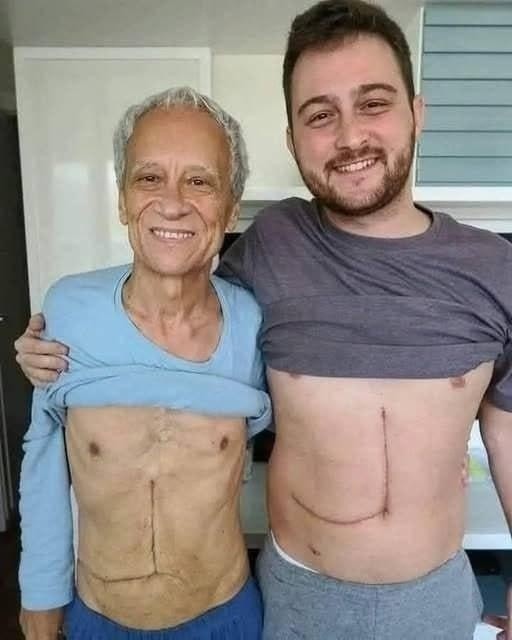
The decision to become a living organ donor is one of the purest acts of love a person can make. When a son steps forward to give part of his liver to his ailing father, it’s not just medical — it’s a profound statement about family bonds, sacrifice, and hope against overwhelming odds. In this case, the son — a young man in his prime — learned his father’s liver was failing due to chronic illness. Doctors confirmed he was a compatible match, and after thorough evaluations, the transplant proceeded. The surgery was a success at first: the father received the lifesaving portion he needed, and both were stable in recovery. What should have been a story of triumph and gratitude took a devastating turn when the donor son began experiencing severe complications that threatened his own life.
Living liver donation is considered relatively safe compared to other major surgeries, with the donor’s remaining liver regenerating over weeks to months. Most donors return to normal activities within a few months, experiencing only temporary fatigue or discomfort. Yet, like any major operation, risks exist: infection, bleeding, bile leaks, blood clots, or issues with the surgical site. In rare cases, these escalate into life-threatening situations requiring emergency intervention, prolonged ICU stays, or additional procedures. For this son, early signs of trouble appeared during recovery — persistent pain, fever, abnormal lab results — that quickly worsened into a cascade of complications doctors are still working to stabilize.
The emotional toll on the family is immense. The father, now on the path to recovery thanks to his son’s gift, faces the unbearable guilt of knowing his second chance came at such a high cost to the person he loves most. He’s been at his son’s bedside as much as his own health allows, whispering apologies and prayers. The mother and siblings shuttle between rooms, holding hands, updating relatives, and clinging to every small improvement in the son’s condition. Extended family and friends have rallied with meals, prayers, and financial support to cover mounting hospital bills that insurance doesn’t fully absorb. The community where they live has shared the story quietly at first, then more widely, sparking an outpouring of empathy from strangers who see their own parents or children in the faces of this family.
Stories like this remind us how fragile health can be, especially after 40 when bodies heal more slowly and complications hit harder. Many adult children quietly worry about their aging parents’ health — heart issues, diabetes, liver problems from years of hard work or medication. The idea of donating an organ feels heroic in theory, but the reality includes weeks of preparation, major surgery, and months of recovery. Donors undergo rigorous screening to minimize risks, yet no screening eliminates them entirely. This case highlights why transplant teams emphasize informed consent: donors must understand that while the odds favor a good outcome, the possibility of serious complications or even death, though low (around 0.2–0.5% for living liver donors), is real.
Financial strain adds another layer of worry. Transplant surgeries are expensive, and while many costs for the recipient are covered by insurance or programs, donors sometimes face gaps in coverage for follow-up care, lost wages during extended recovery, or unexpected treatments if issues arise. In this situation, the family has launched a quiet fundraiser to help with travel, lodging near the hospital, and bills piling up during the son’s prolonged stay. It’s a common reality for families in crisis: the emotional weight is crushing enough without the added pressure of money worries in retirement years or mid-career stages.
The broader lesson here is about preparation and support. Organ donation saves lives — thousands every year through living donors — but it’s not without personal cost. Families considering this path often benefit from counseling, connecting with past donors for real stories, and ensuring strong support networks. Medical teams now better monitor donors post-surgery with closer follow-ups, imaging, and symptom checks to catch problems early. Yet even the best care can’t always prevent rare complications from escalating.
For the son fighting now, every day is a battle of resilience. His liver function is being supported, infections are being aggressively treated, and doctors remain cautiously optimistic that his youth and prior health will help him pull through. The father, regaining strength, has vowed to honor his son’s sacrifice by living fully — advocating for organ donation awareness, supporting other families, and never taking a single day for granted. Their bond, already deep, has been forged in fire: one gave life, the other fights to keep it.
This story touches something universal, especially for those of us who’ve watched parents age or cared for sick loved ones. We’d all like to think we’d step up in the same way — give whatever it takes to save someone we love. But it also reminds us to cherish health while we have it, to discuss end-of-life wishes and organ donation openly with family, and to support systems that make such acts safer and more accessible. In the end, love like this — willing to give a piece of oneself — is what makes families endure. Whether the son recovers fully or faces ongoing challenges, his selflessness has already changed lives: his father’s, his family’s, and anyone who hears this and considers what they’d do for the people they hold dearest.
Pray for this young man’s healing, for his father’s peace of mind, and for strength for the whole family. In a world that often feels divided, stories of sacrifice like this remind us what truly matters: showing up, giving everything, and holding on together through the hardest days.
Most Popular!
-
 The Ultimate Wedding Revenge: When the Mother Who Abandoned Her Six Daughters Showed Up with Her Millionaire Boss, the Bride Opened a Box That Destroyed Lives Forever
-
The Beach Shaming Disaster: What My 8-Year-Old Said to the Prying Stranger Left Everyone Speechless
-
My Husband Abandoned Me With Twin Babies for a Luxury Fishing Trip — When He Returned, I Had Already Packed His Bags
-
The Three-Dollar Miracle: How a Dust-Covered Vase Revealed a Heartbreaking Decades-Old Secret
-
The $80,000 Battle to Erase a Birthmark: Why One Mother Risked Everything for Her Daughter’s Future
-
The Silent Thief: Why Millions of Men Are Living with a Time Bomb They Can’t See
-
The Final Curtain Falls: Beloved Sanford and Son Legend Hal Williams Gone at 91
-
Found at a Yard Sale: This “Useless” Vintage Contraption Is Actually a Forgotten Piece of Human History