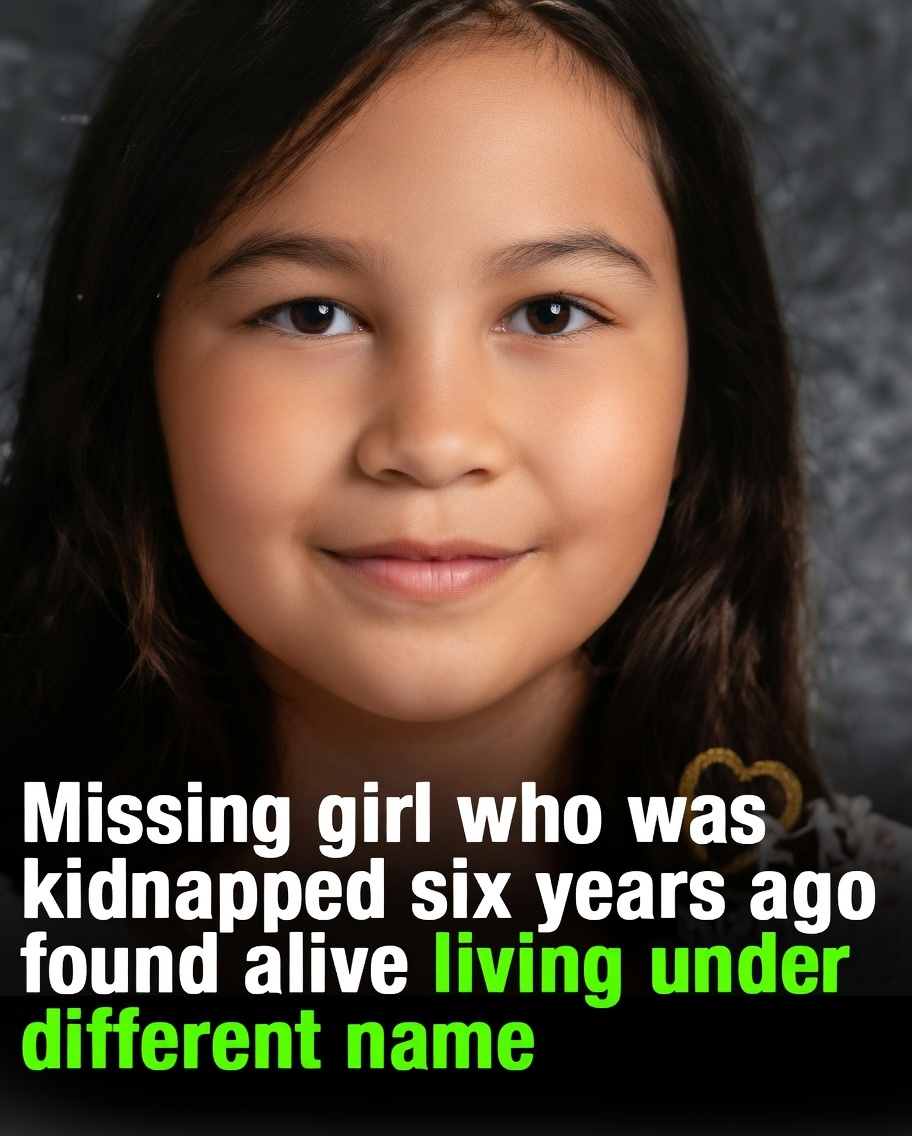
When a child disappears, time doesn’t just pass — it carves deep grooves into the lives left behind. Parents learn to live with the ache, siblings grow up in the shadow of an empty chair at the table, and entire communities carry the quiet weight of an unsolved mystery. For Karen’s family, those six years felt like an eternity. She was only ten when she stepped outside to play one spring afternoon in a peaceful suburban neighborhood. Neighbors remembered seeing her riding her bike in circles on the driveway. Then, in the span of minutes, she was gone. No scream, no struggle, no trace. Police canvassed every house, searched wooded areas for miles, interviewed hundreds of people. Amber Alerts flashed across screens nationwide. Vigils turned into annual remembrances. But as months stretched into years, hope dimmed for everyone except her parents.
Karen’s mother, Lisa, kept her daughter’s bedroom exactly as it was — posters on the walls, stuffed animals lined up on the bed, a half-finished puzzle on the desk. She refused to let anyone move a thing, as if preserving the space might somehow bring Karen back. Her father, Mark, threw himself into advocacy work, joining groups for missing children, speaking at conferences, and pushing for better tracking systems. They never divorced, never stopped talking about “when” Karen came home instead of “if.” Friends admired their strength, but privately many wondered how long a person could hold onto something that felt increasingly impossible. The case grew cold. Leads dried up. Karen’s name appeared less often in the news, becoming one more heartbreaking statistic in long lists of unresolved abductions.
Then came the phone call that no one expected. A detective in a midwestern state contacted the original investigating agency with cautious words: “We may have something.” A young woman, now sixteen, had walked into a local police department asking for help. She said her name was Emily, that she had run away from a controlling guardian, and that she needed to know who she really was. Something about her story didn’t add up — inconsistencies in her background, no school records, no social security trace before a certain date. Officers took her fingerprints as routine procedure. When the results came back, the room went silent. The prints matched Karen’s from six years earlier. Dental records, DNA swabs, childhood photos compared side by side — every test confirmed it. The girl who had been living as Emily was Karen.
The reunion that followed was equal parts joy and devastation. Karen’s parents flew across the country the same night, hearts pounding with disbelief and fear of what they would find. When they walked into the hospital room where she was being evaluated, time seemed to stop. Karen looked taller, her hair longer, her face more mature — but her eyes were the same. She didn’t run into their arms at first. She stood frozen, tears streaming, whispering “Mom? Dad?” like she was testing the words. Lisa collapsed into sobs. Mark held both of them, unable to speak. The moment was captured by no cameras, shared with no one outside the immediate circle for days. It was too raw, too private, too fragile.
Investigators pieced together the story slowly and carefully. Karen had been taken by a woman she vaguely remembered as a neighbor who had occasionally babysat her. The abductor, now in her late forties, had moved several times across state lines, changing identities and keeping Karen isolated from schools and public systems. She told Karen her parents had died in an accident, that she was her only family now. Over the years, fear, manipulation, and a lack of outside contact kept Karen compliant. She was homeschooled under a false name, rarely left the house alone, and grew up believing escape was impossible. As she reached her mid-teens, doubts crept in — fragments of memories, inconsistencies in the stories she’d been told. One day, when left alone briefly, she found old news clippings about her own disappearance on a public computer at a library. That moment of clarity gave her the courage to leave.
The emotional aftermath is complex and ongoing. Karen is safe now, surrounded by professionals who specialize in trauma recovery from long-term abductions. Therapists work with her to rebuild trust, process years of psychological control, and reconnect with the family she barely remembers. Her parents attend sessions too, learning how to support her without overwhelming her, how to give space while showing unwavering love. Siblings who were young when she vanished now face the strange reality of welcoming back a sister who is both familiar and a stranger. Grandparents, aunts, uncles — the whole extended family navigates joy mixed with grief for the childhood that was stolen.
For families of other missing children, this case reignites a painful spark of hope. Support groups that had grown quiet suddenly buzz with shared stories, renewed calls to action, and reminders that miracles can still happen after years of silence. Advocacy organizations report a surge in tips to cold case hotlines, as people who once stayed silent now wonder if their small memory might matter. Law enforcement agencies emphasize the importance of never closing a file completely — technology improves, witnesses come forward, circumstances change. Karen’s return proves that persistence and belief can outlast even the longest odds.
Financially and logistically, the road ahead is daunting. Medical evaluations, therapy, potential legal proceedings against the abductor, relocation for safety — these costs add up quickly. Yet communities have already rallied. Fundraisers launched quietly online, neighbors organized meal trains, local businesses offered support. It’s a reminder that when one family endures unimaginable loss and then finds improbable redemption, the wider circle often steps in to help carry the load.
Karen’s story also highlights the quiet strength required to survive such circumstances. She endured isolation, lies, and fear, yet something inside her refused to fully surrender her identity. That inner resilience — nurtured perhaps by faint memories of love and safety — eventually led her to seek the truth. For her parents, the greatest gift is not just her return, but the knowledge that she fought to come home, even when the path was dark.
As Karen begins the long process of reclaiming her life, her family holds onto small moments: a shared laugh over an old photo, a hand squeezed during a quiet walk, the sound of her voice saying their names again. These are the threads that slowly weave a new normal. There will be hard days ahead — triggers, nightmares, questions that may never have satisfying answers. But there is also tomorrow, and the day after, and the chance to build memories that were stolen for so long.
In the end, Karen’s reappearance reminds us that hope is not naive; it’s a choice made in the face of overwhelming evidence to the contrary. For every family still waiting, lighting candles, keeping rooms untouched, refusing to let go — this case whispers that the story isn’t always over when the world says it is. Sometimes, against all reason, the missing come home. And when they do, the world feels a little less broken, a little more capable of grace. Karen is proof of that. Her family is living it. And anyone who has ever loved and lost a piece of their heart knows exactly why this quiet miracle matters so deeply.
Most Popular!
-
 Eggs, Cholesterol, and Timing: What Actually Matters for Most People
-
When a Partner Leaves With More Than a Suitcase: Protecting Yourself From Financial Betrayal
-
When Financial Support Meets Contempt: Recognizing Exploitation Inside a Marriage
-
Why Some Sensory Toys and Household “Hacks” Do Not Belong in the Microwave
-
When Grief Clouds Judgment: Misreading Silence and the Quiet Ways People Show Care
-
When One Partner Does All the Hosting: Recognizing Imbalance Before Resentment Takes Over
-
How Many Holes Are in a T-Shirt? What a Simple Puzzle Reveals About How We See
-
The Quiet Stories Inside Secondhand Objects: When a Thrift-Store Find Carries Someone Else’s History