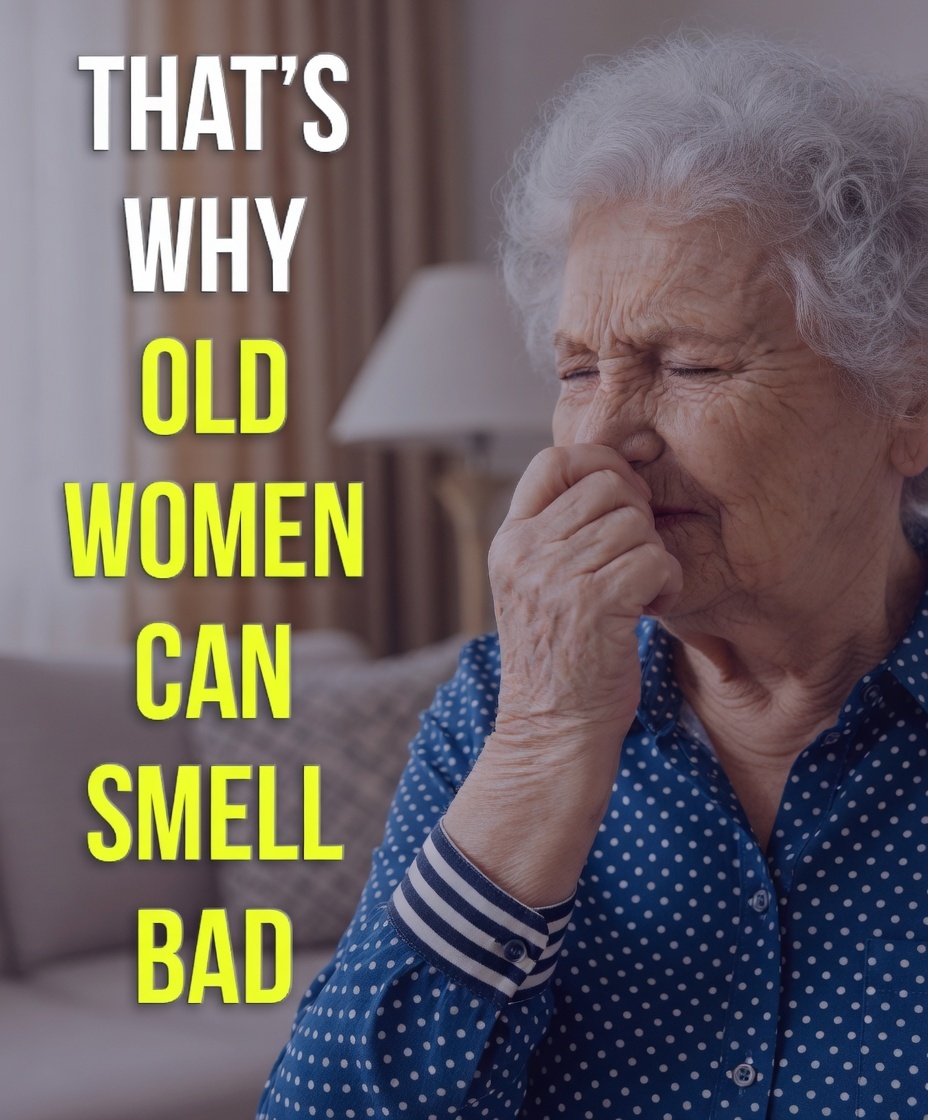
As we move through our forties, fifties, sixties and beyond, our bodies quietly go through changes we rarely discuss in polite company. We talk about gray hair, reading glasses, slower steps up the stairs, even the need for better joint support or heart-healthy habits. But one change tends to stay in the shadows: a shift in the way our bodies smell. It’s often called “old people smell,” a phrase that can sting when we hear it applied to ourselves or someone we love. The important truth to understand right away is that this is not a sign of poor hygiene or laziness. It is a normal, biology-driven process that begins to become noticeable as we age, and once we know what’s really happening underneath, we can handle it with far more confidence and ease.
Scientists have identified the main culprit behind this distinct odor: a compound called 2-nonenal. This particular chemical starts to increase in our skin after around age 40. It forms when certain fatty acids in the skin’s outer layer break down through a process called lipid peroxidation. As our skin produces fewer natural antioxidants over time, these fatty acids become more vulnerable to oxidation — basically, they react with oxygen in a way that creates that specific grassy, greasy, sometimes slightly musty scent. It’s the same family of compounds you might notice in aged beer, old books, or certain essential oils, which is why the smell feels oddly familiar even if you can’t quite place it at first.
What makes 2-nonenal especially noticeable is that it clings to fabrics and lingers longer than many other body odors. Regular sweat smells come mostly from bacteria breaking down proteins on the skin surface, and those can usually be washed away with soap and water. But 2-nonenal is produced deeper in the skin layers and gets released steadily through the day. It attaches itself to clothing, bedding, upholstery — anywhere we spend a lot of time. That’s why sometimes the scent seems to “follow” a person or a room even after they’ve showered. It’s not that hygiene has failed; it’s that a different kind of odor molecule is at play.
Hormonal shifts play a supporting role too. As we age, levels of certain hormones change — estrogen in women, testosterone in men — and these shifts influence how much oil our skin produces and what kind of oils. More sebum combined with slower cell turnover means the skin’s surface can hold onto those oxidizing lipids longer. Add in a natural decline in the skin’s ability to repair itself quickly, and the perfect conditions exist for 2-nonenal production to creep up. It’s not dramatic overnight; it’s gradual, which is why many people don’t notice it on themselves until someone else gently points it out — or until they catch a whiff on their own coat after it’s hung in the closet for a week.
Diet can influence the intensity to some degree. Foods high in omega-6 fatty acids — think processed snacks, certain vegetable oils, fried foods — can contribute more raw material for lipid peroxidation. On the flip side, diets richer in antioxidants from colorful fruits, vegetables, nuts, and fish can help the body neutralize some of those oxidative processes before they turn into noticeable odor compounds. Staying well-hydrated matters too; drier skin tends to hold onto odors longer because there’s less natural moisture to help flush things away. None of these are magic fixes on their own, but together they create a supportive foundation.
One of the most practical ways to manage the scent starts in the shower. Using a gentle, fragrance-free or lightly scented antibacterial body wash can help reduce the bacterial component that sometimes mixes with 2-nonenal and makes the overall smell stronger. Focus on areas where oil glands are more active — underarms, groin, feet — but don’t scrub so hard that you strip the skin completely, because overly dry skin can actually worsen odor retention. Many people in their fifties and sixties find that switching to a moisturizing body wash with ingredients like ceramides or hyaluronic acid helps keep the skin barrier healthier, which indirectly reduces how much of that oxidized compound escapes into the air.
After the shower, the real game-changer for many is choosing the right laundry routine. Regular detergents sometimes don’t fully remove 2-nonenal from fabrics because it’s lipid-soluble rather than water-soluble. Adding a half-cup of white vinegar to the rinse cycle or using a laundry booster like borax can help break down and lift those stubborn molecules. Some folks swear by enzyme-based odor eliminators designed for pet smells or athletic wear; those work surprisingly well on clothing, sheets, and towels that have absorbed the scent over time. Washing in hot water when possible and drying thoroughly in sunlight also helps, since UV light can degrade some odor compounds naturally.
For everyday protection, lightweight, breathable clothing made from natural fibers like cotton or bamboo tends to hold less odor than synthetics. Polyester and other man-made fabrics trap oils and compounds close to the skin, making the smell more persistent. Changing out of clothes at the end of the day and letting them air out before putting them away prevents buildup. Simple habits like this — nothing drastic — can make a noticeable difference over a few weeks without anyone needing to feel self-conscious.
Skincare routines can be quietly powerful here too. Using a body lotion or cream with antioxidants — think vitamin E, green tea extract, or niacinamide — after showering helps protect the skin lipids from excessive oxidation. Some people experiment with diluted apple cider vinegar as a body wipe or toner because of its mild acidity and antimicrobial properties, but it’s wise to test a small area first to avoid irritation. The goal is never to mask the smell with heavy fragrances — that often just creates a confusing mix — but to reduce the source at the skin level.
Staying active and keeping good circulation going also helps. Regular movement — even gentle walking, stretching, or chair exercises — improves blood flow to the skin and supports the body’s natural detoxification processes through sweat. Sweating itself isn’t the enemy; fresh sweat is mostly odorless. It’s when it sits on the skin or clothing that problems start. Showering soon after exercise prevents that buildup. For those dealing with limited mobility, dry brushing before a shower or using a long-handled brush can gently exfoliate and stimulate the skin without much effort.
Emotional factors matter more than we might think. When someone feels embarrassed about a natural aging change, they sometimes withdraw from close family moments — hugs, sitting side by side on the couch — and that isolation can quietly affect mental health and even family bonds. Talking openly (but kindly) about this with loved ones removes a lot of the shame. Many adult children are relieved to learn it’s a biological fact, not a personal failing, and they’re often happy to help with practical solutions like picking up the right laundry additives or suggesting a new body wash brand.
Financially, managing this doesn’t have to be expensive. Most of the effective steps — vinegar in the wash, breathable clothing you probably already own, antioxidant-rich foods you can buy at any grocery store — cost very little compared to the peace of mind they bring. For those on fixed retirement incomes, these small investments in daily comfort pay off far more than fancy perfumes or deodorants that only cover things up temporarily.
The bigger picture is about aging with dignity and grace. Our bodies change — that’s the deal we all sign up for — but we don’t have to accept discomfort or embarrassment as part of the package. Understanding that “old people smell” comes from a specific, explainable chemical shift takes away a lot of its power to hurt feelings. With a few thoughtful adjustments to hygiene, laundry, clothing choices, and skin care, most people can reduce it to the point where it’s barely noticeable, even to their own nose.
In the end, the scent of a home where grandparents live should feel like love, safety, and shared history — not something anyone has to apologize for. A hug from a grandchild should never come with hesitation. By shining a gentle, factual light on what’s really happening and sharing simple ways to manage it, we give ourselves and our loved ones permission to keep connecting closely, comfortably, and confidently no matter the decade we’re living in. That’s worth far more than any perfect fragrance could ever provide.
Most Popular!
-
 The Ultimate Wedding Revenge: When the Mother Who Abandoned Her Six Daughters Showed Up with Her Millionaire Boss, the Bride Opened a Box That Destroyed Lives Forever
-
The Beach Shaming Disaster: What My 8-Year-Old Said to the Prying Stranger Left Everyone Speechless
-
My Husband Abandoned Me With Twin Babies for a Luxury Fishing Trip — When He Returned, I Had Already Packed His Bags
-
The Three-Dollar Miracle: How a Dust-Covered Vase Revealed a Heartbreaking Decades-Old Secret
-
The $80,000 Battle to Erase a Birthmark: Why One Mother Risked Everything for Her Daughter’s Future
-
The Silent Thief: Why Millions of Men Are Living with a Time Bomb They Can’t See
-
The Final Curtain Falls: Beloved Sanford and Son Legend Hal Williams Gone at 91
-
Found at a Yard Sale: This “Useless” Vintage Contraption Is Actually a Forgotten Piece of Human History