The architectural blueprint of American comedy was fundamentally altered the moment Lily Tomlin stepped into the light. For over six decades, she has been the artisan of our collective joy, a performer who could coax a roar of laughter from a stadium crowd as easily as she could draw a solitary tear in a darkened theater. Yet, the effortless nature of her punchlines often obscured the heavy lifting required to deliver them. To understand the icon, one must look past the glittering awards and the iconic characters to the working-class streets of Detroit, where a young girl first discovered that humor could be both armor and weapon.
Born Mary Jean Tomlin on September 1, 1939, Lily grew up in a modest apartment above her father’s auto repair shop. Her parents, Guy and Lillie Mae Tomlin, were Southern transplants who brought Kentucky grit and humor to the industrial Midwest. Money was tight. Her father struggled with alcoholism, a condition that cast long shadows over the household. But laughter was never in short supply. Lily’s mother, a nurse’s aide with a sharp wit, filled the home with stories, impressions, and songs. From her earliest years, Lily absorbed the power of mimicry — copying neighbors, teachers, radio personalities, even the cadence of her father’s frustrated rants. She wasn’t just imitating; she was observing, dissecting human behavior with the eye of a born satirist.
By high school, she was already performing in local theater and doing stand-up at coffeehouses. She attended Wayne State University briefly but dropped out to pursue acting in New York City in the early 1960s. The city was brutal for a young woman with no connections and a thick Detroit accent. She waitressed, typed, and auditioned relentlessly. Rejections piled up. But she refused to soften her edges. Instead, she sharpened them. She created characters — oddballs, misfits, dreamers — drawn from the people she saw every day: the switchboard operators, the gossipy neighbors, the eccentric old ladies on park benches. These weren’t stereotypes; they were portraits — loving, precise, and hilariously human.
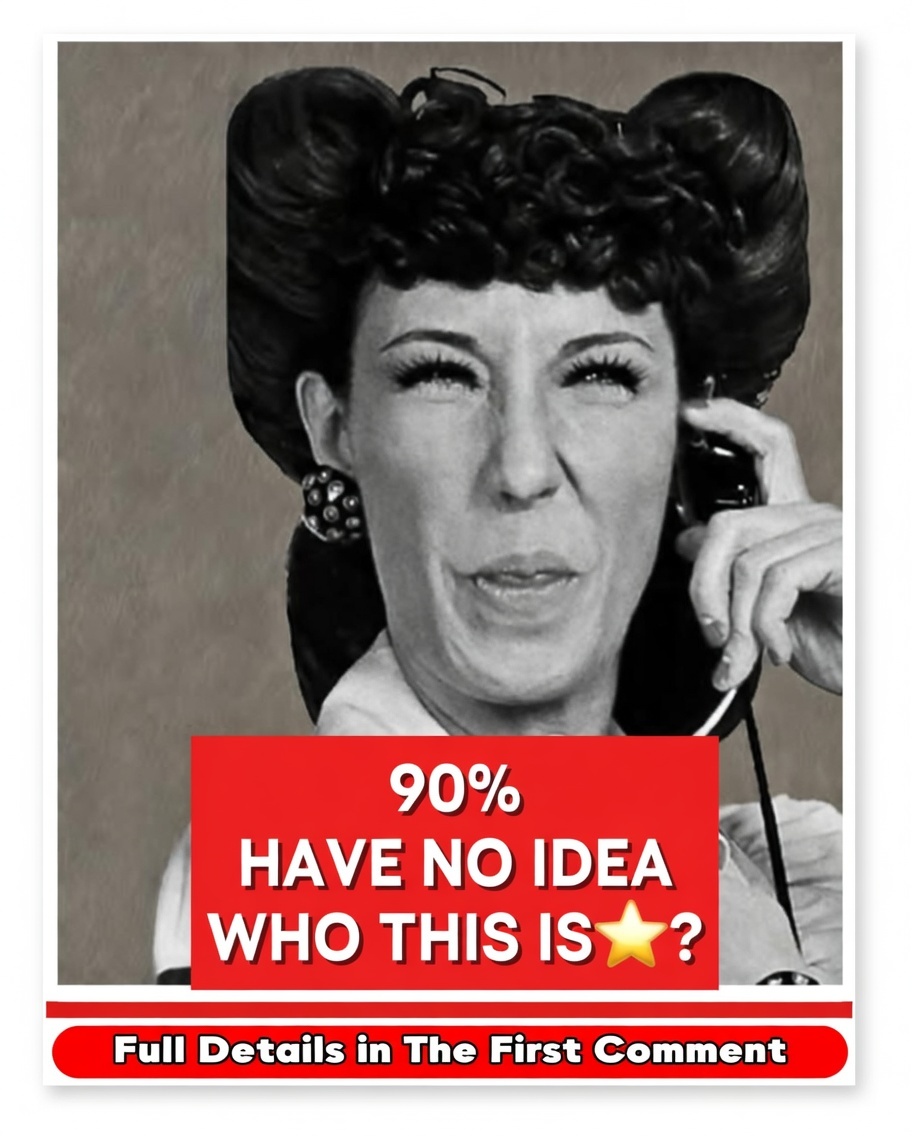
Her breakthrough came in 1969 on Rowan & Martin’s Laugh-In. As Ernestine the Telephone Operator, she sat primly at a switchboard, nasal voice dripping with disdain, delivering lines like “One ringy-dingy… two ringy-dingies…” America fell in love. Ernestine wasn’t just funny — she was subversive. A working-class woman quietly judging the powerful, rolling her eyes at the absurdity of it all. The character made Tomlin a star overnight. She followed with Edith Ann, the five-and-a-half-year-old philosopher who sat in an oversized rocking chair and delivered deadpan observations about life (“And that’s the truth… pthhh!”). Both characters became cultural touchstones, proving Tomlin could embody vastly different ages, genders, and social classes with uncanny precision.
The 1970s and 1980s were her golden era. She starred in groundbreaking films like Nashville (1975), where her performance as gospel singer Linnea Reese earned an Oscar nomination; 9 to 5 (1980), where she, Jane Fonda, and Dolly Parton became feminist icons; and The Incredible Shrinking Woman (1981), a sci-fi satire that showcased her physical comedy. On stage, her one-woman shows — Lily Tomlin: Onstage, Lily Sold Out — sold out theaters worldwide. She won Tony Awards, Emmys, Grammys, and a Peabody. Yet she never rested on laurels. She kept pushing boundaries — tackling racism, sexism, homophobia, and class inequality with wit that cut deeper because it made you laugh first.
In 1971, she met Jane Wagner, a writer and director who would become her creative partner and life partner for over 50 years. Wagner wrote many of Tomlin’s most iconic characters, including Edith Ann and Trudy the Bag Lady. Their collaboration was one of the most enduring in show business — a partnership built on mutual respect, shared vision, and deep love. They married in 2013 after decades together, a quiet act of defiance against a world that hadn’t always welcomed such relationships.
Tomlin never stopped working. In the 1990s and 2000s she appeared in films like Flirting with Disaster, I Heart Huckabees, and A Prairie Home Companion. In 2015, she began starring in Netflix’s Grace and Frankie alongside Jane Fonda, a role that introduced her to a new generation. The show — about two women reinventing themselves after their husbands leave them for each other — became a cultural phenomenon, running for seven seasons and earning Tomlin multiple Emmy nominations. At 86, she remains one of the most respected and beloved performers alive.
Offstage, Tomlin has been an outspoken advocate for LGBTQ+ rights, women’s equality, and environmental causes. She and Wagner have supported progressive organizations for decades. In 2014, she received the Kennedy Center Honors. In 2017, she was awarded the Mark Twain Prize for American Humor. Yet she remains humble, often deflecting praise with a wry joke or a self-deprecating aside. “I’m just an old broad who’s been lucky,” she told an interviewer in 2023. “The real miracle is that people still let me come out and talk.”
For Americans over 40, Lily Tomlin is more than a comedian — she’s a cultural companion. She was there during the turbulent 1970s, the AIDS crisis of the 1980s, the culture wars of the 1990s, and the streaming revolution of the 21st century. She made us laugh at ourselves, at our institutions, at our hypocrisies — and in laughing, we found moments of clarity and compassion. Her characters weren’t punchlines; they were people — flawed, funny, deeply human. In a career spanning eight decades, she never betrayed that truth.
Today, at 85, Lily Tomlin continues to perform, to create, to speak out. She remains an active force in theater, film, and activism. She and Jane Wagner still collaborate. She still makes people laugh — and think. And she still carries that Detroit grit, that refusal to be anything less than fully herself.
The conversation is just getting started — and for countless people over forty who grew up with her voice in their homes and her characters in their hearts, it is already changing everything for the better.
Lily Tomlin didn’t just make us laugh. She made us see. She made us feel. And she made us believe that humor — real, honest, fearless humor — can still change the world. One ringy-dingy at a time.
Most Popular!
-
 The Ultimate Wedding Revenge: When the Mother Who Abandoned Her Six Daughters Showed Up with Her Millionaire Boss, the Bride Opened a Box That Destroyed Lives Forever
-
The Beach Shaming Disaster: What My 8-Year-Old Said to the Prying Stranger Left Everyone Speechless
-
My Husband Abandoned Me With Twin Babies for a Luxury Fishing Trip — When He Returned, I Had Already Packed His Bags
-
The Three-Dollar Miracle: How a Dust-Covered Vase Revealed a Heartbreaking Decades-Old Secret
-
The $80,000 Battle to Erase a Birthmark: Why One Mother Risked Everything for Her Daughter’s Future
-
The Silent Thief: Why Millions of Men Are Living with a Time Bomb They Can’t See
-
The Final Curtain Falls: Beloved Sanford and Son Legend Hal Williams Gone at 91
-
Found at a Yard Sale: This “Useless” Vintage Contraption Is Actually a Forgotten Piece of Human History