In the quiet town of Millfield, Ohio, where the auto parts factory whistle still blew at shift changes, Linda Harper raised her daughter Emily alone after her husband walked out when Emily was three. Linda was 32, a line worker making $14 an hour, and she made a promise that night she tucked Emily into bed: “You’re going to have everything I didn’t.”
For the next 15 years, that promise became her life. Night shifts from 11 PM to 7 AM, six days a week. She learned to sleep in 4-hour blocks during the day while Emily was at school. She packed lunches with notes saying “You’re going to change the world.” When Emily wanted dance lessons, Linda worked double shifts. When Emily got accepted to Ohio State pre-med, Linda sold her wedding ring to cover the deposit.
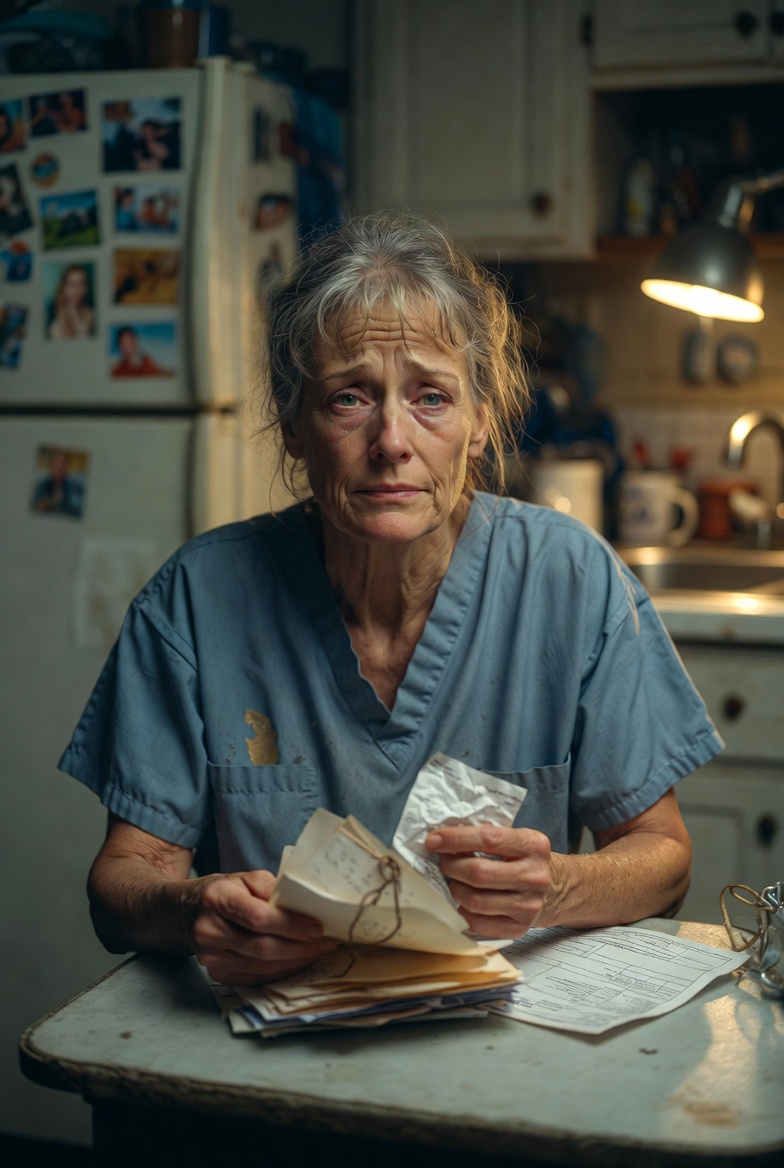
No one saw the toll. Linda’s back ached constantly from standing on concrete. Her hands were calloused. But every Sunday morning after her shift, she’d sit at the tiny kitchen table with a cup of black coffee and write Emily a real letter on notebook paper. “Today at the plant we fixed a machine that makes brake pads for trucks. Reminded me how important your work will be someday. Love you bigger than the sky.”
At 48, during a routine physical the factory offered, the doctor found the lump. Stage 2. Treatable, but aggressive. Linda sat in her car in the parking lot and cried for ten minutes, then wiped her face and drove home. She decided right then: Emily could not know. Med school was hard enough. So she scheduled chemo on her off days, told her sister she was “just tired,” and kept working. The hair loss she hid with bandanas under her hard hat. The nausea she fought with ginger ale on breaks.
She wrote more letters than ever. 87 of them over two years, each one sealed and mailed from the post office so the return address wouldn’t raise questions. Emily would call excited about cadavers and exams, and Linda would laugh and say, “That’s my girl.”
Graduation day arrived in June 2023. Emily, now 24, stood on stage in cap and gown, giving her valedictorian speech about “the mothers who carry us.” Linda sat in the back row, scarf around her head, 20 pounds lighter than two years ago. She clapped until her hands hurt.
Afterward, in the parking lot, Emily hugged her so tight the envelope slid out of Linda’s purse. Emily picked it up, saw the hospital logo, and froze. “Mom… what is this?”
The drive home was silent except for Linda’s quiet explanation. Emily wanted to scream, to quit residency, to stay. But Linda took her hand and said, “You finish what we started. That’s how you honor me.”
Six months later, on a cold January night, Linda passed peacefully at home with Emily holding those 87 letters against her chest. Emily became Dr. Emily Harper two years later and now works in oncology. She keeps every letter in a wooden box on her desk.
Sometimes, late at night, she writes back.
Most Popular!
-
 My Cruel Mother Threw My Clothes on the Porch After My Nursing Shift But She Had No Idea Who Actually Owned the House
-
The Disturbing Truth Behind the Pima County Deputy Arrest That Has Shattered Public Trust in Arizona
-
The Chilling Discovery in Nancy Guthrie’s Son-in-Law’s Garage That Has Sent Shockwaves Through Arizona
-
Nebula Sexuality Explained – Why Neurodivergent People Are Adopting This Rare New Identity
-
Lunar Mission in Peril: Veteran Astronaut Issues Dire Warning Over Artemis II Safety Flaws
-
The Secret Garden Weapon Hiding in Your Kitchen Trash – Why Professional Gardeners Never Throw Eggshells Away
-
My High School Bully Husband Called Me 20 Years Later to Expose Her Darkest Secret
-
Melania Trump Explosive Epstein Statement Sparks Massive Outrage as Survivors Fire Back