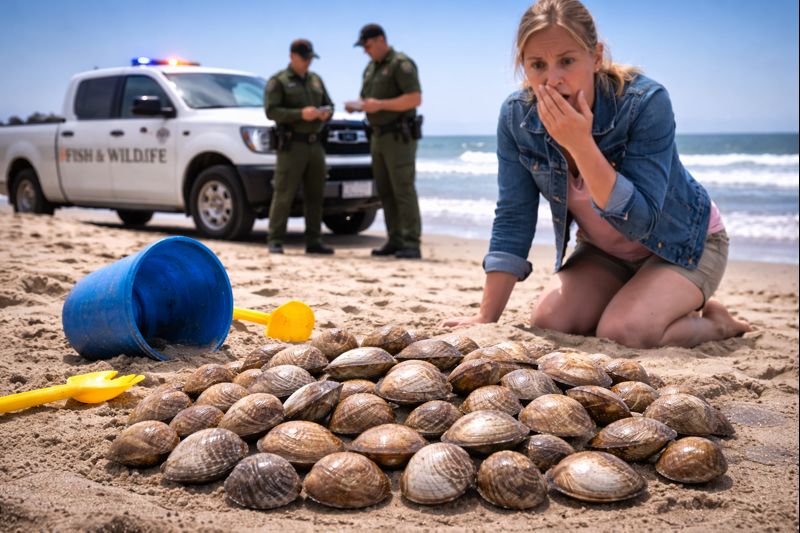
It was supposed to be a perfect day at the beach — sun, sand, and children laughing as they collected what looked like harmless seashells. Instead, one mother walked away from Pismo Beach facing a fine so massive it left her speechless. Seventy-two clams. That’s all it took. When the official number was read aloud, even seasoned beachgoers were stunned. What seemed like an innocent mistake quickly became a financial shock that no family ever expects from a seaside outing.
A Simple Mistake With Devastating Consequences
The woman, visiting Pismo Beach with her children, says they weren’t trying to break the law. Her kids were doing what children have done for generations — picking up shells along the shoreline. Only later did they realize those “shells” were actually live clams.
By the time wildlife officials intervened, the damage was done.
Her children had collected 72 clams.
Under California law, clamming is tightly regulated. Harvest limits exist to protect marine ecosystems, and violations can carry heavy penalties. Unfortunately, ignorance of the law does not equal immunity — something this family learned the hard way.
“I Looked It Up — Too Late”
The mother says she even tried to do the right thing.
“Right before we went, I decided to look it up,” she explained later. “That’s when I saw the amount.”
But by then, enforcement officers had already issued a citation on the spot. What followed was far worse.
Weeks later, a notice arrived in the mail detailing the total fine: just over $88,000.
The breakdown was staggering. Each clam carried a separate penalty, multiplied by environmental restitution fees and statutory fines.
Why the Fine Is So High
To many people, the punishment sounds excessive. But wildlife officials say the penalties are designed to deter overharvesting, which can devastate clam populations and the ecosystems that rely on them.
California treats illegal harvesting as a serious environmental offense. The fines are intentionally steep to discourage repeat violations and commercial exploitation.
However, critics argue that applying the same penalties to a family mistake feels disproportionate.
“This wasn’t poaching,” one observer noted. “It was kids at the beach.”
Public Reaction: Outrage and Confusion
When the story spread, public reaction was swift and emotional. Many people expressed shock that a family could face a life-altering fine over what looked like a misunderstanding.
- “How is anyone supposed to know this?”
- “$88,000 for shells?”
- “This feels like punishment without mercy.”
Others defended the regulations, pointing out that signs and rules do exist — even if they’re easy to miss.
The debate quickly turned into a larger conversation about accessibility of laws and whether enforcement should consider intent.
Wildlife Officials Respond
Officials say enforcement officers are required to apply the law evenly. Once clams are removed from the environment, the violation has occurred — regardless of intent.
They also stress that regulations are available online and posted in certain beach areas, though critics argue signage is inconsistent and unclear for tourists.
“This is about protecting natural resources,” one official stated. “Not punishing families.”
Still, the fine amount remains unchanged.
A Lesson No Family Wanted
For the children involved, the day ended not with souvenirs, but with guilt and confusion.
“They felt awful,” the mother said. “They thought they were doing something fun.”
Instead, the experience turned into a harsh lesson about environmental law — and consequences that feel wildly out of proportion to the act.
Calls for Reform Grow Louder
Since the story broke, some lawmakers and advocates have called for more discretion in enforcement, especially in cases involving families and first-time offenders.
Suggestions include:
- Warnings instead of fines for non-commercial violations
- Clearer signage at beaches
- Educational programs for visitors
- Reduced penalties for unintentional harvesting
So far, no changes have been announced.
What Beachgoers Should Know
Experts urge anyone visiting coastal areas to:
- Check local wildlife regulations before collecting anything
- Assume living creatures are protected
- When in doubt, leave it on the beach
What looks like a shell may be part of a protected species.
The Question That Lingers
A sunny afternoon.
Children laughing.
A mistake that cost more than most homes.
As this family struggles with the fallout, one question continues to echo far beyond Pismo Beach:
Should environmental protection come with punishment so severe that one innocent moment changes a family’s life forever?
Most Popular!
-
 Expert Suggests New Approaches to Communication During Baby Diaper Changes
-
From Hollywood Stardom to Silence: The Actress Who Walked Away from Fame to Start Over with Baking
-
Demi Moore’s Heartfelt Birthday Tribute to Bruce Willis on His 71st Birthday Shows the Power of Enduring Love
-
This Little-Known 80s Horror Story Left a Lasting and Disturbing Impact
-
This Morning I Went Outside and Noticed Something Unusual on My Porch That Immediately Caught My Attention
-
After 15 Years, a State Questioned Her License Plate – What Happened Next Shocked Her
-
The Hidden Threat: How to Protect Your Savings from Modern Online Scams
-
I Missed My Prom Plans While Facing a Serious Stage 3 Diagnosis – What Happened Next Changed My Life