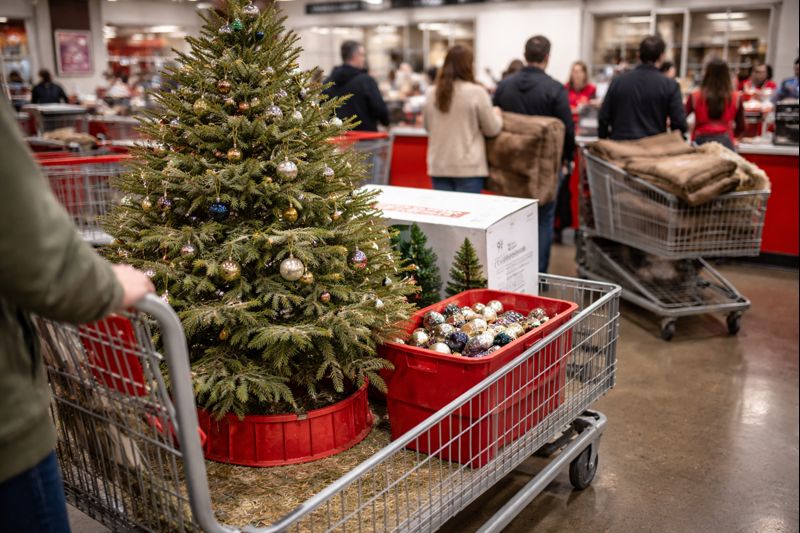
At first, employees thought it was a joke. Then the carts kept coming. Fully decorated Christmas trees. Needles falling. Trunks dry. All rolling straight to the return counter after Christmas was over. What shocked shoppers wasn’t just the audacity — it was that the returns were accepted. As the scenes spread online, one uncomfortable question exploded everywhere: has America turned generous return policies into free rental services? And no retailer is feeling it more than Costco.
The Post-Holiday Scene No One Expected
In the days following Christmas, return counters at Costco locations across the country saw something unusual — and unsettling. Customers were returning fully used Christmas trees. Not unopened. Not defective. Trees that had been proudly displayed all season, lights wrapped around branches, ornaments removed only hours earlier.
Employees say the trees were clearly used. Some were dried out. Others still smelled like pine. Yet customers lined up confidently, receipts in hand, expecting refunds.
And in many cases — they got them.
When a Return Policy Becomes a Loophole
Costco is famous for its generous return policy, designed to build trust and loyalty. The idea is simple: if you’re not satisfied, you can bring it back.
But critics say what happened after Christmas crossed a line.
Shoppers didn’t return trees because they were defective. They returned them because they were done using them.
Social media users quickly dubbed it “the holiday loan program.”
“People are treating Costco like a free rental service,” one commenter wrote. “Use it, enjoy it, return it.”
It Wasn’t Just Trees
The trees were only the beginning.
Employees and shoppers reported returns of:
- Large sofas
- Dining tables
- Sectional couches
- Patio furniture
Some items showed clear signs of use. Others were reportedly purchased just weeks earlier for holiday hosting, then brought back once guests were gone.
The scale of it stunned even longtime Costco employees.
Why Costco Allows It — For Now
Costco’s business model relies heavily on member trust. Executives have long believed that a flexible return policy encourages more spending overall. Most customers don’t abuse it — and those who do were considered the exception.
But critics argue the balance may be shifting.
With rising costs, inflation, and tighter household budgets, more shoppers appear willing to exploit the policy to save money — even if it means bending ethical lines.
“Just because you can return something doesn’t mean you should,” one retail analyst said.
The Internet Reacts — Harshly
Videos of returned Christmas trees went viral almost instantly. Comment sections filled with outrage.
- “This is why prices go up.”
- “People ruin good things for everyone.”
- “That’s not a return — that’s theft with extra steps.”
Others defended the customers, arguing that Costco’s policy is clear and voluntary.
“If Costco allows it, that’s on them,” one user wrote.
The divide highlighted a growing cultural debate about consumer responsibility versus corporate policy.
The Cost of “Free” Returns
Retail experts warn that widespread abuse doesn’t come without consequences. Returned items that can’t be resold often:
- End up discarded
- Get written off as losses
- Drive higher prices for everyone
While Costco can absorb losses better than smaller retailers, sustained abuse could force changes.
And some insiders believe those changes are coming.
Will Costco Crack Down?
So far, Costco hasn’t announced formal policy changes. But employees say internal discussions are happening. Some stores are reportedly tracking excessive return behavior more closely.
Historically, Costco has quietly revoked memberships from customers who repeatedly abuse returns.
That means the holiday “free rental” strategy may not stay risk-free forever.
A Reflection of a Bigger Problem
This isn’t just about trees.
It’s about a consumer culture increasingly comfortable pushing limits — and corporations deciding how much trust is too much.
As generous policies collide with viral behavior, retailers face a hard choice:
- Tighten rules and risk backlash
- Or keep trusting customers — and absorb the losses
The Question Everyone Is Asking
A Christmas tree enjoyed for weeks.
Returned without shame.
Refunded like nothing happened.
So here’s the question that retailers — and shoppers — can’t ignore:
If return policies become loopholes instead of safeguards, how long before the generosity disappears for everyone?
Most Popular!
-
 Melania Trump Explosive Epstein Statement Sparks Massive Outrage as Survivors Fire Back
-
Sensational Military Attack Claims Go Viral: Why Lack of Official Evidence Means You Should Tread Carefully
-
A Hundred Roses Covered My Porch While I Was Away — Then I Found the Note That Destroyed My World
-
Chaos in the Fitting Room: A Husband’s Worst Nightmare Unfolds in Public
-
The Heartbreaking Reality Joe Biden Tried to Hide — A Nation Stopped in Its Tracks
-
Donald Trump Releases Shocking Health Report but Critics Point to Hidden Details and Missing Data That Could Change Everything
-
The Unholy War Between the White House and the Vatican: Why JD Vance’s Shocking Accusation Against Pope Leo Has the Entire World Bracing for a Spiritual Collapse
-
Chilling Reports of US and Iran War Send Global Markets into Total Chaos as Truth Behind Downed Fighter Jet Finally Revealed