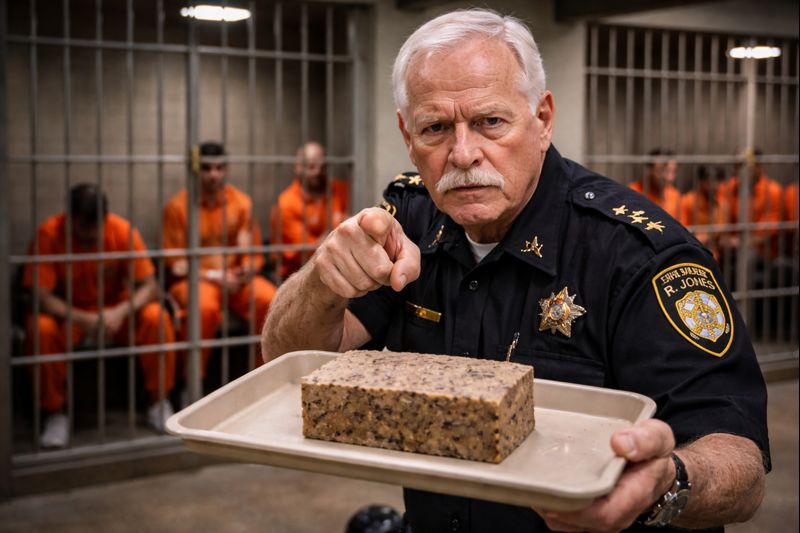
It looks like a burger, but the reaction it’s causing is anything but ordinary. Photos spread fast. Outrage followed faster. Inmates eating a strange, compact meal in isolation — and a sheriff unapologetically defending it. When asked why he serves it, his answer stunned critics and fueled a national debate: punishment, power, and where the line is drawn inside American jails. The controversy isn’t slowing down — and neither is the man at the center of it.
What Is the “Warden Burger”?
The so-called warden burger is not a fast-food item and not meant to be enjoyed. It’s a dense, tightly packed meal served to inmates placed in isolation at the Butler County Jail. According to the sheriff, it contains all required nutritional components — protein, carbohydrates, and calories — compressed into a single, unappetizing block.
To critics, it looks like punishment disguised as food.
To supporters, it’s discipline.
And to Richard Jones, it’s perfectly justified.
The Sheriff Who Refuses to Back Down
Sheriff Jones has never been one to soften his language — and this controversy is no exception. After facing intense backlash on social media, including being labeled a “disgusting human,” Jones doubled down.
“The State Department of Corrections is not my boss,” he said bluntly. “So I basically don’t give two what they think.”
Jones argues that inmates in isolation are there because of serious misconduct — fighting, assaulting staff, or repeated violations. In his view, jail is not meant to be comfortable.
“This isn’t a restaurant,” he has said repeatedly. “It’s jail.”
Is It Food — or Punishment?
That’s the heart of the debate.
Civil rights advocates argue that food should never be used as a form of punishment, regardless of an inmate’s behavior. They say that while the meal may technically meet nutritional requirements, its presentation and intent cross an ethical line.
“You’re degrading people,” one activist commented online. “This isn’t discipline. It’s humiliation.”
Others worry that normalizing such practices opens the door to harsher treatment under the guise of “order.”
Supporters Say Critics Don’t Understand Jail
Supporters of the sheriff see it very differently.
Many argue that isolation units exist for the most disruptive inmates — those who pose risks to others. From that perspective, privileges are reduced by design.
“If you don’t want the warden burger,” one supporter wrote, “don’t break the rules.”
Some corrections officers and former inmates have defended the practice, saying the meal is safe, filling, and temporary — not starvation or abuse.
“This is accountability,” a retired officer said. “Not cruelty.”
What the Law Actually Says
Legally, jails are required to provide inmates with adequate nutrition — not comfort or variety. Courts have generally ruled that meals must meet basic dietary standards but do not need to be appealing.
That’s where the warden burger exists in a gray zone.
As long as it meets caloric and nutritional benchmarks, it may be legal. But legality doesn’t always end public debate — especially when images spark emotional reactions.
Social Media Turns It Into a National Flashpoint
What once might have stayed a local jail policy became national news after photos and videos spread online. Comment sections exploded. Hashtags formed. The sheriff became both a villain and a hero — depending on who you ask.
The polarization reflects a broader divide in how Americans view incarceration:
- Is jail about punishment or rehabilitation?
- Should discomfort be part of deterrence?
- Where does discipline end and cruelty begin?
The warden burger became a symbol far larger than a meal.
Jones Says He Won’t Change
Despite the backlash, Sheriff Jones has made one thing clear: he has no plans to stop.
He believes strong measures keep order and send a message. To him, criticism comes from people who’ve never worked inside a jail.
“They don’t run my facility,” he said. “I do.”
That defiance has only intensified the debate.
A Bigger Question About Power and Punishment
Beyond the burger itself, critics say the issue is about unchecked authority. Supporters say it’s about restoring control in chaotic environments. And inmates, largely unheard in the debate, live with the consequences.
As the controversy continues, no official action has been taken to force change — but the scrutiny isn’t going away.
The Question That Won’t Go Away
A compact meal. A defiant sheriff. A furious public.
Whether you see the warden burger as discipline or degradation, one uncomfortable question lingers over the entire debate:
If food can be used to send a message in jail — what message are we really sending about punishment in America?
Most Popular!
-
 Donald Trump Releases Shocking Health Report but Critics Point to Hidden Details and Missing Data That Could Change Everything
-
The Unholy War Between the White House and the Vatican: Why JD Vance’s Shocking Accusation Against Pope Leo Has the Entire World Bracing for a Spiritual Collapse
-
Chilling Reports of US and Iran War Send Global Markets into Total Chaos as Truth Behind Downed Fighter Jet Finally Revealed
-
The Truth About What Happens to Your Body When You Eat Walnuts Every Day, According to Top Medical Experts
-
Brandi Passante Sends Internet Into Total Meltdown After Stunning New Beach Photos Go Viral Across Social Media
-
Where Are They Now: The Heartstopping True Story of Britain’s Youngest Parents Who Shocked the Nation at Fourteen Years Old
-
Why You Are Waking Up at One AM Every Night and the Shocking Spiritual Warning Your Body Is Trying to Send You Before It Is Too Late
-
Unprecedented Global Showdown as Trump Unleashes Chilling Two-Word Attack on Pope Leo Amid International Crisis